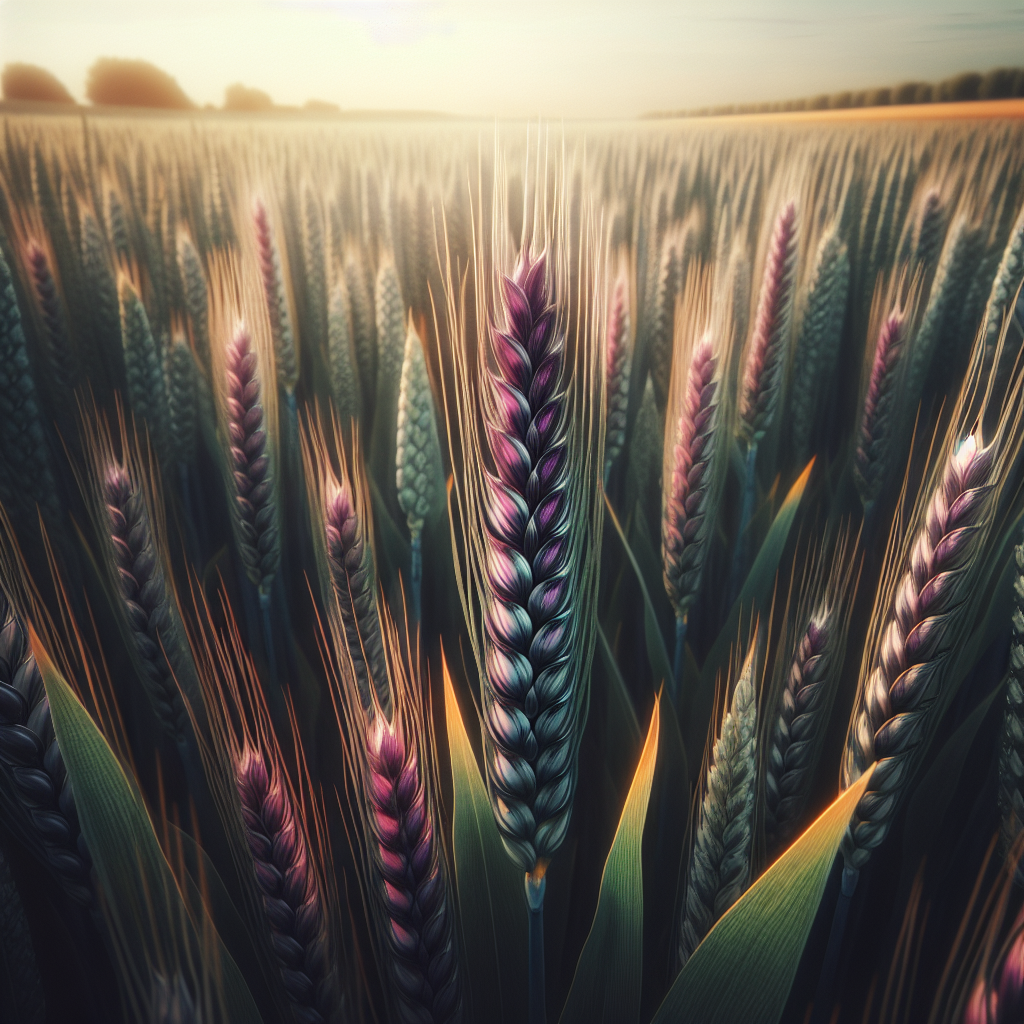
Introduction to Purple Wheat
Purple wheat is a specialty form of bread wheat selected for its striking violet-to-deep-purple grain bran coloration, a trait caused primarily by anthocyanin pigments accumulating in the outer layers of the kernel. Agronomically, it behaves similarly to common wheat, though market interest often centers on its nutritional profile, whole-grain flour quality, and niche food uses such as artisan bread, crackers, noodles, flakes, and health-oriented grain blends. The purple color is most visible in the bran rather than the endosperm, so whole-grain products tend to show the greatest visual and nutritional distinction.
Historically, pigmented wheats have drawn renewed interest as farmers, breeders, and food processors look for cereals with added value beyond yield alone. Purple-grained types are part of a wider family of colored cereals that include blue and black wheats, each differing in where pigments accumulate in the kernel. In purple forms, the pericarp is typically the pigmented tissue. This matters because milling extraction rate strongly affects final flour color and antioxidant retention.
For growers, the key question is not simply whether purple wheat can be grown like ordinary wheat, but how to produce grain that meets specialty standards: uniform color, high test weight, low disease load, strong grain filling, and clean storage stability. Many of the principles overlap with standard Wheat production, but purple wheat rewards close attention to field selection, moderate nitrogen strategy, and gentle postharvest handling.
Botanical Profile of Purple Wheat
Purple wheat belongs to the grass family Poaceae and, in most commercial cases, to the species Triticum aestivum, the same species as common bread wheat. It is an annual cereal with a fibrous root system, erect hollow culms, narrow linear leaves, and a terminal spike inflorescence bearing multiple florets that develop into kernels after pollination.
Typical plant height ranges from about 75 to 120 cm depending on cultivar, fertility, irrigation, and lodging pressure. Modern purple wheat cultivars may be bred as spring or winter types. Winter forms require vernalization and are sown in autumn in temperate climates; spring forms are planted after winter in cooler regions or during suitable dry-season windows in subtropical production systems.
The defining feature is the kernel appearance. The bran layer often shows a dark plum, violet, or reddish-purple cast, while the interior remains closer to amber or pale wheat tones. Kernel hardness varies by cultivar; some purple wheats are softer and better for specialty baked products, while others are hard wheats suitable for stronger flour applications. Thousand-kernel weight, test weight, and protein levels can vary widely, so farmers should source seed based on end-use, not color alone.
Growth stages follow the standard wheat sequence: germination, emergence, tillering, stem elongation, booting, heading, anthesis, milk stage, dough stage, and physiological maturity. Purple pigmentation intensity can be influenced by genetics first and environment second. Cool finishing weather, balanced nutrition, and healthy grain fill often improve visual expression. Severe stress, shriveling, disease pressure, or premature harvest can dull color and reduce grain value.
Rooting depth typically reaches 60 to 120 cm in friable soils, though most active nutrient and water uptake occurs in the top 30 to 60 cm. This makes topsoil structure, drainage, and moisture consistency critical. Purple wheat is self-pollinated, which helps maintain varietal purity if seed lots are kept separate, though volunteers from previous cereal crops can still contaminate harvests.
Soil, pH, and Climate Requirements for Purple Wheat
Purple wheat performs best in well-drained loam, silt loam, or clay loam soils with good tilth and moderate to high inherent fertility. Sandy soils can produce acceptable crops if irrigation and fertility are managed precisely, but they are less forgiving because they dry rapidly and leach nitrogen. Heavy clays can work if drainage is strong and surface crusting is minimized; prolonged saturation in early growth often reduces tillering and increases root disease risk.
An ideal soil pH is 6.0 to 7.5. It can tolerate slightly more acidic or mildly alkaline soils, but performance generally drops below pH 5.5 due to reduced nutrient availability and potential aluminum toxicity, and above pH 8.0 due to micronutrient lock-up, especially zinc and iron. If pH is low, apply agricultural lime based on a soil test several months before planting. If pH is high, focus on organic matter, localized nutrient placement, and correcting micronutrient deficiencies rather than attempting dramatic pH shifts in one season.
For climate, purple wheat is fundamentally a temperate cereal. It prefers cool establishment conditions, moderate temperatures during vegetative growth, and dry weather at maturity. The best temperature range for germination is about 12 to 25°C, though seed can emerge under cooler conditions if soils are not waterlogged. Tillering is strongest in cool weather, while flowering and grain filling are most successful when daytime temperatures remain roughly 18 to 26°C. Prolonged heat above 30°C during flowering or grain fill can reduce kernel set, shrink grain size, lower test weight, and diminish the premium appearance of the harvest.
Water demand is moderate compared with many crops, but timing is critical. Purple wheat should not sit in constantly wet soil. Aim for consistent moisture in the upper root zone from emergence through stem elongation, then especially from booting to early grain fill. In practical terms, soil in the top 10 to 15 cm should feel cool and slightly moist, not sticky or smeared, and should form a weak ball that crumbles with light pressure. If the soil powders in the hand and seedling leaves become dull blue-green or rolled by midday, moisture is too low. If lower leaves yellow early, roots smell sour, or the field stays tacky for days after irrigation or rain, conditions are too wet.
Rainfed crops typically do best where seasonal precipitation is 350 to 650 mm and is reasonably distributed. Irrigated crops can be highly productive, but over-irrigation is one of the most common quality-reducing mistakes. Standing water for more than 24 to 48 hours on young wheat can thin stands and predispose the crop to crown and root problems.
Purple wheat also requires full sun. Shading from hedgerows, agroforestry belts, or uneven topography lowers tiller survival and grain fill. Wind exposure is usually tolerable, but excessive nitrogen combined with irrigation and stormy conditions increases lodging risk.
Step-by-Step Planting & Propagation
Purple wheat is propagated by seed. Because it is a grain crop, success starts with seed quality more than transplant care or nursery management. Always use clean, high-germination, varietally pure seed from a reputable source. For farm-saved seed, test germination before sowing; 85% or better is preferred for reliable stand establishment.
Select the field carefully. Choose land free from severe grass weed pressure, volunteer cereals, and recent disease-heavy wheat residue. Avoid low-lying pockets with poor drainage.
Soil test before planting. Target phosphorus and potassium corrections before sowing, since these nutrients are less mobile than nitrogen. Specialty grain contracts may also specify protein or quality parameters, so fertility planning should begin early.
Prepare a firm, fine seedbed if using conventional tillage. Wheat seed performs best when planted into even depth with good seed-to-soil contact. In no-till systems, residue should be uniformly distributed and openers adjusted to prevent hair-pinning.
Treat seed where appropriate. Organic systems may rely on hot water, biological inoculants, or approved seed protectants if seed-borne diseases are known risks. Untreated seed should only be used if seed health is verified.
Time planting by crop type. Winter purple wheat is usually sown in autumn early enough to establish 3 to 5 leaves and some tillers before hard freezes, but not so early that lush growth encourages disease or insect pressure. Spring purple wheat is planted as soon as soil can be worked and temperatures favor germination.
Set planting depth at 2.5 to 5 cm. In moisture-limited conditions, seed can go slightly deeper if necessary to reach consistent moisture, but planting too deep delays emergence and weakens seedlings.
Use an appropriate seeding rate. A common target is 250 to 400 viable seeds per square meter, adjusted upward for late sowing, poor seedbed conditions, or lower germination. In row terms, narrow grain-drill spacing of roughly 15 to 20 cm encourages quicker canopy closure and weed suppression.
Roll or firm the soil after seeding if the seedbed is fluffy. This improves seed-soil contact and moisture uptake.
Irrigate lightly after sowing only if the topsoil is dry. Avoid heavy irrigation that causes crusting or seed displacement.
Emergence should occur within about 5 to 14 days depending on temperature and moisture. A strong stand is even, upright, and bright green. Patchy emergence often indicates variable planting depth, crusting, seed rot, or localized moisture issues.
If you are building a broader small-grain rotation, practices discussed in soil health strategies can help improve structure, infiltration, and nutrient resilience over time.
Care & Maintenance regimes for Purple Wheat
Once established, purple wheat benefits from disciplined rather than excessive management. The goal is to support tillering, maintain a healthy canopy, and carry the crop through grain fill without lodging or quality loss.
Nitrogen management is especially important. Too little nitrogen leads to pale leaves, weak tillering, short heads, and low protein. Too much nitrogen creates lush, dark growth that is more prone to lodging, foliar disease, delayed maturity, and sometimes diluted pigment expression if grain fill becomes unbalanced. Total nitrogen needs vary by soil type, yield goal, rainfall, and previous crop, but many systems perform well with split applications: a base amount at planting and a topdress during tillering to early stem elongation. If leaf color is excessively deep green and lower canopies stay humid and dense, further nitrogen should be reconsidered.
Phosphorus supports early rooting and tiller establishment, while potassium improves water regulation and stem strength. Sulfur is often overlooked but increasingly important for grain quality and protein formation, especially in low-organic-matter soils. Micronutrients such as zinc and manganese may matter in high-pH or heavily cropped fields.
Moisture management should focus on four sensitive windows: germination, tillering, booting/heading, and grain fill. During vegetative growth, maintain moderate moisture in the top 30 cm without saturation. During booting through anthesis, moisture stress can sharply reduce floret fertility and head size. During grain fill, drought causes shriveled kernels and reduced test weight. However, once kernels approach hard dough and the crop begins to yellow naturally, irrigation should be reduced or stopped to encourage dry-down and reduce disease pressure.
Visual cues are useful. Healthy wheat leaves stand relatively erect and show elastic, not brittle, tissue. Water deficit often appears first as leaf rolling in the hottest part of the day, then as a dull, gray-green cast. Overwatering often shows as persistent soft ground, yellowing lower leaves despite adequate fertility, reduced root anchorage, and in severe cases lodging after wind.
Weed management is most critical from emergence to canopy closure. Purple wheat is competitive once established, but early weed pressure from annual grasses or broadleaves can cut yield and contaminate grain. Use stale seedbeds, narrow rows, crop rotation, clean seed, and timely mechanical or approved selective control methods. In organic systems, blind harrowing at the right stage can reduce thread-stage weeds before wheat becomes vulnerable.
Lodging prevention is central in fertile or irrigated fields. Avoid excessive late nitrogen, maintain balanced potassium, select moderate-stature cultivars where possible, and do not over-irrigate after stem elongation. Lodged wheat is harder to harvest, more disease-prone, and more likely to produce weathered, low-quality grain.
Pests, Diseases & Organic Management
Purple wheat is susceptible to many of the same pests and pathogens that affect conventional wheat. The purple grain trait does not make the crop broadly pest-proof, so integrated management is essential.
Common insect pests include Aphids, Armyworms, Cereal Leaf Beetles, Hessian Fly in some regions, and occasional Cutworms during establishment. Aphids are important not only for sap feeding but also because they can transmit Barley Yellow Dwarf Virus. Scout field margins and interior zones weekly during active growth. Threshold-based control is preferable to routine spraying. Organic approaches include conserving beneficial insects, avoiding excessive nitrogen that attracts sap feeders, and using approved biological or soap-based products where suitable and effective.
Major diseases include rusts (leaf, stem, stripe), Powdery Mildew, Septoria and Tan Spot complexes, Fusarium Head Blight, Loose Smut, Common Bunt, Take-All, and various Root Rots. Disease pressure depends heavily on rotation, humidity, residue, cultivar resistance, and weather during heading and grain fill.
Rusts appear as colored pustules on leaves and stems and can spread rapidly under conducive conditions. Powdery Mildew shows white, dusty growth on leaf surfaces, especially in dense, lush canopies. Fusarium Head Blight is especially serious because it reduces yield, shrivels grain, and can introduce mycotoxins. It is favored by wet, humid conditions during flowering. In purple wheat grown for premium milling or health-food markets, Fusarium contamination can destroy marketability even if yield remains acceptable.
Organic and low-input management should start with prevention:
- Rotate away from wheat and other cereals for at least one season when disease pressure has been high.
- Avoid planting into heavy infected residue unless using a robust residue management plan.
- Use certified, disease-free seed.
- Select resistant or locally adapted purple cultivars whenever available.
- Manage nitrogen conservatively to avoid rank canopies.
- Promote airflow with sensible seeding rates and balanced fertility.
- Irrigate early in the day and avoid overhead irrigation at heading if possible.
Seed-borne diseases are best controlled before planting. Foliar diseases are best suppressed by canopy management and resistance. Head diseases require weather-aware prevention and rotation. If your market requires organic certification, verify that all seed treatments and foliar products are approved under your applicable standards.
Birds can occasionally feed on maturing grain, especially in small plantings, though this is more often a concern in garden-scale or trial plots than broadacre production. Rodents may damage stored grain if bins are not sealed.
Harvesting, Curing & Optimal Storage
Harvest timing is one of the most important quality decisions in purple wheat production. The crop is ready when stems and heads have largely turned golden-brown, kernels are hard, and grain moisture has dropped to harvest range. For combine harvest, target roughly 12 to 14% grain moisture where possible. Grain harvested above that level may be acceptable if drying capacity is available immediately, but delays increase the risk of heating, mold, and color loss.
To test readiness in the field, thresh a few heads by hand. Mature kernels should be firm and resist denting with a fingernail. Heads should shatter only moderately depending on cultivar. If kernels are still soft or doughy, wait. If weather threatens and the crop is overripe, prioritize harvest to avoid sprouting, weather staining, and lodging.
Combine settings should be adjusted to reduce cracked kernels and excessive dehulling of the bran. Because purple coloration is concentrated in outer layers, rough handling can lower visual quality. Start with conservative cylinder or rotor speed and adequate concave clearance, then fine-tune based on threshing completeness and grain damage. Clean grain promptly to remove chaff, weed seeds, shriveled kernels, and diseased material.
If harvested above safe storage moisture, dry grain using ambient or low-heat systems. For seed or premium food grain, avoid unnecessarily high drying temperatures, which can reduce germination and potentially affect grain appearance. As a rule, cool, steady air movement is better than aggressive heat unless rapid rescue drying is essential.
Safe long-term storage usually requires moisture at or below 12%, and in warm climates 10 to 11% is safer for extended holding. Storage temperature matters nearly as much as moisture. Cool grain below 15°C if possible; below 10°C is even better for long-term quality retention and insect suppression. Monitor bins for hot spots, condensation, crusting, and insect activity. Grain that smells musty, sweet-fermented, or sour is already deteriorating.
Store purple wheat in clean, dry, rodent-proof bins or food-grade containers. Separate it clearly from conventional wheat to preserve identity and market premium. Specialty buyers often value traceability, lot integrity, and test results for protein, falling number, test weight, and mycotoxins.
For home-scale growers, cure harvested heads in a dry, shaded, well-ventilated area before threshing if full drying has not yet occurred. Avoid direct sun for extended periods, as overheating can reduce visual quality and seed viability.
Companion Planting for Purple Wheat
In broadacre farming, companion planting around wheat is better understood as intercropping, understory support species, border plantings, or rotational companions rather than classic garden-style pairing. The best companions are those that suppress weeds, support beneficial insects, improve soil tilth, or contribute nitrogen without overwhelming the wheat stand.
Clover is one of the most useful companions in low-density living mulch or frost-seeded systems. It can protect soil, reduce erosion, support pollinators when allowed to flower later, and contribute biologically fixed nitrogen for the following crop. The main caution is competition: in dry climates or low-fertility soils, clover must be managed so it does not rob moisture from the wheat during stem elongation and grain fill.
Peas are useful more often in rotation than true mixed stands, but in some systems they serve as a nitrogen-building precursor crop that improves the following wheat. They also help break cereal disease cycles. Where intercropped experimentally, seeding rates and harvest logistics must be planned carefully to avoid grain contamination.
Garlic and Yarrow are more practical as border or edge companions than field-scale intercrops. Garlic can help diversify field margins and may fit into smallholder mixed systems, while yarrow attracts beneficial insects that support biological pest balance. Neither should be expected to replace sound agronomy, but both can contribute to a more resilient farm ecosystem.
For most growers, the strongest companion strategy is not crowding purple wheat with too many neighbors during the cash-crop season. Instead, use carefully chosen support species before, after, or along margins so the wheat retains full light, space, and harvest efficiency. In specialty production, clean grain and varietal purity usually matter more than aggressive interplanting.