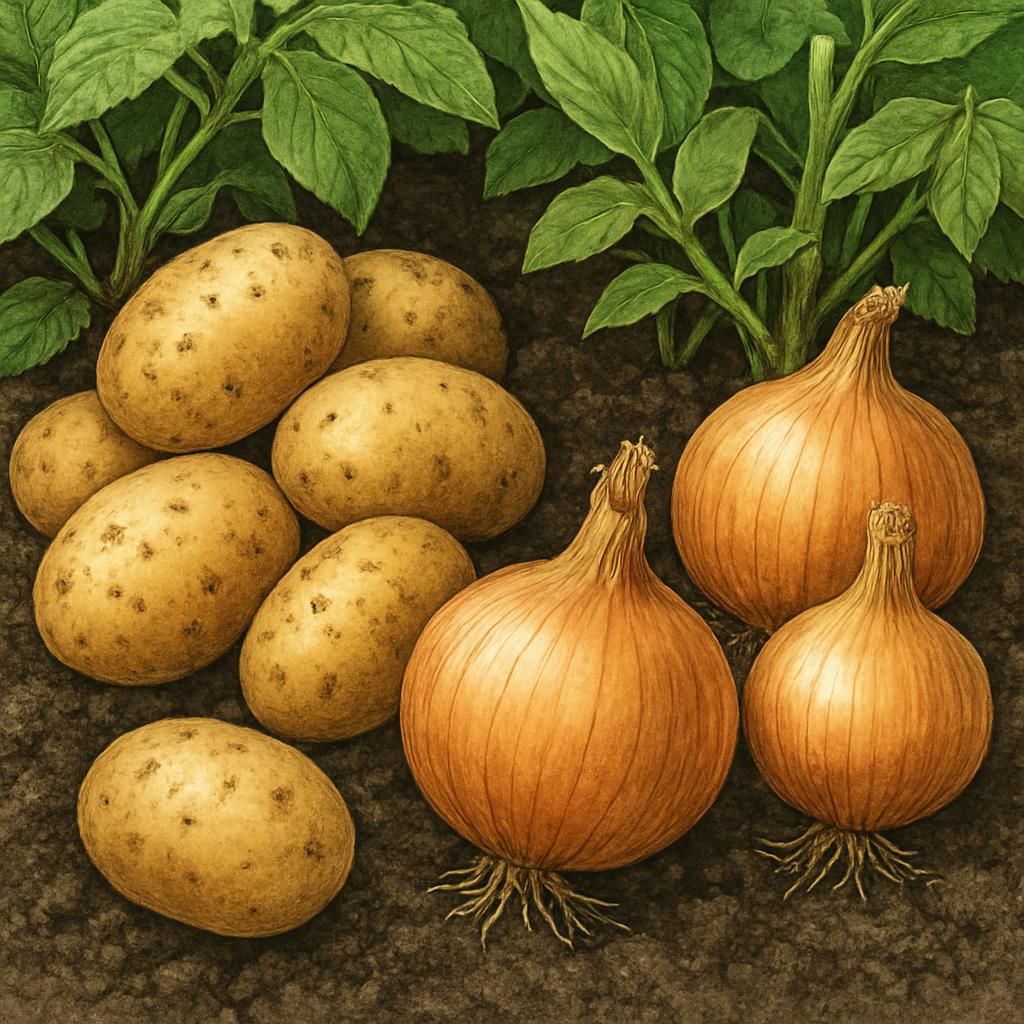
Introduction to Potato Onion
The Potato Onion is an unusual and highly productive vegetable that delivers two harvests from a single planting: crisp, potato-like tubers beneath the soil and flavorful, onion-scented bulbs at the base of the foliage. This hybrid cultivar appeals to gardeners seeking maximum output from limited space while enjoying the culinary versatility of both potatoes and onions. Its resilience and dual nature make it especially valuable for small farms and intensive vegetable systems.
Botanical Profile of Potato Onion
Botanically, the Potato Onion exhibits characteristics of both the Potato and Onion families. The plant develops compound underground storage organs that resemble small potatoes yet carry the sulfur compounds responsible for onion pungency. Above ground, it produces hollow, blue-green leaves typical of alliums, while the root system combines fibrous potato roots with the shallow bulb plate of onions. Flowering is rare under cultivation, and propagation is achieved vegetatively through division of the compound tubers.
Soil, pH, and Climate Requirements for Potato Onion
Successful cultivation begins with well-drained, fertile soil rich in organic matter. The crop performs best in loamy or sandy loam textures that allow easy tuber expansion while retaining adequate moisture. Avoid heavy clay soils that become waterlogged.
| Parameter | Ideal Range | Notes |
|---|---|---|
| Soil Type | Sandy loam to loam | Excellent drainage essential |
| pH | 6.0 – 7.0 | Slightly acidic to neutral |
| Temperature | 15–24 °C (59–75 °F) daytime | Cool-season crop; avoid frost after emergence |
| Sunlight | Full sun (minimum 6–8 hours) | Promotes tuber bulking |
| Soil Temperature at Planting | 10–15 °C (50–59 °F) | Ensures rapid root establishment |
Step-by-Step Planting & Propagation
- Select certified disease-free Potato Onion planting stock consisting of whole compound tubers.
- Prepare beds by incorporating 5–8 cm of well-rotted compost or aged manure.
- Plant tubers 10–12 cm deep and 20–25 cm apart in rows spaced 45–60 cm apart.
- Water thoroughly after planting to settle soil around the tubers.
- Mulch with 5 cm of straw or shredded leaves to suppress weeds and maintain even moisture.
Care & Maintenance regimes for Potato Onion
Consistent moisture and balanced nutrition are critical during the 90–110 day growing cycle. Apply water evenly to prevent irregular tuber development, and side-dress with organic nitrogen sources once foliage reaches 15 cm.
| Task | Schedule | Details |
|---|---|---|
| Watering | Every 5–7 days | 2.5–3.5 cm per week; increase during bulking |
| Fertilizer | At planting + 4 weeks later | Balanced organic 5-5-5 or compost tea |
| Pruning | Remove flower stalks if present | Diverts energy to tuber and bulb development |
Pests, Diseases & Organic Management
Common threats include Aphids, Wireworms, and fungal issues such as Early blight. Practice strict crop rotation with non-hosts such as Lettuce and use floating row covers during early growth. Neem oil sprays and beneficial nematodes provide effective organic control. Remove and destroy any infected plant material promptly.
Harvesting, Curing & Optimal Storage
Harvest when foliage begins to yellow, typically 90–110 days after planting. Gently lift plants with a fork to avoid bruising tubers. Separate the compound structures into individual potato-like tubers and onion bulbs. Cure in a shaded, well-ventilated area at 15–20 °C for 7–10 days. Store cured produce in mesh bags or crates at 4–10 °C with 60–70 % relative humidity for up to four months.
Companion Planting for Potato Onion
Pair Potato Onion with nitrogen-fixing legumes such as Peas and Beans to improve soil fertility. Aromatic herbs including Thyme and Rosemary help deter insect pests. Avoid planting near Tomato or other solanaceous crops to reduce shared disease pressure. Interplanting with Carrot or Radish maximizes bed space and provides additional early-season harvests.