Introduction to Potato (Nicola)
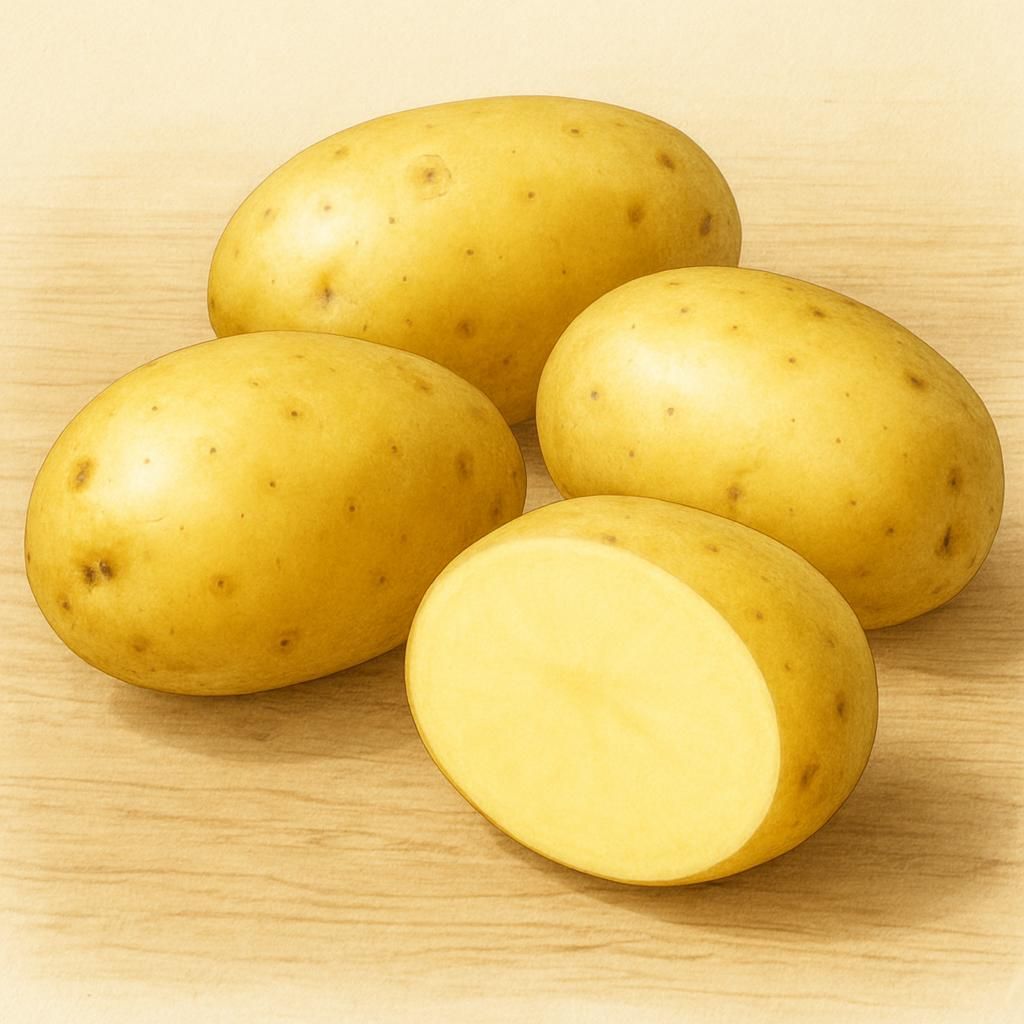
Nicola is a mid-season, waxy potato cultivar developed in Germany that has gained international recognition for its superior culinary qualities and disease resistance profile. Its smooth, yellow skin and firm, creamy yellow flesh make it ideal for boiling, steaming, salads, and roasting while retaining shape. Growers value Nicola for consistent tuber set, moderate drought tolerance, and reliable performance across temperate climates. As a Potato (crop) variety, it bridges the gap between heirloom flavor and modern agronomic needs.
Botanical Profile of Potato (Nicola)
Nicola belongs to the Solanaceae family and exhibits the typical herbaceous perennial growth habit of cultivated potatoes, though it is grown as an annual. Plants reach 60–80 cm in height with semi-erect stems and medium-green compound leaves. Tubers are oval to long-oval, uniform in shape, and display shallow eyes with smooth yellow skin. The variety produces moderate numbers of medium-sized tubers per plant, typically 8–12, with high dry-matter content around 18–20 %. Nicola flowers are white to pale lilac and set few berries under field conditions.
Soil, pH, and Climate Requirements for Potato (Nicola)
Successful Nicola production begins with well-drained, fertile loam or sandy-loam soils that allow unrestricted tuber expansion. The variety performs best in cool, moist conditions with moderate day-length sensitivity.
| Parameter | Ideal Range | Notes |
|---|---|---|
| Soil Type | Loam, sandy loam | Avoid heavy clays; improve drainage |
| Soil pH | 5.5–6.5 | Lower pH reduces common scab risk |
| Temperature (Soil) | 7–20 °C at planting | Optimal emergence at 10–15 °C |
| Temperature (Air) | 15–24 °C daytime | Growth slows above 28 °C |
| Frost Tolerance | Sensitive below –1 °C | Protect young shoots with row cover |
| Rainfall / Irrigation | 500–700 mm season total | Even moisture critical during tuberization |
Step-by-Step Planting & Propagation
- Source certified, disease-free seed tubers of Nicola sized 35–55 mm; avoid using grocery-store potatoes.
- Pre-sprout (chit) seed tubers 4–6 weeks before planting in a cool, bright location (10–15 °C) to encourage 2–3 short, sturdy sprouts.
- Prepare soil by incorporating 5–8 cm of well-rotted compost or aged manure; perform a soil test and correct potassium and magnesium deficiencies.
- Plant when soil temperature reaches a minimum of 7 °C; space seed pieces 30 cm apart in rows 75–90 cm wide and 10–15 cm deep.
- Cover with soil and apply a light mulch of straw or shredded leaves to moderate soil temperature and suppress weeds.
- Irrigate immediately after planting to settle soil around tubers; maintain consistent moisture until emergence.
Care & Maintenance regimes for Potato (Nicola)
Nicola requires steady nutrition and moisture management to achieve maximum marketable yield and quality.
| Growth Stage | Water Schedule | Fertilizer (NPK) | Pruning / Hilling |
|---|---|---|---|
| Pre-emergence | Light irrigation to maintain 60 % field capacity | None after planting; banded 10-20-20 at 400 kg/ha at planting | None |
| Vegetative (4–8 wks) | 25–30 mm/week; avoid waterlogging | Side-dress 100 kg/ha calcium nitrate at 4 weeks | Hill soil when plants reach 15–20 cm tall |
| Tuber Initiation | Maintain even moisture; critical period | Apply 80 kg/ha potassium sulfate at tuber set | Second hilling at 30 cm height |
| Bulking | Reduce frequency slightly as skins set | Foliar micronutrients (Mg, B, Zn) if deficiency symptoms appear | Remove lower leaves only if disease present |
| Maturation | Withhold water 2 weeks before harvest | None | Cease hilling; allow natural senescence |
Pests, Diseases & Organic Management
Nicola shows good resistance to common scab (Common scab (disease)) and moderate tolerance to late blight. Primary insect threats include Colorado potato beetle (pest) and wireworms (pest). Implement a 3–4 year rotation with non-host crops such as Corn (crop) or cereals. Use floating row covers at planting to exclude beetles; hand-pick larvae when populations are low. Apply approved organic products such as spinosad or neem oil at first sign of feeding damage. For late blight, destroy volunteer potatoes and plant only certified seed; apply copper-based fungicides preventively during humid periods. Mulching with straw reduces soil splash that spreads early blight spores.
Harvesting, Curing & Optimal Storage
Nicola reaches maturity 90–110 days after planting when vines begin to yellow. Harvest on a dry day once skins have set by gently lifting plants with a fork. Cure tubers for 10–14 days at 12–15 °C and 85–90 % relative humidity to heal minor wounds. Store in darkness at 4–7 °C with 85–90 % humidity and good ventilation; avoid temperatures below 4 °C to prevent sugar accumulation. Properly cured and stored Nicola tubers maintain quality for 4–6 months.
Companion Planting for Potato (Nicola)
Nicola benefits from strategic companions that deter pests and improve soil health. Plant rows of Garlic (crop) or Onion (crop) between potato beds to repel Colorado potato beetle (pest). Nasturtium (crop) and Marigold (crop) attract beneficial insects and mask potato foliage from aphids. Avoid planting near Tomato (crop) or other Solanaceae to reduce shared disease pressure. Incorporate Clover (crop) as a living mulch to fix nitrogen and suppress weeds without competing heavily for moisture.