Introduction to poinsettia
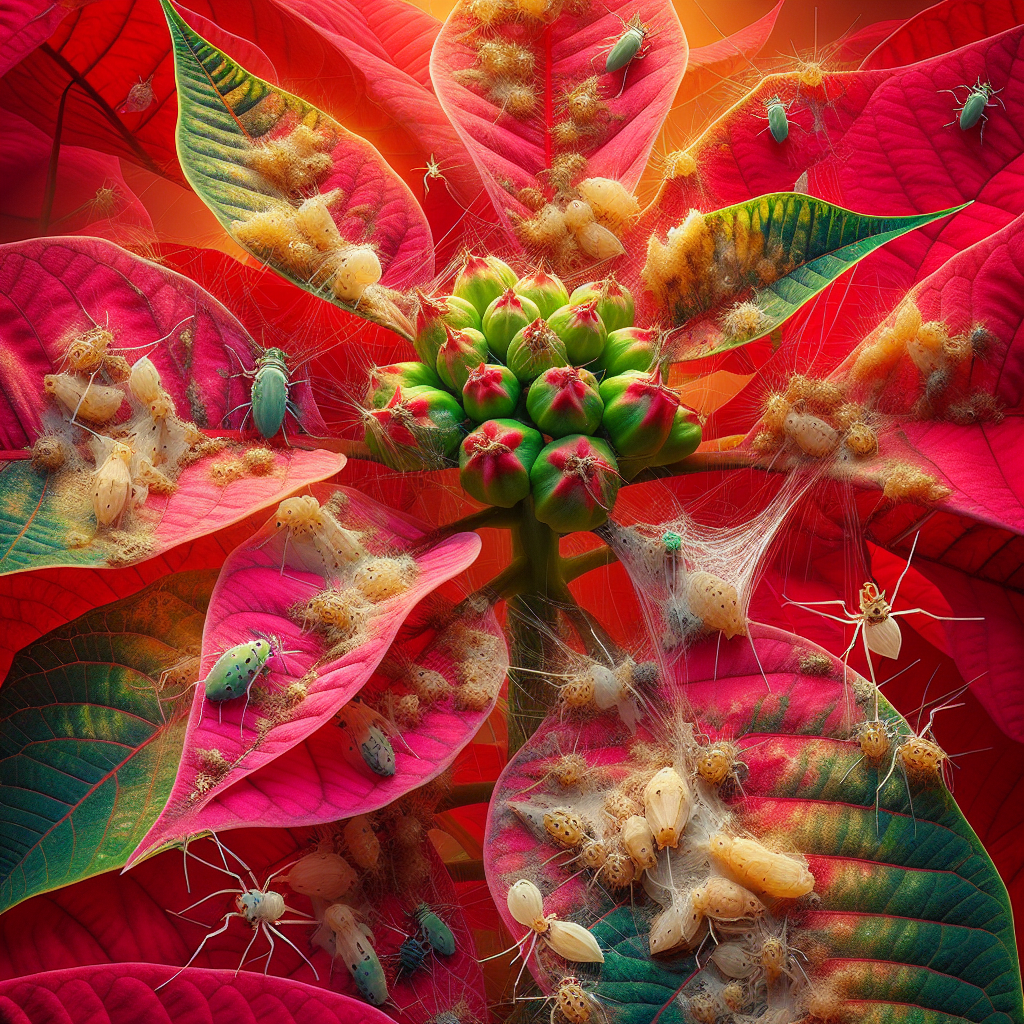
Poinsettias, scientifically known as Euphorbia pulcherrima, are iconic holiday plants prized for their vibrant red bracts and festive appeal. Native to Mexico and Central America, they thrive in warm, controlled environments like greenhouses, making them a staple in commercial floriculture worldwide. However, poinsettias are highly susceptible to a range of pests that can devastate crops, leading to significant economic losses for growers. Common invaders include whiteflies, aphids, spider mites, and mealybugs, which exploit the plant's tender foliage and sap-rich tissues.
Pest pressure on poinsettias intensifies during propagation and finishing stages, where high humidity and dense canopies create ideal conditions for infestation. Early detection is critical, as unchecked pests can spread rapidly, reducing bract color, leaf quality, and overall marketability. This comprehensive guide equips professional growers and hobbyists with diagnostic tools, lifecycle knowledge, organic control plans, and prevention strategies to manage poinsettia pests effectively. By integrating cultural practices, biological controls, and monitoring, you can minimize chemical inputs and sustain healthy, saleable plants. For small farms battling similar issues, check out this Spring Pest Patrol blog post for broader organic insights.
Understanding poinsettia pest dynamics requires recognizing their biology and interaction with host plants. These pests not only feed directly on plant sap but also transmit viruses like poinsettia mosaic virus, compounding damage. Annual global production exceeds 100 million plants, with the U.S. market alone valued at over $250 million, underscoring the need for robust IPM (Integrated Pest Management) programs tailored to poinsettias.
Identifying Symptoms & Damage
Accurate diagnosis begins with spotting subtle early signs before populations explode. Poinsettia pests manifest through characteristic symptoms on leaves, stems, and bracts:
- Whiteflies: Adults and nymphs cluster on leaf undersides, leaving sticky honeydew that promotes sooty mold. Leaves yellow, wilt, and drop prematurely. Use yellow sticky traps to confirm presence.
- Aphids: Green or black colonies on new growth cause curled leaves, stunted shoots, and honeydew. Inspect terminals weekly.
- Spider Mites: Fine webbing, stippling (tiny white dots), and bronzing on foliage. Shake leaves over white paper to detect moving mites.
- Mealybugs: Cottony white masses on stems, leaf axils, and roots. Heavy infestations lead to deformed bracts and plant collapse.
Damage escalates in high-density production: sap-feeding weakens plants, reducing bract development and color retention. Severe cases show leaf drop, stem dieback, and up to 50% yield loss. Differentiate pests from diseases like powdery mildew (white powdery patches) or Botrytis (gray fuzz). Use a 10x hand lens for confirmation—pests move, pathogens don't.
Monitor propagation sticks closely, as cuttings are prime entry points. Thresholds: 1 whitefly per 10 leaves or 5% infested plants warrant action. Document symptoms with photos for trend tracking.
Lifecycle and Progression of poinsettia
Poinsettia pests follow predictable cycles synchronized with crop timelines (8-12 weeks from stick to finish):
- Whiteflies: Eggs hatch in 4-7 days; nymphs develop 18-24 days; adults live 30+ days, laying 100+ eggs. Multiple generations per crop cycle.
- Aphids: Parthenogenetic reproduction; nymphs mature in 7-10 days, populations double weekly under warmth (70-80°F).
- Spider Mites: Egg to adult in 5-9 days; thrive at low humidity (<50%). Exponential growth in dry conditions.
- Mealybugs: Crawlers (mobile stage) settle and molt 3 times over 20-40 days; females produce cysts with eggs.
Progression: Initial scouting misses lead to mid-crop explosions during bract formation (weeks 4-8), when dense foliage hides pests. Overwintering stages in weedy borders or nearby tomato crops reinfest clean stock. Hot spots form in poorly ventilated areas. Track degree-days (base 50°F) for timing sprays.
Environmental Triggers & Risk Factors
Poinsettias demand precise conditions (65-75°F days, 60-65°F nights, 50-60% RH), but imbalances trigger outbreaks:
- High nitrogen fertility boosts tender growth, attracting aphids and whiteflies.
- Low humidity (<40%) favors spider mites; excess (>70%) promotes whiteflies and mealybugs.
- Poor airflow in crowded greenhouses (>4 plants/ft²) enables rapid spread.
- Contaminated cuttings from off-site propagators introduce 80% of infestations.
- Weeds like lamb's quarters harbor pests; proximity to cucumber fields increases whitefly migration.
Risk peaks October-December during forcing. Scout weekly, especially after shipping/receiving. Over-fertilization or drought stress weakens defenses, amplifying damage.
Organic Control & Treatment Plans
Prioritize IPM with layered organic tactics:
- Monitoring: Yellow/blue sticky traps (1/1000 sq ft); scout 10% plants weekly.
- Cultural: Space plants 12-18" apart; prune for airflow; remove weeds. Quarantine new stock.
- Biological: Release Encarsia formosa for whiteflies (1-2/week), Aphidius colemani for aphids, predatory mites (Phytoseiulus persimilis) for spider mites. Neem oil or insecticidal soap (1-2% solution) weekly.
- Organic Sprays: Rotate insecticidal soaps, horticultural oils, Beauveria bassiana (fungal biopesticide). Apply evenings to spare beneficials.
- Threshold-Based: Treat at 1-5% infestation; recheck 7 days post-treatment.
Sample Plan: Week 1: Soap drench. Week 2: Predators + traps. Avoid broad-spectrum synthetics to preserve naturals. For root mealybugs, drench with potassium salts of fatty acids.
Preventing poinsettia in the Future
Prevention outperforms cure:
- Source certified clean cuttings; inspect/dip in soap.
- Sanitize greenhouses (bleach benches, steam floors).
- Use resistant cultivars like 'Prestige Red'.
- Maintain 55-65% RH, 16-hr days.
- Border sprays with pyrethrins; plant trap crops like marigolds.
- Rotate pesticides; track via logs.
- Clean up debris post-harvest to break cycles.
Annual IPM audits reduce incidence 70%. Integrate with thrips management for comprehensive coverage.
Crops Most Affected by poinsettia
While poinsettias suffer most, pests migrate to:
- Pepper (whiteflies, aphids)
- Eggplant (mealybugs, mites)
- Tomato (all)
- Cucumber (whiteflies)
- Strawberry (mites, aphids)
Mixed greenhouses amplify cross-infestation. Isolate ornamentals from edibles.