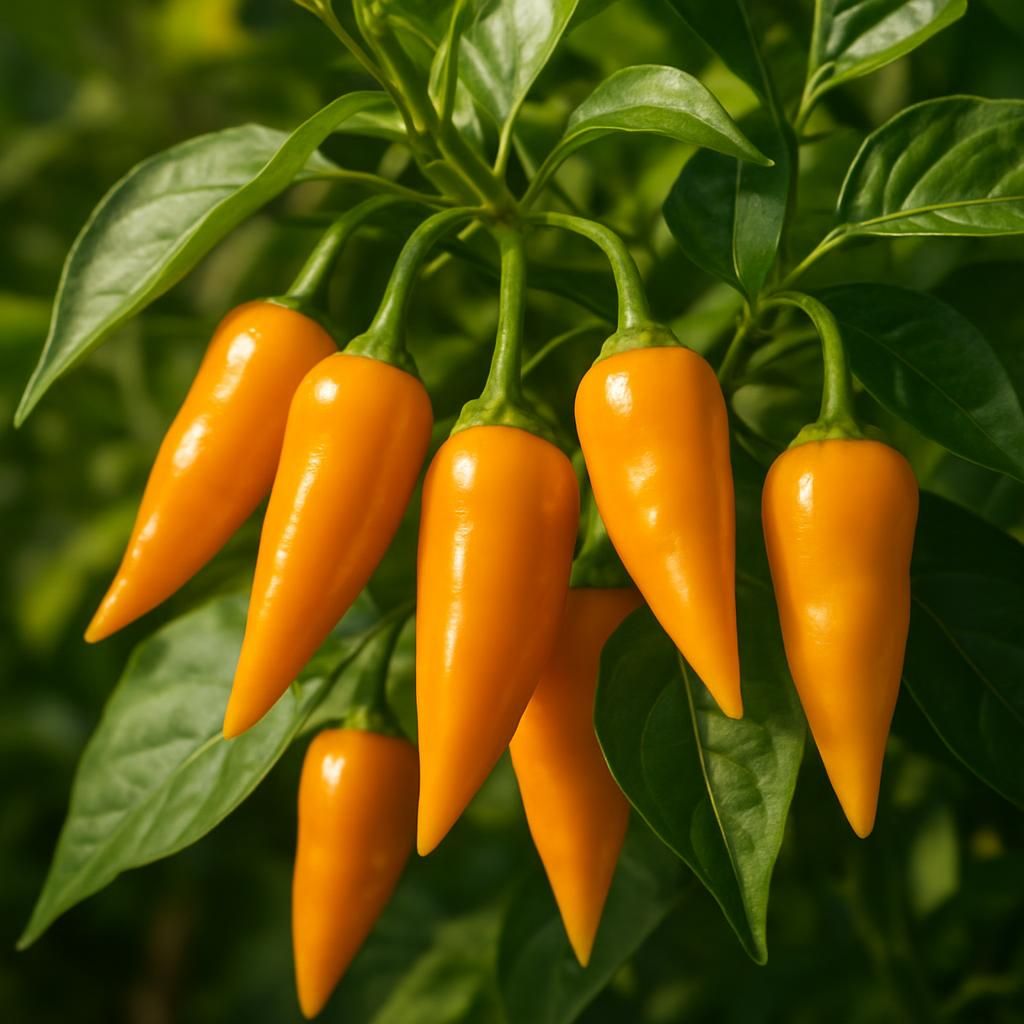
Introduction to Pimenta de Cheiro
Pimenta de Cheiro, scientifically known as Capsicum chinense, is a distinctive Brazilian chili pepper celebrated for its powerful fragrance and complex flavor profile. Unlike many hot peppers, it delivers moderate heat (typically 10,000–30,000 Scoville Heat Units) while offering an unmistakable sweet, fruity aroma that distinguishes it in culinary traditions across South America. The name literally translates to "fragrant pepper," reflecting its signature scent that intensifies during ripening. This heat-tolerant species thrives in tropical and subtropical climates and has become increasingly popular among home gardeners and small-scale commercial growers seeking aromatic varieties beyond standard Chili Pepper.
Botanical Profile of Pimenta de Cheiro
Pimenta de Cheiro belongs to the Solanaceae family and is closely related to Habanero and Scotch Bonnet peppers. Plants grow 60–120 cm tall with a bushy, upright habit and produce small, elongated fruits measuring 4–7 cm in length. The peppers transition from green to vibrant yellow, orange, or red at maturity, depending on the cultivar. Leaves are ovate to lanceolate with a slightly glossy texture, and white star-shaped flowers appear in clusters. The species is perennial in frost-free zones but is most commonly grown as an annual in temperate regions. Its high capsaicinoid content in placental tissue contributes to both heat and the signature volatile aromatic compounds.
Soil, pH, and Climate Requirements for Pimenta de Cheiro
Successful cultivation begins with replicating the warm, humid conditions of its native Amazonian habitat. Well-drained, fertile soils rich in organic matter support vigorous root development and consistent fruit set.
| Parameter | Ideal Range | Notes |
|---|---|---|
| Soil Type | Loamy, well-drained | Sandy loam with high organic content preferred |
| Soil pH | 6.0–6.8 | Slightly acidic to neutral; avoid alkaline soils |
| Temperature (Day) | 24–32 °C | Consistent warmth promotes flowering and fruiting |
| Temperature (Night) | 18–22 °C | Protect from temperatures below 15 °C |
| Relative Humidity | 60–80% | High humidity reduces blossom drop |
| Sunlight | Full sun (6–8 hours) | Partial shade in extreme heat |
| Spacing | 60–75 cm between plants | 90–120 cm between rows for airflow |
Step-by-Step Planting & Propagation
Start seeds indoors 8–10 weeks before the last expected frost. Sow seeds 0.5 cm deep in sterile seed-starting mix at 25–28 °C. Maintain consistent moisture until germination occurs in 7–14 days. Transplant seedlings into 15 cm pots once they develop two true leaves, hardening them off over 7–10 days. In frost-free zones, direct sow after soil temperature reaches 20 °C. Space plants 60–75 cm apart in raised beds or containers with excellent drainage. For best results, incorporate 5–8 cm of well-rotted compost into planting holes.
Care & Maintenance regimes for Pimenta de Cheiro
Consistent irrigation, targeted nutrition, and strategic pruning maximize both yield and fruit quality. Mulching with organic materials conserves moisture and suppresses weeds.
| Task | Frequency | Details |
|---|---|---|
| Watering | 2–3 times weekly | Deep watering to 20 cm; reduce during fruit ripening |
| Fertilizer (Vegetative) | Every 2 weeks | Balanced NPK 10-10-10 or fish emulsion |
| Fertilizer (Flowering/Fruiting) | Every 3 weeks | High-potassium formula (e.g., 5-10-15) |
| Pruning | Once at 30 cm height; then monthly | Pinch growing tips to encourage bushiness; remove suckers |
| Mulching | Apply 5–7 cm layer at planting | Straw, wood chips, or dried leaves |
Pests, Diseases & Organic Management
Monitor regularly for common Solanaceous pests. Aphids and Whiteflies can transmit viruses; deploy yellow sticky traps and release ladybugs or lacewings. Spider mites thrive in hot, dry conditions—increase humidity and apply neem oil sprays. Prevent fungal issues such as powdery mildew and Phytophthora through proper spacing, drip irrigation, and soil solarization. Copper-based sprays and Bacillus subtilis products provide effective organic control of bacterial and fungal pathogens.
Harvesting, Curing & Optimal Storage
Harvest Pimenta de Cheiro when fruits reach full color and size, typically 70–85 days after transplanting. Use clean pruners to cut stems, leaving a short peduncle. For fresh use, store at 7–10 °C with 85–90% humidity for up to two weeks. To dry, spread peppers in a single layer at 35–40 °C with good airflow until brittle (5–7 days). Store dried peppers in airtight glass jars away from light. For long-term preservation, freeze whole or process into aromatic pastes and oils.
Companion Planting for Pimenta de Cheiro
Pair Pimenta de Cheiro with aromatic herbs and flowers to deter pests and improve pollination. Thai Basil repels aphids and thrips while attracting beneficial insects. Marigold roots exude compounds that suppress nematodes. Nasturtium serves as a trap crop for aphids. Avoid planting near Fennel or other Apiaceae that may inhibit growth. Interplanting with Tomato and Eggplant can enhance biodiversity but requires vigilant disease monitoring. Rotate with legumes such as Cowpea to naturally replenish soil nitrogen between pepper crops.