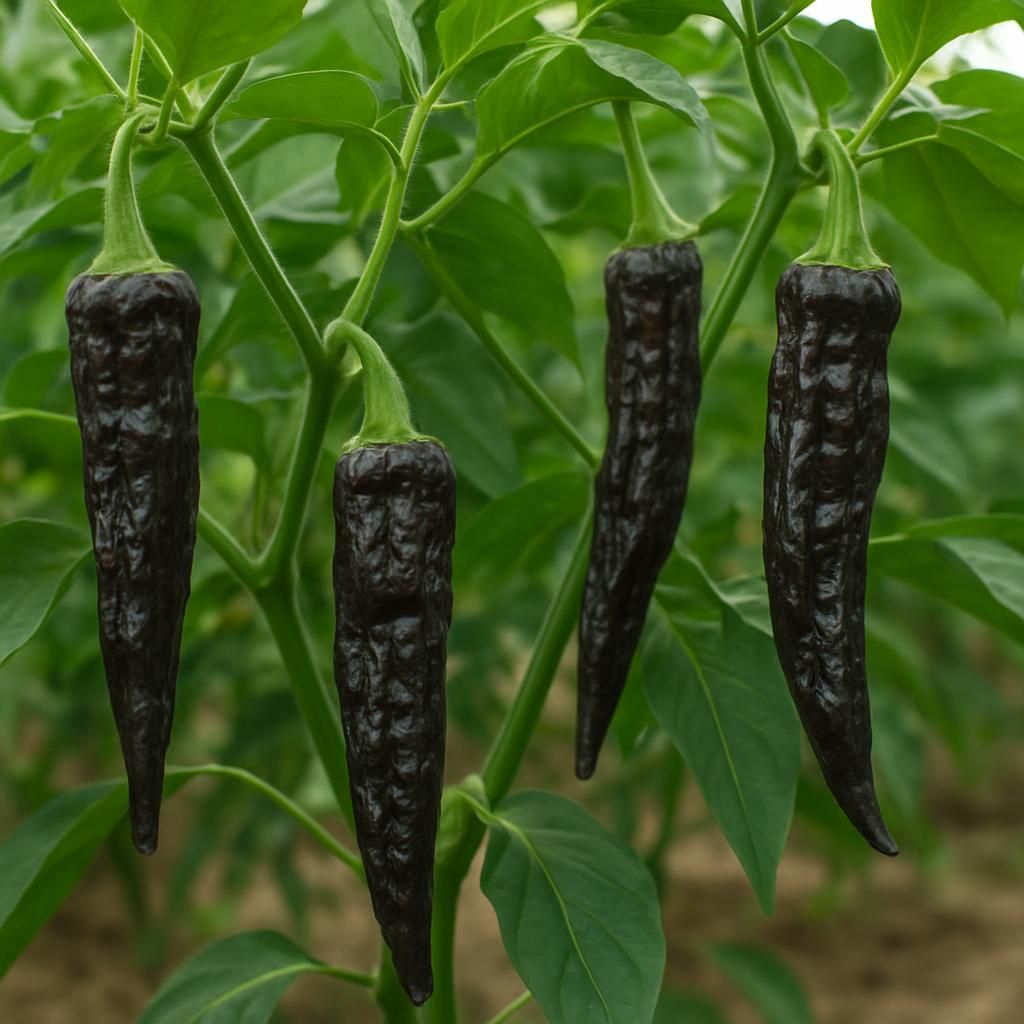
Introduction to Pasilla Bajio Pepper
The Pasilla Bajio Pepper is a distinctive heirloom variety of Capsicum annuum native to central Mexico. Its name derives from the Spanish word 'pasilla,' meaning 'little raisin,' referring to the deep, wrinkled appearance the pods develop when fully ripe and dried. Unlike many chiles that are harvested green, Pasilla Bajio is traditionally picked at full physiological maturity when the skin turns dark brown to nearly black. The flavor is complex—earthy, slightly sweet, with tobacco and prune undertones and moderate heat ranging from 1,000 to 4,000 Scoville Heat Units. This pepper is essential in authentic Mexican mole sauces and is gaining popularity among home gardeners and small-scale commercial growers seeking unique, high-value specialty crops.
Botanical Profile of Pasilla Bajio Pepper
Pasilla Bajio belongs to the Solanaceae family and shares the same species as many other common peppers including Bell Pepper and Chili Pepper. Plants grow 60–90 cm tall with an upright, moderately branching habit. Leaves are ovate to lanceolate, medium green, and slightly glossy. Flowers are small, white, and self-pollinating, though insect activity can improve fruit set. Fruits are elongated, measuring 15–20 cm in length and 2–3 cm in diameter, tapering to a point. At maturity, pods develop a characteristic wrinkled, raisin-like skin and a deep mahogany to nearly black coloration. The thin walls dry quickly and rehydrate well, making them ideal for both fresh use and preservation.
Soil, pH, and Climate Requirements for Pasilla Bajio Pepper
Successful cultivation begins with matching the crop to appropriate environmental conditions. Pasilla Bajio performs best in fertile, well-drained loam or sandy loam soils with good organic matter content. Heavy clay soils should be amended with compost or aged manure to improve drainage and aeration. The crop is moderately drought tolerant once established but produces the highest yields with consistent moisture. It requires full sun (minimum 6–8 hours daily) and warm temperatures throughout the growing season.
| Parameter | Ideal Range | Notes |
|---|---|---|
| Soil Type | Loam or sandy loam | Well-drained; avoid compacted or waterlogged soils |
| Soil pH | 6.0–7.0 | Slightly acidic to neutral; test annually |
| Temperature (Day) | 21–29 °C (70–85 °F) | Optimal fruit set occurs within this range |
| Temperature (Night) | 15–21 °C (59–70 °F) | Below 13 °C slows growth significantly |
| Growing Season Length | 90–110 days from transplant | Start seeds 8–10 weeks before last frost |
| Sunlight | Full sun, 6–8+ hours | South-facing exposure preferred |
| Frost Tolerance | None | Protect or transplant after danger of frost |
Step-by-Step Planting & Propagation
Begin propagation indoors 8–10 weeks before the expected last frost date. Sow seeds 6 mm deep in sterile seed-starting mix. Maintain soil temperature at 24–27 °C using a heat mat for uniform germination, which typically occurs in 7–14 days. Once seedlings develop their first true leaves, transplant into 7–10 cm pots and grow under bright lights or in a greenhouse at 21–24 °C daytime temperatures. Harden off plants for 7–10 days before transplanting outdoors when soil has warmed to at least 18 °C and night temperatures remain above 13 °C. Space plants 45–60 cm apart in rows 75–90 cm wide. Use black plastic mulch or organic mulch to suppress weeds and conserve soil moisture. Install drip irrigation at planting to deliver water directly to the root zone.
Care & Maintenance regimes for Pasilla Bajio Pepper
Consistent care throughout the season ensures vigorous plants and abundant fruit. Mulch heavily after transplanting to maintain even soil moisture and reduce weed pressure. Monitor plants weekly for nutrient deficiencies, especially nitrogen and potassium, which affect fruit quality. Side-dress with compost tea or balanced organic fertilizer at flowering and again when fruit begins to set. Prune lower leaves and suckers to improve airflow and reduce disease incidence. Support plants with stakes or cages if growing in windy areas or when fruit load is heavy.
| Growth Stage | Watering Schedule | Fertilizer Application | Pruning/Maintenance |
|---|---|---|---|
| Transplant to Flowering | 2.5–3.8 cm (1–1.5 in) per week; keep soil evenly moist | Low-nitrogen starter fertilizer at planting; switch to balanced 5-5-5 at 3 weeks | Remove lower leaves touching soil; stake if needed |
| Flowering to Fruit Set | Maintain consistent moisture; avoid overhead watering | Side-dress with compost or fish emulsion every 3–4 weeks | Pinch growing tips to encourage bushiness; remove damaged leaves |
| Fruit Development to Harvest | Reduce slightly to concentrate sugars; 2 cm per week minimum | Potassium-rich fertilizer (e.g., 3-5-8) every 2 weeks | Remove yellowing foliage; harvest ripe pods promptly |
Pests, Diseases & Organic Management
Pasilla Bajio is susceptible to several common pepper pests and diseases. Aphids and Thrips can transmit viruses; monitor with yellow sticky traps and release beneficial insects such as lady beetles. Spider Mites appear during hot, dry spells—use strong water sprays and neem oil to suppress populations. Fungal issues such as Powdery Mildew and Phytophthora root rot are managed through proper spacing, drip irrigation, and soil drainage. Rotate crops every 3–4 years and avoid planting after other solanaceous crops. Apply copper-based fungicides or biological controls (Bacillus subtilis) at the first sign of leaf spots. Regular scouting and removal of infected plant material remain the most effective organic strategies.
Harvesting, Curing & Optimal Storage
Harvest Pasilla Bajio when pods reach full size and develop the characteristic dark, wrinkled skin. For fresh use, pick at the dark brown stage; for drying, allow pods to remain on the plant until fully mature. Use clean pruners to cut stems, leaving a short peduncle attached. Dry pods in a single layer in a warm, well-ventilated area or dehydrator at 35–40 °C until brittle. Store dried peppers in airtight glass jars away from light and heat for up to 12 months. Fresh pods can be refrigerated in perforated bags for 1–2 weeks. For long-term preservation, freeze whole or powdered pods.
Companion Planting for Pasilla Bajio Pepper
Strategic companion planting improves pollination, deters pests, and enhances soil health. Basil and Thai Basil repel aphids and thrips while attracting beneficial insects. Marigolds deter nematodes and provide bright color that draws pollinators. Nasturtium acts as a trap crop for aphids. Avoid planting near fennel or dill, which can inhibit pepper growth. Interplant with Tomato or Eggplant in well-managed rotations to maximize space and diversify the garden ecosystem. Include nitrogen-fixing cover crops such as clover in the off-season to rebuild soil fertility.
For more on optimizing harvest windows, read The Overlooked Art of Seasonal Harvest Timing for Small Farm Profit.