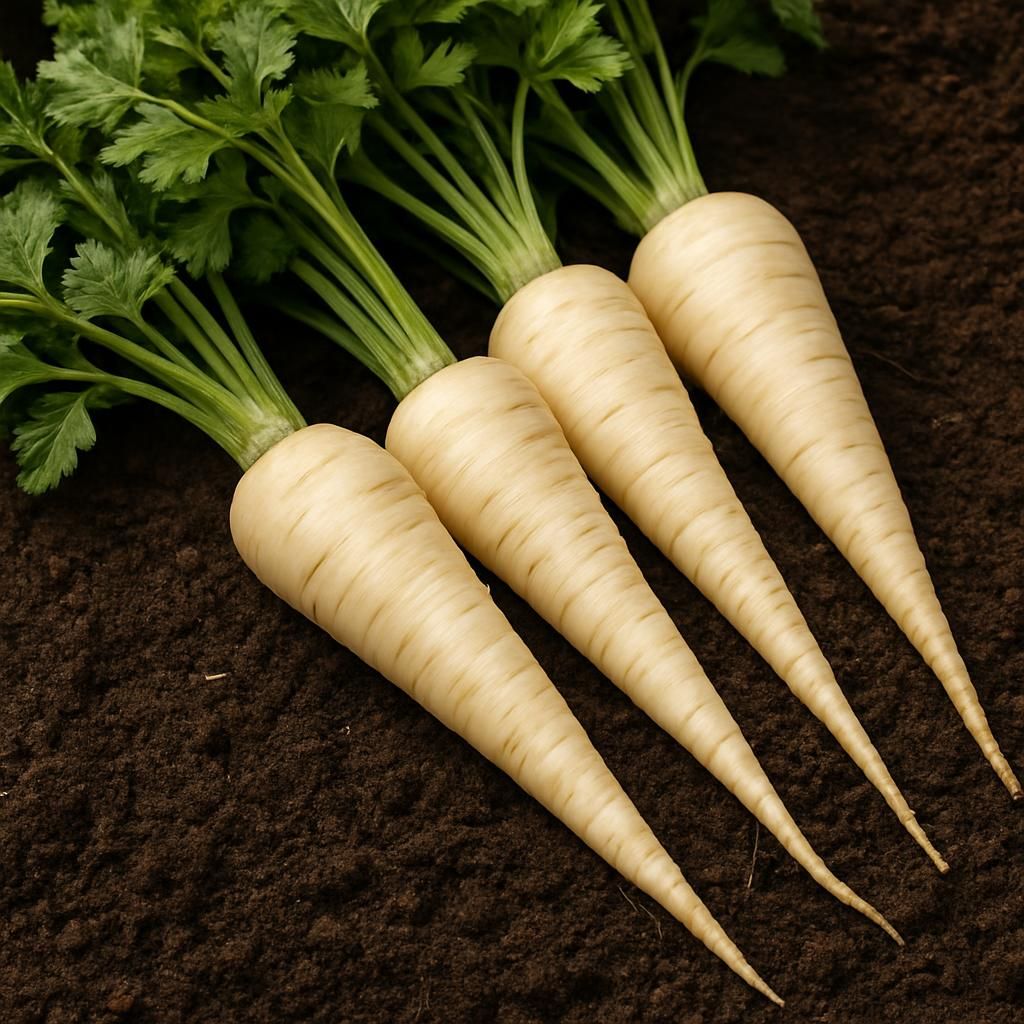
Introduction to Parsnip (White Gem)
Parsnip (White Gem) is a refined cultivar of Pastinaca sativa developed for uniform root shape, smooth skin, and excellent flavor. The variety produces medium-length, tapered roots that remain slender and free of excessive forking, making it ideal for both fresh market sales and storage. White Gem matures in approximately 120–140 days and develops its signature sweetness after exposure to frost.
This cultivar excels in temperate regions where cool soil temperatures allow steady root development without bolting. Gardeners value White Gem for its reliable germination, resistance to canker, and ability to hold quality in the ground through winter. The roots reach 8–10 inches in length with a creamy white exterior and fine-grained, ivory flesh.
Parsnips have been cultivated in Europe for centuries and remain a staple winter vegetable. White Gem improves upon older varieties by offering straighter roots that are easier to harvest and clean. The variety performs particularly well in raised beds or deep, stone-free soils where consistent moisture supports even growth.
Botanical Profile of Parsnip (White Gem)
Parsnip (White Gem) belongs to the Apiaceae family alongside carrot and celery. The plant forms a basal rosette of pinnate leaves before sending up a flowering stalk in its second year. Roots are biennial storage organs that accumulate sugars as temperatures drop.
The cultivar produces smooth, cream-colored roots with minimal side branching. Foliage is bright green and deeply lobed, reaching 12–18 inches in height. Flowers are small, yellow umbels that appear in the second season if roots are left in the ground. Seeds are flat, winged, and require light for germination.
White Gem roots develop the highest sugar content after several hard frosts convert starches into sugars. This physiological response distinguishes parsnips from many other root crops and gives the variety its prized flavor profile.
Soil, pH, and Climate Requirements for Parsnip (White Gem)
Parsnip (White Gem) demands deep, friable soil free of stones to produce straight, unblemished roots. Heavy clay or compacted soils cause forking and stunted growth. Raised beds or double-dug plots are recommended for optimal results.
| Parameter | Ideal Range | Notes |
|---|---|---|
| Soil Type | Sandy loam to loam | Deep, stone-free, well-drained |
| Soil pH | 6.0–7.0 | Slightly acidic to neutral |
| Soil Temperature | 50–65°F (10–18°C) | Optimal for germination and root expansion |
| Air Temperature | 55–75°F (13–24°C) | Cool season crop; tolerates light frost |
| Spacing | 3–4 inches between plants | Rows 18–24 inches apart |
| Depth | ½ inch seed depth | Sow in moist soil; avoid crusting |
| Organic Matter | 3–5% | Incorporate well-rotted compost |
The variety performs best in USDA zones 3–8. Consistent moisture prevents cracking and forking, while excessive nitrogen promotes leafy growth at the expense of root quality.
Step-by-Step Planting & Propagation
- Prepare the bed in early spring or late summer by removing stones and incorporating aged compost to a depth of 12–18 inches.
- Sow seeds directly ½ inch deep when soil reaches 50°F. Parsnip seed loses viability quickly; use fresh seed each season.
- Space seeds 2 inches apart initially, thinning to 3–4 inches once seedlings reach 2 inches tall.
- Maintain even moisture until germination, which takes 14–21 days. Mark rows clearly as seedlings resemble grass.
- For fall harvest, sow 100–120 days before first expected frost. Mulch lightly after seedlings emerge to retain moisture.
Direct seeding is essential; parsnips do not transplant well. Avoid using fresh manure, which causes root forking.
Care & Maintenance regimes for Parsnip (White Gem)
Consistent care ensures straight roots and maximum sweetness. Mulching helps retain moisture and suppress weeds that compete for nutrients.
| Task | Frequency | Details |
|---|---|---|
| Watering | 1 inch per week | Deep, infrequent watering; avoid waterlogging |
| Fertilizer | At planting and 6 weeks later | Low-nitrogen, high-phosphorus organic fertilizer |
| Weeding | Weekly until canopy closes | Shallow cultivation to protect shallow roots |
| Thinning | Once at 2-inch height | Maintain 3–4 inch spacing for root development |
| Mulching | After thinning | 2-inch layer of straw or leaf mold |
| Pruning | Not required | Remove flower stalks in second year if seed saving |
Side-dress with compost tea mid-season if growth appears slow. Avoid high-nitrogen fertilizers that produce oversized tops and small roots.
Pests, Diseases & Organic Management
Parsnip (White Gem) faces fewer pest pressures than many vegetables but remains susceptible to certain issues. carrot rust fly larvae tunnel into roots, while aphids colonize foliage. Parsnip webworm can defoliate plants in late summer.
Common diseases include canker and powdery mildew. Practice crop rotation and avoid planting where carrot or celery grew the previous season. Remove and destroy infected foliage to reduce spore load.
Organic controls include floating row covers for carrot rust fly, insecticidal soap for aphids, and neem oil for webworm. Improve drainage and avoid overhead watering to minimize canker. Beneficial nematodes can suppress soil-dwelling larvae.
Harvesting, Curing & Optimal Storage
Harvest parsnips after 120–140 days when roots reach 1–2 inches in diameter at the shoulder. For maximum sweetness, wait until after several hard frosts or leave roots in the ground through winter under heavy mulch.
Use a digging fork to loosen soil beside the row, then lift roots carefully to avoid breakage. Trim tops to ½ inch and brush off soil. Allow roots to air-dry for several hours before storage.
Store at 32–34°F with 90–95% humidity. Roots keep 4–6 months in perforated plastic bags or moist sand. Do not wash until ready to use. For longer storage, parsnips can be blanched and frozen.
Companion Planting for Parsnip (White Gem)
Parsnip (White Gem) benefits from strategic companions that improve soil, deter pests, or provide shade. onion and garlic planted nearby help repel carrot rust fly. radish matures quickly and marks rows while loosening soil.
Avoid planting near celery or carrot to reduce shared pest and disease pressure. peas and beans fix nitrogen but should be grown in alternate rows rather than interplanted directly. nasturtium and marigold provide additional pest deterrence and attract beneficial insects.
For more on building resilient garden systems, see The Forgotten Art of Fall Soil Revival: 8 Organic Strategies for Small Farm Resilience.