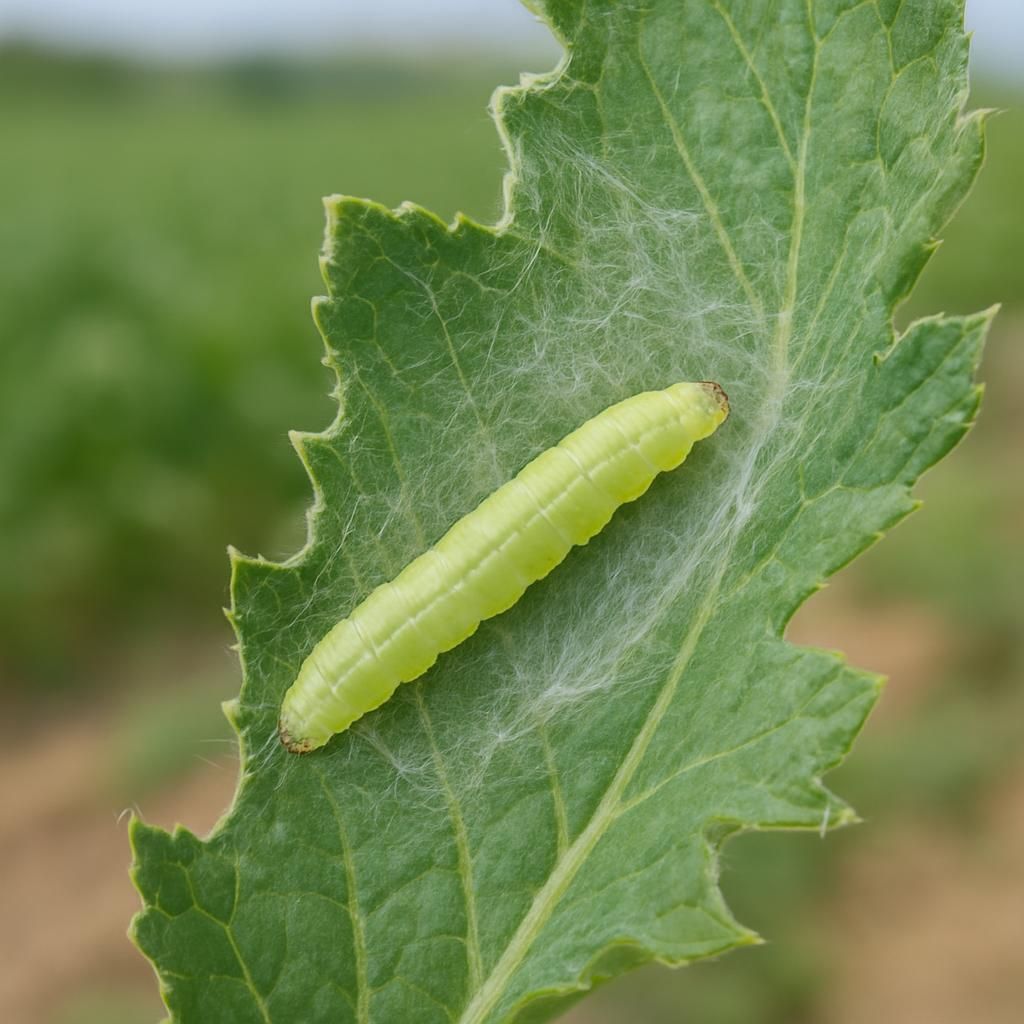
Introduction to Parsnip webworm
The parsnip webworm (Depressaria pastinacella) is a moth whose larvae specialize on plants in the Apiaceae family, particularly parsnip (Pastinaca sativa). Adult moths are small, grayish-brown with a wingspan of 18–22 mm. Larvae are pale green to yellowish caterpillars that create distinctive silk webs on foliage and flower heads. While primarily a problem in commercial and home parsnip production, the pest occasionally affects related crops such as carrot and celery when populations are high.
Damage begins in early spring when overwintered adults lay eggs on young foliage. The resulting larvae feed gregariously inside protective silk tents, consuming leaves, petioles, and developing umbels. Severe infestations can defoliate plants and destroy seed crops, making accurate identification and timely management critical for growers.
Identifying Symptoms & Damage
Early symptoms appear as small, irregular silk webs on the undersides of leaves or within the developing flower umbels. As larvae mature, webs enlarge into dense tents that shelter dozens of caterpillars. Within these tents, leaves become skeletonized, turning brown and translucent while frass accumulates in clumps.
On flower stalks, larvae bore into peduncles and florets, causing umbels to wilt, brown, and fail to set seed. In severe cases entire plants collapse. Distinguishing features include the presence of silk, the characteristic pale green larva with a dark head capsule, and the absence of chewing damage typical of larger caterpillars such as caterpillars.
Lifecycle and Progression of Parsnip webworm (MUST INCLUDE A MARKDOWN TABLE OF LIFECYCLE STAGES)
The parsnip webworm completes one generation per year in temperate climates. Adults emerge in spring from pupae that overwinter in soil or plant debris. Females lay 50–150 eggs singly or in small clusters on the undersides of young leaves. Eggs hatch in 5–10 days depending on temperature.
Larvae progress through five instars inside protective silk webs, feeding for 3–5 weeks before descending to the soil to pupate. Pupation lasts 10–14 days. The cycle repeats the following spring when new adults emerge.
| Stage | Duration | Key Characteristics | Location |\n|-------------|-------------------|----------------------------------------------|---------------------------| | Egg | 5–10 days | Small, oval, pale yellow | Underside of leaves | | Larva | 3–5 weeks | Pale green-yellow, dark head, silk web | Within silk tents | | Pupa | 10–14 days | Brown, cylindrical, in soil or debris | Soil near host plants | | Adult | 1–2 weeks | Gray-brown moth, 18–22 mm wingspan | Active at dusk |
Environmental Triggers & Risk Factors
Warm, dry springs accelerate egg hatch and larval development while stressing host plants, increasing susceptibility. Dense plantings with poor airflow promote web formation and reduce natural enemy access. Overwintering survival rises when crop residues and weeds are left in place, providing shelter for pupae.
Fields bordered by wild parsnip or Queen Anne’s lace serve as reservoirs. Soil temperatures above 10 °C in early spring trigger adult emergence. High nitrogen fertility that produces lush foliage also favors rapid larval growth.
Organic Control & Treatment Plans (MUST INCLUDE A MARKDOWN TABLE OF TREATMENT OPTIONS AND FREQUENCIES)
Effective organic management integrates cultural sanitation, mechanical removal, and targeted biological agents. Begin scouting at the first sign of silk webs in spring. Hand removal of infested umbels combined with destruction of crop residue after harvest reduces overwintering pupae.
Biological insecticides containing Bacillus thuringiensis var. kurstaki (Btk) provide excellent control when applied to young larvae before webs become dense. Spinosad offers a secondary option for heavy pressure. Release of the parasitoid Apanteles depressariae has shown promise in research settings.
| Treatment Option | Active Ingredient / Method | Application Frequency | Notes |
|---|---|---|---|
| Sanitation & residue removal | Manual cleanup of debris | Post-harvest and pre-planting | Destroys overwintering pupae |
| Hand removal of webs | Physical removal of infested tissue | Weekly during egg hatch | Effective on small plantings |
| Btk spray | Bacillus thuringiensis var. kurstaki | Every 7–10 days while larvae are small | Apply to leaf undersides; reapply after rain |
| Spinosad | Spinosad | Every 7–14 days as needed | Target early instars; avoid during bloom |
| Parasitoid release | Apanteles depressariae | One release at first egg hatch | Best in greenhouse or high-value seed crops |
Preventing Parsnip webworm in the Future
Crop rotation away from Apiaceae for at least two seasons disrupts the pest’s host continuity. Select early-maturing parsnip cultivars that complete flowering before peak moth activity. Maintain 30–45 cm spacing between plants and orient rows parallel to prevailing winds to improve airflow and reduce humidity within the canopy.
Remove or mow wild parsnip and related weeds within 100 m of production areas. Incorporate a fall cover crop such as rye followed by spring tillage to expose pupae. Encourage beneficial insects by planting insectary strips of dill and fennel nearby.
Crops Most Affected by Parsnip webworm
Primary host: parsnip. Secondary hosts include carrot, celery, parsley, and occasionally dill. Wild Apiaceae species serve as alternate hosts and reservoirs. No significant damage has been recorded on non-Apiaceae crops such as tomato or lettuce.