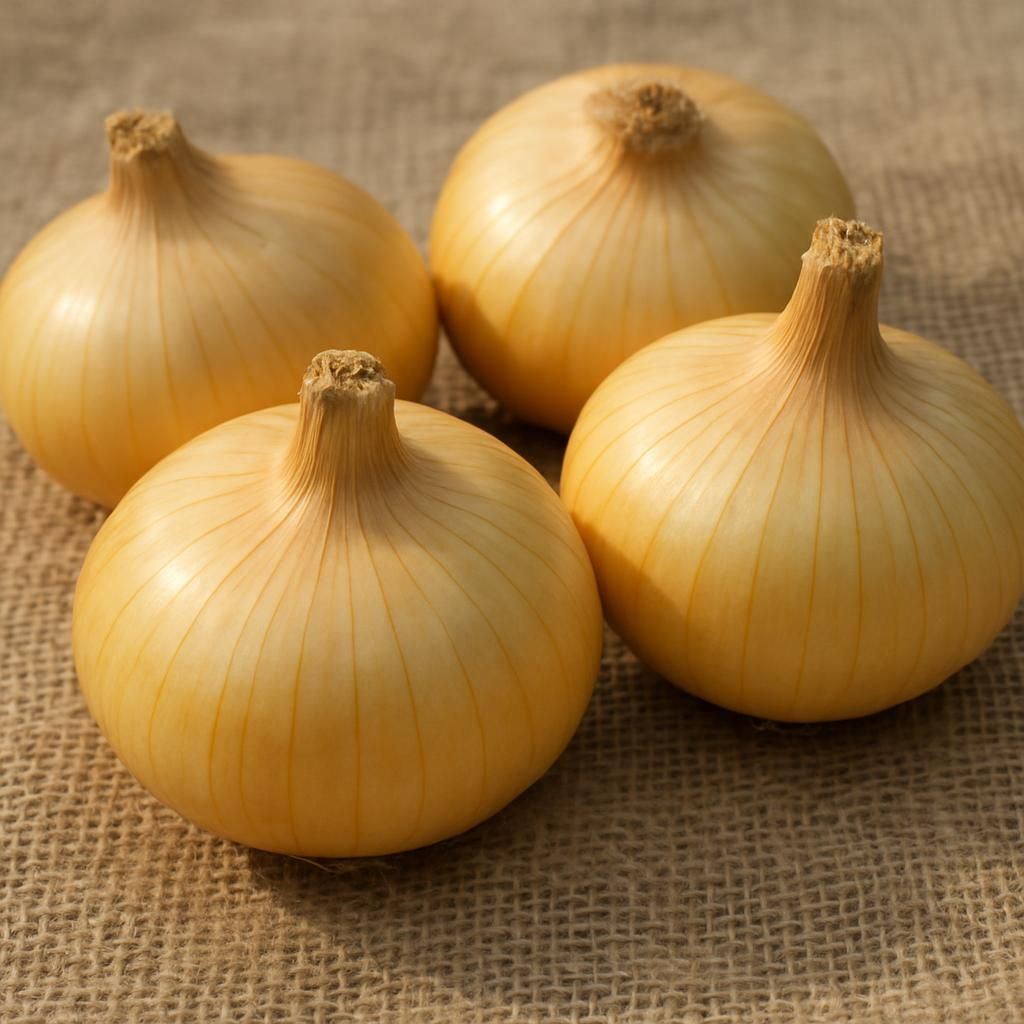
Introduction to Onion (Vidalia - Yellow Granex)
The Vidalia Yellow Granex onion is a short-day variety celebrated worldwide for its exceptionally sweet, mild flavor and crisp texture. Grown primarily in the southeastern United States under strict geographical and soil-sulfur restrictions, these onions develop low pyruvic acid levels that produce minimal tear-inducing compounds. Professional growers and home gardeners alike prize the variety for fresh eating, grilling, and raw applications where a gentle onion taste is desired.
Successful cultivation hinges on precise timing, soil fertility management, and careful irrigation. Because Vidalia onions are short-day types, they require 10–12 hours of daylight to initiate bulb formation. Regions outside the approved Vidalia production zone can still grow the Yellow Granex cultivar but must accept that the trademark sweetness depends on low soil sulfur.
This guide delivers professional-grade, actionable advice for achieving consistent, high-quality harvests while maintaining soil health and minimizing chemical inputs.
Botanical Profile of Onion (Vidalia - Yellow Granex)
Yellow Granex belongs to the Amaryllidaceae family and is botanically classified as Allium cepa. Plants produce hollow, bluish-green leaves that emerge from a compressed stem called a basal plate. As the plant matures, food reserves are redirected from foliage into swelling leaf bases that form the bulb.
The Yellow Granex cultivar is a hybrid short-day onion characterized by a flattened-globe shape, thin golden-yellow skin, and high sugar content. Unlike long-day varieties suited to northern latitudes, short-day types such as Onion mature rapidly in southern climates with mild winters. The bulbs typically reach 3–4 inches in diameter under optimal fertility and spacing.
Flowering occurs only if plants experience prolonged cold followed by lengthening days; however, most commercial Vidalia production avoids bolting through careful variety selection and planting dates.
Soil, pH, and Climate Requirements for Onion (Vidalia - Yellow Granex)
Vidalia Yellow Granex onions demand well-drained sandy loam soils with high organic matter and very low sulfur content. Excessive sulfur produces pungent, sharp-flavored bulbs that fail to meet the mildness standard. Soil pH should be maintained between 6.0 and 6.5 for optimal nutrient uptake.
| Parameter | Ideal Range/Value | Notes |
|---|---|---|
| Soil Type | Sandy loam to loamy sand | Excellent drainage prevents rot |
| Soil pH | 6.0–6.5 | Adjust with lime if below 5.8 |
| Organic Matter | 2–4 % | Incorporate compost or aged manure |
| Soil Sulfur | < 0.5 % | Critical for mild flavor |
| Day Length Requirement | 10–12 hours | Short-day variety; plant in fall/winter |
| Temperature Range | 55–75 °F (13–24 °C) | Cool season crop; avoid prolonged >85 °F |
| Frost Tolerance | Hardy to 20 °F (-6 °C) | Protect seedlings from hard freezes |
Consistent moisture is essential during bulb enlargement, while drier conditions near harvest improve skin quality and storage life.
Step-by-Step Planting & Propagation
- Site Selection: Choose a location with full sun and previous crop history free of Allium diseases. Conduct soil tests for sulfur and pH.
- Soil Preparation: Till to 8–10 inches, incorporate 2–3 inches of well-rotted compost, and apply lime if needed to reach target pH.
- Seed or Sets: Use certified disease-free transplants or pelleted seed for uniform stands. Sets are rarely used for Vidalia types.
- Timing: Sow seed indoors 8–10 weeks before field transplanting or direct-seed in fall in zones 8–9. Target transplanting when seedlings reach pencil thickness.
- Spacing: Transplant seedlings 4–6 inches apart in rows 12–18 inches apart. Shallower planting encourages larger bulbs.
- Irrigation: Provide 1 inch of water per week from transplant through bulbing; reduce slightly as necks begin to soften.
Care & Maintenance regimes for Onion (Vidalia - Yellow Granex)
Consistent fertility and weed control are the cornerstones of high-quality Vidalia onion production. Nitrogen is applied in split doses, while phosphorus and potassium are adjusted according to soil tests. Mulching with straw or pine needles conserves moisture and suppresses weeds.
| Growth Stage | Water Schedule | Fertilizer Application | Pruning / Other Tasks |
|---|---|---|---|
| Transplant to 4 weeks | 1" per week, keep soil moist | 30 lb N/acre at transplant | Weed control, sidedress if needed |
| Bulb Initiation | 1–1.25" per week | 40 lb N/acre at 4–5 leaf stage | Remove flower stalks immediately |
| Bulb Swelling | 0.75–1" per week | 20–30 lb N/acre if tissue tests low | Maintain mulch, monitor for pests |
| Neck Fall / Maturity | Reduce to 0.5" per week | None; allow natural ripening | Cease irrigation 2–3 weeks before harvest |
Regular scouting for nutrient deficiencies and pests allows timely organic interventions.
Pests, Diseases & Organic Management
Common threats include Thrips, Onion maggot (not in list—new), Botrytis, and Fusarium basal rot. Implement integrated pest management beginning with cultural practices.
- Crop rotation with non-Allium crops for at least three years reduces soil-borne pathogens.
- Floating row covers exclude onion maggot flies during early growth.
- Beneficial insects such as minute pirate bugs and lacewings suppress thrips populations.
- Copper-based fungicides and biological agents containing Bacillus subtilis manage Botrytis and downy mildew.
- Remove and destroy infected plant debris at season end to lower overwintering inoculum.
Harvesting, Curing & Optimal Storage
Vidalia onions are ready when 50–80 % of tops have fallen naturally. Pull bulbs carefully to avoid bruising and lay them in windrows for field curing 3–7 days under dry conditions.
Cure further indoors at 75–80 °F with 70–80 % humidity and good airflow for 7–14 days. Trim roots and necks to 1 inch once outer skins are dry and papery.
Store cured onions at 32–40 °F and 65–70 % relative humidity. Avoid temperatures near freezing that cause internal freezing injury. Properly cured Vidalia Yellow Granex onions maintain quality for 2–4 months.
Companion Planting for Onion (Vidalia - Yellow Granex)
Onions form beneficial partnerships with many vegetables. Carrot and Lettuce benefit from the pest-repellent sulfur compounds exuded by onion roots. Interplanting with Cabbage and Broccoli helps deter cabbage loopers and aphids.
Avoid planting near Peas and Beans because onions can inhibit nitrogen-fixing bacteria. Aromatic herbs such as Thyme and Rosemary (new) further mask onion scent from pests.
Summer Companion Planting: 10 Organic Pairings to Boost Small Farm Resilience offers additional strategies for mixed vegetable systems.