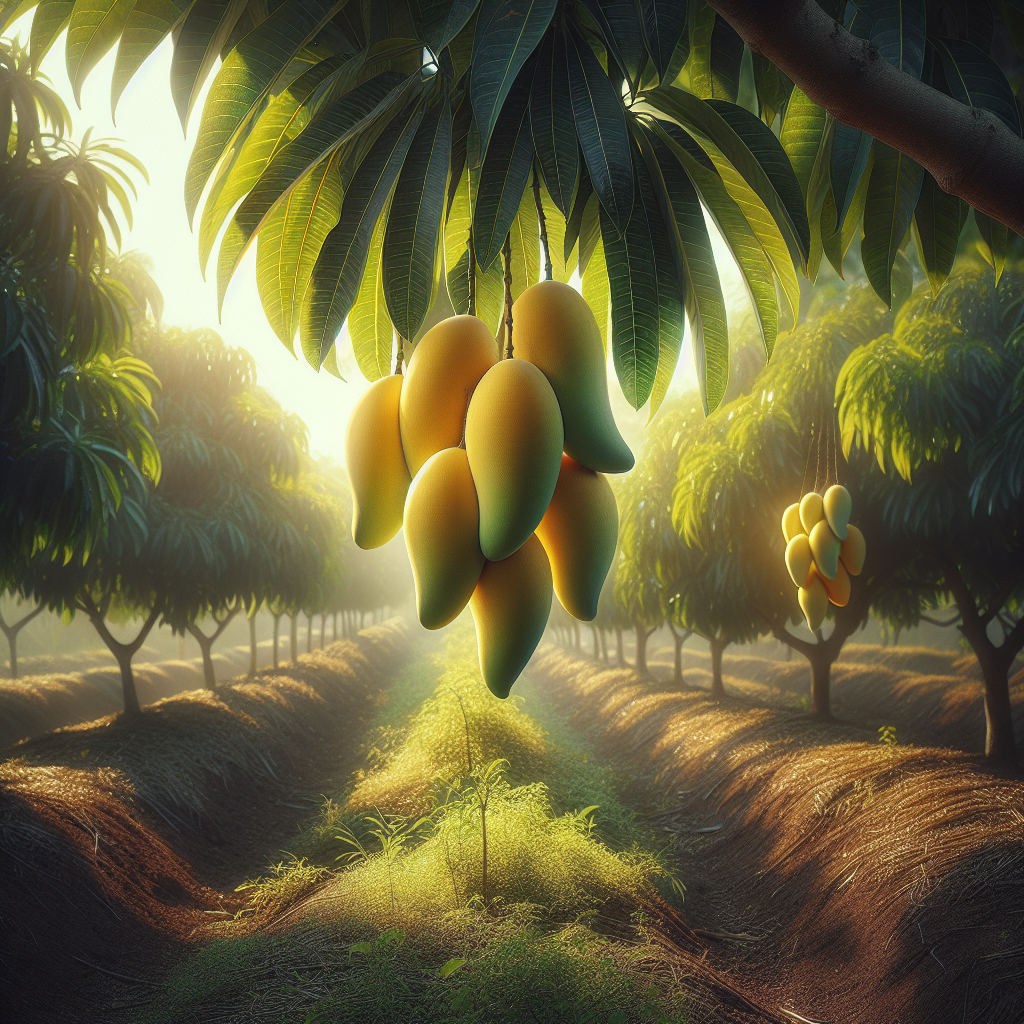
Introduction to Nam Dok Mai Mango
Originating in Thailand, this cultivar is widely regarded as one of the finest eating mangoes in Southeast Asia and export markets. The name is often translated as “nectar of flowers,” a reference to the fruit’s perfumed sweetness and delicate floral notes. Compared with many commercial mangoes selected mainly for shipping durability, this variety is grown primarily for superior eating quality: smooth, nearly fiberless flesh, a thin seed, high soluble solids, and a graceful elongated shape that often develops a golden-yellow skin at maturity.
It is especially valued in home orchards, boutique orchards, and specialty fruit operations where flavor commands a premium. In well-managed plantings, trees can be productive and regular bearers, but fruit quality is highly influenced by irrigation timing, pruning discipline, crop load, and disease pressure during bloom. In wetter climates, careful site selection matters as much as fertilization. For growers comparing flavor profiles across cultivars, see this broader Mango guide.
A key characteristic of this cultivar is its responsiveness to seasonal cues. It tends to flower best after a period of reduced rainfall or mild water stress, then benefit from consistent moisture once fruit has set. That means the grower must think in phases rather than simply “watering regularly” year-round. Overly lush vegetative growth at the wrong time can suppress bloom, while prolonged drought during fruit fill can reduce size and increase internal disorders.
Botanical Profile of Nam Dok Mai Mango
This cultivar belongs to the species Mangifera indica, an evergreen fruit tree in the family Anacardiaceae. Like other mangoes, it produces a dense canopy of leathery, lanceolate leaves and terminal panicles carrying hundreds to thousands of small flowers. Individual flowers are mostly male, with a minority of perfect flowers capable of setting fruit. Pollination is typically assisted by flies, bees, and other small insects.
Nam Dok Mai is generally medium to vigorous in growth, though vigor varies by rootstock, soil depth, and irrigation regime. Young flushes often emerge reddish-bronze before maturing to glossy green. Internode length can become excessive under high nitrogen, low light, or overly wet conditions, producing tall, unbalanced trees that are harder to manage and slower to develop productive lateral branching.
The fruit is usually elongated, gently curved, and more slender than rounder Indian or Florida types. Average fruit size commonly ranges from about 250 to 450 grams, though larger fruit are possible under light crop loads. The skin remains relatively smooth and thin; depending on climate and harvest stage it may stay greenish-yellow or color fully to warm yellow. Flesh is deep yellow, soft when ripe, nearly free of fiber, and rich in sugars. Brix can be very high when fruits mature under sunny, relatively dry finishing conditions.
This cultivar is often polyembryonic or treated in production systems with attention to clonal seedling behavior, but commercial propagation still relies overwhelmingly on grafting to ensure true-to-type performance. Trees may begin bearing in 2 to 4 years after planting if grafted, with meaningful commercial yields developing as canopy volume increases. As with many high-quality dessert mangoes, fruit bruises more easily than tough-skinned shipping cultivars, so postharvest handling should be gentler and harvest timing more precise.
Soil, pH, and Climate Requirements for Nam Dok Mai Mango
The ideal site is a frost-free tropical or warm subtropical location with full sun, excellent air movement, and no standing water after rain. Best performance occurs where annual temperatures are warm, with active growth strongest from about 24 to 32°C. Flowering can be induced by a cooler dry season in subtropics or a pronounced dry period in the tropics. Mature trees can tolerate brief drops near 2 to 4°C with damage risk, but young trees are far more vulnerable; even light frost can kill terminals or entire young plants.
Rainfall pattern matters more than total rainfall. A wet, humid flowering season strongly increases Anthracnose and blossom blight risk, reducing fruit set. The best districts for this cultivar usually have a dry spell before and during flowering, followed by moderate moisture during fruit expansion. Relative humidity that remains very high at bloom, especially combined with poor airflow, often leads to blackened panicles, flower drop, and poor fruit retention.
Deep, well-drained sandy loams to loams are ideal, but trees can also perform well in decomposed granite or lighter alluvial soils if irrigation and nutrition are carefully managed. Heavy clay is risky unless planted on broad mounds or raised berms at least 30 to 60 cm high, because oxygen-starved roots decline quickly in saturated conditions. Root rot pressure rises dramatically when soil remains waterlogged for more than 48 hours.
A target soil pH of 5.5 to 7.0 is preferred. Trees can survive slightly outside this range, but nutrient availability becomes less balanced. Above pH 7.5, iron, manganese, and zinc deficiencies are more common, often showing as interveinal chlorosis on new leaves, small pale flushes, and reduced vigor. Below pH 5.0, aluminum and manganese can become excessive while calcium and magnesium may be limiting.
For practical orchard management, aim for soil moisture that is evenly moist but never swampy in the active root zone, especially the upper 20 to 40 cm where feeder roots are concentrated. After irrigation, the soil should drain sufficiently that a squeezed handful from root depth feels cool and cohesive but does not ooze water. If the soil smells sour, leaves become dull, and new flush wilts despite wet ground, suspect root stress from poor drainage rather than drought.
Wind protection is beneficial, but dense windbreaks placed too close can trap humidity and suppress pollinator movement. Maintain some shelter from severe desiccating winds while preserving open airflow through the orchard.
Step-by-Step Planting & Propagation
Use grafted nursery trees from reputable sources. Seed-grown plants are unsuitable for dependable production because fruit quality, tree shape, and bearing age become variable. Select a healthy graft with a straight stem, well-healed union, no bark cracking, and several mature leaves. Avoid rootbound trees with circling roots or swollen, sour-smelling media.
- Choose a site in full sun with at least 8 hours of direct light daily. In home plantings, allow roughly 6 to 8 meters between trees if you plan annual pruning; for less intensive systems, 8 to 10 meters is safer.
- Prepare the planting area by removing perennial weeds in at least a 1-meter circle. If soil is heavy, build a mound or berm before planting rather than simply digging a deeper hole.
- Dig a hole only as deep as the root ball and about 2 times as wide. Planting too deep is a common cause of failure. The top of the root ball should sit level with or slightly above surrounding soil.
- Tease out any circling roots gently. Set the tree so the graft union remains well above the soil line.
- Backfill with native soil unless the site is extremely poor. Over-amending only the hole can create a “pot effect” that restricts outward rooting.
- Water immediately to settle the soil and remove air pockets. Apply enough water to thoroughly wet the root ball and adjacent soil.
- Mulch 5 to 10 cm deep over the root zone, keeping mulch 15 to 20 cm away from the trunk to prevent collar rot and rodent damage.
- Stake only if the site is windy or the trunk is weak. Remove or loosen ties before they constrict growth.
Best planting time is early in the warm season when soil temperatures are rising and severe heat or waterlogging is not imminent. In monsoonal climates, plant at the beginning or just after the heaviest rains, not in the middle of a saturated period. In Mediterranean subtropics, late spring after frost danger is ideal.
Propagation is normally done by veneer grafting, cleft grafting, or side grafting onto vigorous rootstocks. Skilled grafters select scion wood from mature, disease-free, non-flushing shoots with swollen buds. High humidity and warm temperatures improve callusing, but excessive wetness increases rot. Air layering is not standard for commercial mango production because grafted trees offer better consistency and rootstock advantages.
After planting, tip-prune lightly once the tree establishes and pushes strong growth. Early shaping is critical. Encourage 3 to 4 scaffold branches beginning 60 to 100 cm above ground. This improves future light penetration, spray coverage, and harvest access.
Care & Maintenance regimes for Nam Dok Mai Mango
Water management should change with tree age and phenological stage. Newly planted trees need frequent but not excessive irrigation: usually 2 to 3 times weekly in light soil during the first month, or less often in heavier soils. Each irrigation should moisten the full root ball and some surrounding soil, not just the trunk area. Let the top few centimeters dry slightly before watering again. Constantly wet media invites root disease.
For established trees, irrigate deeply and infrequently enough to encourage deeper rooting. During vegetative growth, many orchards aim to wet soil to 30 to 60 cm depth, then allow partial drying before the next irrigation. In sandy soils this may mean every 4 to 7 days in hot weather; in loams, every 7 to 14 days. Before anticipated flowering, irrigation is often reduced for several weeks if the tree is healthy and conditions permit. This mild stress can help suppress vegetative flush and promote bloom. Once fruit set occurs, resume consistent moisture. Water deficits during fruit fill can lead to small fruit, sap burn susceptibility, premature drop, and uneven ripening.
Overwatering symptoms include yellowing lower leaves, soft weak flushes, leaf drop without crisp dryness, algae or moss growth near the trunk, and reduced response to fertilizer. Underwatering appears as curled or folded leaves in the heat of day that fail to recover by evening, crisp margins on young trees, fruit drop, and hard soil pulling away from the root zone.
Fertilization should be based on leaf analysis and soil testing, but general principles are clear. Young trees need modest, frequent nutrition to build canopy without forcing rank growth. A balanced fertilizer with nitrogen, phosphorus, potassium, magnesium, and trace elements can be applied in split doses 3 to 5 times during the warm season. Mature bearing trees often benefit from reduced nitrogen before flowering and increased potassium during fruit development. Excess nitrogen near bloom causes vigorous vegetative flush at the expense of panicle formation and can worsen disease pressure by creating dense, humid canopies.
Micronutrients are especially important in calcareous or high-pH soils. Foliar zinc, boron, and manganese are often used before flowering where deficiencies are confirmed. Boron is needed only in tiny amounts; too much can be toxic, so apply carefully. Calcium supports cell wall strength but is less mobile in plants, so consistent root uptake matters more than late corrective spraying.
Pruning should be deliberate and regular rather than severe and sporadic. After harvest, reduce tree height, remove crossing limbs, and thin congested centers to maintain a manageable, sunlit canopy. The goal is not an open vase exactly, but a compact dome with light entering the outer and mid canopy. Terminal-bearing species like mango need enough mature shoot tips to flower well, so avoid hard pruning immediately before bloom. Remove diseased twigs and water sprouts promptly. If trees are left unpruned for years, production shifts upward and inward shade worsens fruit quality.
Fruit thinning is not always practiced, but where trees set excessively, selective thinning can improve size, reduce limb breakage, and increase uniformity. Support heavily laden branches if needed.
Weed control is essential within the drip line, especially for young trees. Avoid deep cultivation that damages feeder roots. Organic mulches, living groundcovers in row middles, and hand or shallow mechanical control are preferable. For broader orchard floor strategies, this article on soil health is useful background.
Pests, Diseases & Organic Management
The major disease issue for this cultivar in humid regions is Anthracnose, caused by Colletotrichum species. It attacks flowers, young fruit, leaves, and ripening fruit, often remaining latent until postharvest. Symptoms include black spotting on panicles, blossom blight, fruit lesions, and rot during ripening. Powdery Mildew can also damage panicles and young fruit in some climates, especially where nights are cool and humidity fluctuates.
Organic management starts with dry, airy canopies and sanitation. Prune to improve airflow, remove dead panicles and mummified fruit, avoid overhead irrigation during bloom, and prevent excessive nitrogen. Copper-based sprays and biologicals such as Bacillus-based products are commonly used in organic systems at critical bloom stages, but timing is essential: protect panicles before disease becomes established.
Common insect pests include Mango Hoppers, Scale Insects, Mealybugs, Fruit Flies, Thrips, and occasionally Seed Weevils depending on region. Hoppers and Thrips feed on flowers and tender flush, reducing fruit set. Scales and Mealybugs excrete honeydew, encouraging Sooty Mold and reducing photosynthesis. Fruit Flies are particularly serious near ripening, laying eggs in softening fruit.
Integrated organic control includes monitoring, sticky traps in some systems, orchard hygiene, baiting and trapping for Fruit Flies, conservation of beneficial insects, and targeted use of horticultural oils or insecticidal soaps against scale and mealybug crawlers. Oils should not be sprayed during extreme heat or on water-stressed trees. Ant control is often overlooked but crucial because ants protect Mealybugs and scales from natural enemies.
Birds, bats, and squirrels may damage mature fruit. Bagging selected fruit clusters, harvest timing, and netting can reduce losses in small orchards. Sunburn can also affect exposed fruit after heavy pruning; maintain enough leaf cover to shade fruit while still allowing airflow.
Harvesting, Curing & Optimal Storage
Harvest timing is one of the most important quality decisions with this cultivar. Fruit picked too early may soften without developing full aroma and sugar complexity. Fruit picked too late can bruise easily, develop internal breakdown, or attract fruit fly and disease pressure. Mature fruit usually show fuller shoulders near the stem end, a more rounded cross-section, slight yellowing of the skin depending on exposure, and a reduction in latex pressure compared with immature fruit.
Use clean clippers rather than pulling fruit off. Leave a short stem, then de-sap fruit upside down on racks or in padded bins so latex drains away from the peel. Mango sap can burn the skin, causing black streaks and lowering market value. Once sap flow slows, trim stems shorter. Handle fruit gently at every stage; Nam Dok Mai bruises more easily than tougher commercial cultivars.
A short curing or conditioning period at warm room temperature helps fruit finish ripening evenly. Ideally ripen at about 20 to 24°C with good ventilation. Avoid stacking fruit deeply. If storing before full ripening, keep mature-green fruit at around 12 to 13°C; temperatures much below 10 to 12°C can induce chilling injury, causing gray flesh, poor aroma, uneven softening, and skin pitting. Fully ripe fruit store only briefly and are best consumed within a few days.
Relative humidity around 85 to 90% reduces shrivel, but free moisture on fruit should be avoided. For local markets, harvest at mature-green to breaker stage. For immediate fresh consumption, tree-mature fruit can be picked closer to full color and softness, but shelf life drops sharply.
Companion Planting for Nam Dok Mai Mango
Companion planting around mango should serve orchard function rather than compete aggressively with the tree. The best companions are shallow-rooted, manageable species that improve pollinator activity, suppress weeds, reduce soil erosion, or contribute nitrogen without climbing into the canopy.
Thai Basil works well near young trees and along orchard borders because its flowers attract pollinators and beneficial insects while its root system is relatively modest. Keep it outside the immediate trunk zone so irrigation and mulching remain easy.
Clover is one of the best living groundcovers for orchard alleys and outer root zones. It helps protect soil, contributes biologically fixed nitrogen, and supports predatory insects and pollinators. Mow or slash it before it becomes too competitive in dry periods.
Peanuts can function as a low-growing cover in warm climates, reducing weed pressure and protecting soil from crusting and erosion. They are especially useful in young orchards where sunlight still reaches the ground.
Garlic is useful in small plantings as a border or patch companion where growers want a compact crop with minimal shading. It will not control pests magically, but it can diversify the orchard floor and fit into hand-managed systems.
Avoid highly competitive grasses right up to the trunk, tall companion crops that shade the lower canopy, and thirsty species planted inside the main feeder root zone. Maintain a vegetation-free or heavily mulched circle closest to the trunk, especially for trees under 3 years old. In mature orchards, companion plants should be managed as part of the irrigation and nutrient budget, not treated as an afterthought.