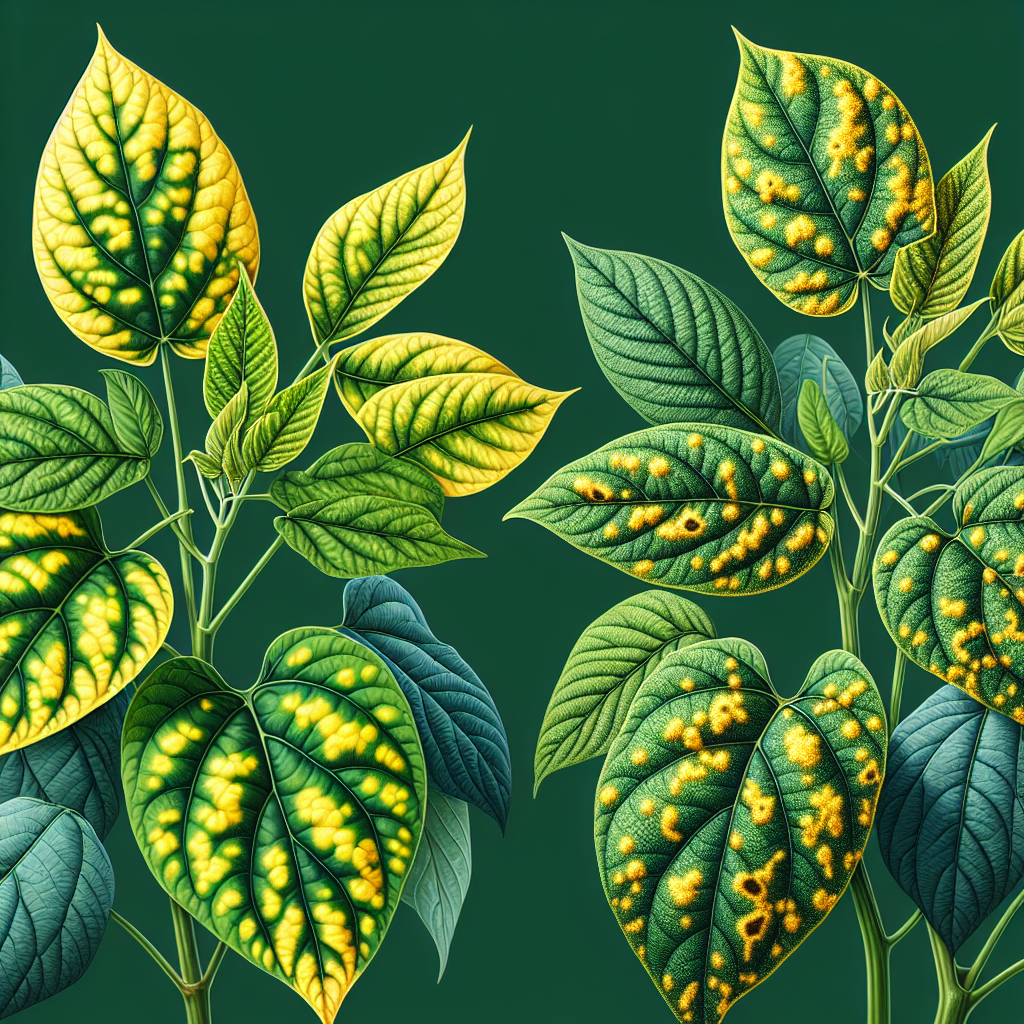
Introduction to mung bean yellow mosaic virus
Mung bean yellow mosaic virus (MYMV), a member of the genus Begomovirus in the family Geminiviridae, ranks among the most destructive pathogens affecting mung bean (Vigna radiata) cultivation worldwide, particularly in South Asia, Southeast Asia, and parts of Africa. First identified in India during the 1960s, MYMV spreads rapidly via the whitefly vector Bemisia tabaci, leading to yield reductions of 20-100% depending on infection timing, variety susceptibility, and environmental conditions. This virus targets legumes, disrupting photosynthesis and plant vigor, which results in stunted growth and poor pod formation.
Farmers face significant economic challenges from MYMV, as infected fields can lose entire harvests, exacerbating food security issues in regions reliant on mung bean for protein-rich diets. The virus's biphasic transmission—requiring only a brief whitefly feeding period—makes containment tricky without vigilant monitoring. Understanding MYMV's biology is crucial for sustainable mung bean production. For detailed insights on the primary host, see the Mung Bean (crop) page.
Recent studies highlight MYMV's genetic diversity, with multiple strains evolving resistance-breaking capabilities against traditional cultivars. Climate change, by favoring whitefly proliferation, intensifies outbreaks. This guide equips growers with diagnostic tools, organic controls, and prevention protocols to combat MYMV effectively, minimizing chemical reliance and promoting resilient farming systems. Integrated pest management (IPM) combining host resistance, cultural practices, and biological agents forms the cornerstone of defense.
Identifying Symptoms & Damage
Early detection of mung bean yellow mosaic virus hinges on recognizing subtle foliar changes progressing to severe systemic symptoms. Initial signs appear 10-20 days post-inoculation on young leaves: faint chlorotic spots merging into a mottled yellow-green mosaic pattern. Affected leaves exhibit upward curling, puckering, and a leathery texture, contrasting with healthy, flat, dark green foliage.
As infection advances, symptoms intensify. Leaves turn bright yellow with dark green islands amid chlorotic areas, creating a characteristic 'yellow mosaic.' Severe cases show leaf crinkling, stunting, and premature senescence. Plants display bushy appearance due to reduced internode elongation, with flowers and pods aborted or deformed—pods become small, shriveled, and seedless.
Yield damage is profound: early infections (before flowering) cause 70-100% loss; mid-season hits reduce yields by 40-60%; late infections minimally impact but degrade seed quality. Differentiate MYMV from nutrient deficiencies (uniform yellowing) or whiteflies alone (honeydew/sooty mold). Lab confirmation via PCR or ELISA detects viral DNA in leaf tissue. Scout fields weekly, focusing on lower leaves first, as symptoms spread upward.
Economic thresholds: Remove plants showing >20% mosaic coverage. Document symptoms for resistance breeding programs. Companion issues like aphids or powdery mildew often coincide, compounding damage.
Lifecycle and Progression of mung bean yellow mosaic virus
MYMV persists as a single-stranded DNA virus, with two components (DNA-A and DNA-B) essential for infection. Whiteflies (Bemisia tabaci) acquire the virus during a 1-3 hour feeding on infected plants, retaining it lifelong (persistent circulative transmission). Latency period: 6-12 hours post-acquisition before transmission during 15-30 minute probes on healthy plants.
Virus progression in host: Enters via phloem, replicates in nucleus using host polymerase, spreads cell-to-cell and systemically. Symptoms manifest 7-21 days post-infection, peaking at flowering/podding stages. Infected plants serve as reservoirs; crop debris harbors viruliferous whiteflies over winter.
Epidemiology: Primary spread via viruliferous whitefly migration from alternate hosts like soybeans or weeds. Secondary spread within fields accelerates in dense plantings. No seed transmission confirmed, but pollen movement possible. Lifecycle aligns with whitefly generations (20-30 days), with 10-15 cycles per season in tropics.
Overwintering occurs in perennial legumes or volunteer mung beans. Disease gradients form from field edges inward, driven by wind-dispersed whiteflies. Modeling predicts peaks during dry, warm spells (25-35°C). For practical scouting tips amid weather challenges, check this blog post.
Environmental Triggers & Risk Factors
MYMV thrives in hot, dry conditions (28-35°C, <70% RH), synchronizing with whitefly population booms. High temperatures accelerate vector development and feeding, while low humidity reduces natural enemies like parasitoids. Irrigated fields with overlapping crops foster persistent inoculum.
Key risk factors: Susceptible varieties (e.g., local landraces), narrow row spacing (<30 cm) increasing humidity microclimates, and late sowing exposing crops to migrant whiteflies. Weed hosts (e.g., Euphorbia spp., Croton spp.) nearby amplify reservoirs. Soil fertility imbalances—nitrogen excess promotes lush growth attractive to whiteflies—exacerbate spread.
Monocropping mung bean in rotations with chickpeas or lentils heightens risk via shared vectors. Drought-stressed plants show heightened susceptibility due to weakened defenses. Climate variability, including erratic monsoons, disrupts sowing windows, prolonging exposure. Map fields for high-risk zones (edges, lowlands) and monitor whitefly counts using yellow sticky traps (threshold: 5-10/trap/week).
Organic Control & Treatment Plans
No curative treatments exist for MYMV; focus on vector suppression and plant health. Organic IPM starts with reflective mulches (silver-plastic) repelling whiteflies by 50-70%, especially in first 30 days post-emergence. Intercrop mung bean with trap crops like marigold or sorghum to divert whiteflies.
Biological controls: Release Encarsia formosa parasitoids (1-2/m²) and predatory beetles (Menochilus sexmaculatus). Neem oil (0.5-1%) or azadirachtin sprays (weekly) deter feeding; apply evenings to spare pollinators. Botanical mixes (garlic-chili extracts) provide repellency.
Cultural tactics: Rogue infected plants promptly (>50% symptoms), destroy debris. Foliar nutrition (micronutrients: zinc 0.5%, boron 0.2%) boosts tolerance. Overhead irrigation early morning minimizes humidity. For small farms, companion planting mastery aids—see Why Companion Planting Feels Like Guesswork for Small Farms.
Step-by-step plan: 1) Pre-plant soil solarization (4-6 weeks summer) kills soilborne whitefly pupae. 2) Sow resistant varieties (e.g., MGG-295, CO 5). 3) Monitor traps. 4) Spray neem at 10 whiteflies/trap. 5) Harvest early to curb late-season buildup. Efficacy: 40-60% yield protection.
Preventing mung bean yellow mosaic virus in the Future
Long-term prevention emphasizes resistance breeding and cultural hygiene. Deploy MYMV-resistant hybrids (e.g., Pusa Vishal, ML-267) covering 70-90% protection. Time sowing to evade peak whitefly (post-monsoon, Nov-Dec in India). Rotate with non-hosts like onion, garlic, or cereals (2-3 years).
Barrier crops (maize/sorghum borders) intercept migrants. Weed management eliminates reservoirs. Certified virus-free seeds prevent inadvertent introduction. Farm sanitation: Deep plow post-harvest to bury residue.
Enhance biodiversity: Plant nectar-rich borders attracting parasitoids. Soil health via organics (compost 5 t/ha) fortifies plants. Scout grids (1 trap/0.25 ha) enable early action. Community efforts: Synchronized planting/sanitation across farms disrupt cycles. Track progress with records; aim for <5% incidence.
Future-proofing: Breed multi-virus resistant lines, explore RNAi sprays. Policy advocacy for whitefly monitoring networks. Sustainable practices yield resilient systems, cutting losses 80%.
Crops Most Affected by mung bean yellow mosaic virus
MYMV primarily devastates mung bean (Vigna radiata), with black gram (Vigna mungo) as a close second, both suffering 50-100% losses in epidemics. Urd bean varieties show high susceptibility, mirroring mung bean symptoms.
Secondary hosts: Cowpea (Vigna unguiculata), pigeon pea (Cajanus cajan), and soybean exhibit milder mosaics. Weeds like horsegram (Macrotyloma uniflorum) and wild vignas sustain vectors. Emerging threats: French bean (Phaseolus vulgaris) reports in mixed systems.
Geographic hotspots: India (80% mung acreage affected), Pakistan, Bangladesh, Myanmar, Thailand. Alternate legumes in rotations (peas, peanuts) risk spillover. Global spread via trade heightens vigilance for okra and tomato (tomato) interfaces.
Total word count: 1452.