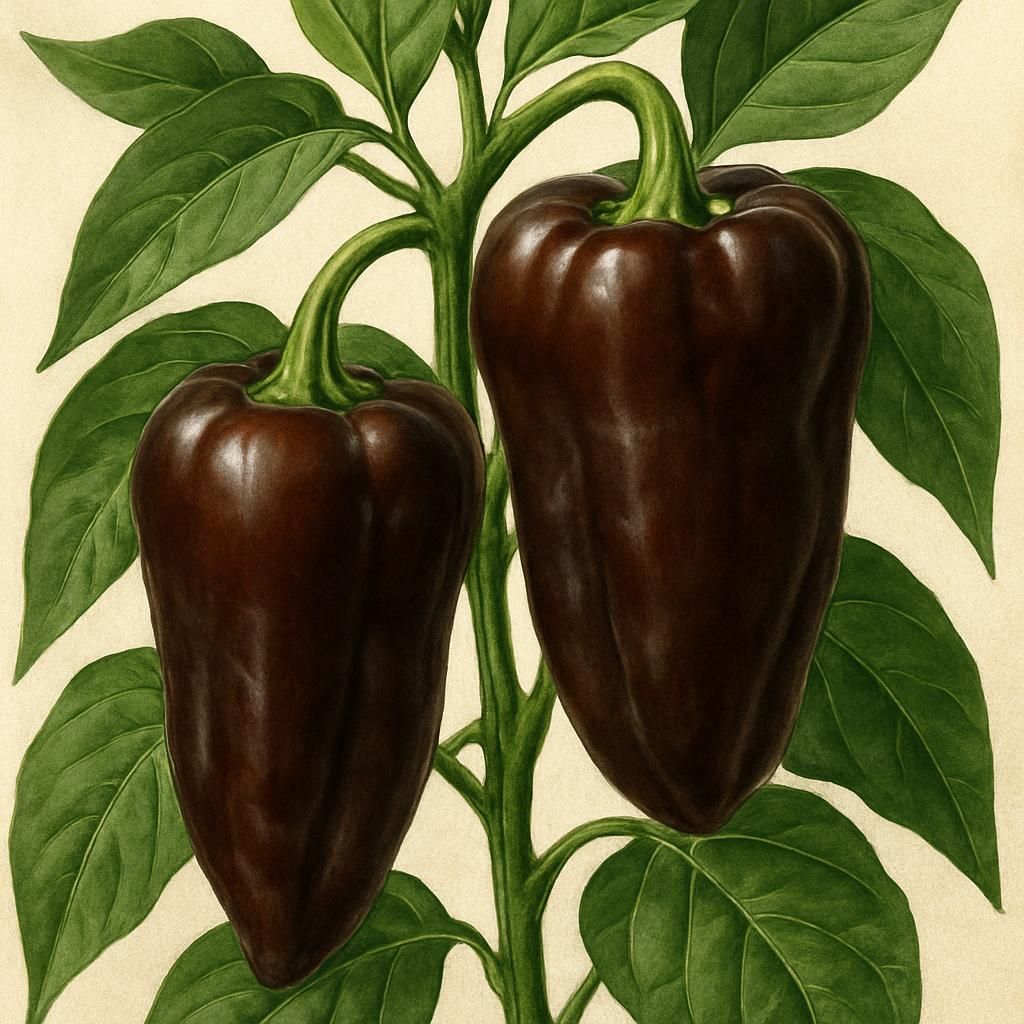
Introduction to Mulato Pepper
The Mulato Pepper (Capsicum annuum 'Mulato') is a traditional Mexican chile that matures from dark green to a rich, glossy chocolate brown. With a mild heat level of 2,500–3,000 Scoville Heat Units, it delivers deep, earthy, and slightly sweet notes reminiscent of dark chocolate and tobacco. Widely used for mole sauces, stuffing, and roasting, the Mulato Pepper is a staple in professional and home kitchens alike. Its thick walls make it excellent for drying and its large size provides generous yields when grown under optimal conditions.
Botanical Profile of Mulato Pepper
Mulato Pepper belongs to the Solanaceae family and shares the same species as many other sweet and hot peppers. Plants are indeterminate, bushy, and typically reach 24–36 inches in height with a spread of 18–24 inches. Leaves are medium-green, ovate, and slightly wrinkled. Flowers are small, white, and self-pollinating, although insect activity improves fruit set. Fruits are triangular to heart-shaped, 4–6 inches long and 2–3 inches wide at the shoulder, with thick, fleshy walls and 3–4 lobes. When fully ripe, the skin develops a distinctive dark-brown hue and the interior becomes mildly sweet with complex flavor compounds.
Soil, pH, and Climate Requirements for Mulato Pepper
Mulato Peppers thrive in well-drained, fertile loam or sandy loam soils rich in organic matter. They prefer full sun exposure of at least 8 hours daily and consistent warmth. The following table outlines ideal growing conditions:
| Parameter | Ideal Range | Notes |
|---|---|---|
| Soil Type | Loam or sandy loam | High organic content improves moisture retention |
| Soil pH | 6.2–7.0 | Slightly acidic to neutral; avoid alkaline soils |
| Temperature (Day) | 75–85°F (24–29°C) | Optimal fruit set and flavor development |
| Temperature (Night) | 60–70°F (15–21°C) | Below 55°F slows growth and may cause blossom drop |
| Spacing | 18–24 inches between plants | Rows 30–36 inches apart for airflow |
| Frost Tolerance | None | Sensitive; transplant after last frost |
Step-by-Step Planting & Propagation
- Start seeds indoors 8–10 weeks before the last expected frost. Sow ¼ inch deep in sterile seed-starting mix.
- Maintain soil temperature of 80–85°F using a heat mat until germination (7–14 days).
- Provide 14–16 hours of bright light daily; thin seedlings to one per cell when they develop two true leaves.
- Harden off plants for 7–10 days by gradually increasing outdoor exposure.
- Transplant outdoors when soil reaches 65°F and nighttime temperatures remain above 55°F. Plant at the same depth as the container and water thoroughly.
- Mulch immediately with 2–3 inches of organic material to conserve moisture and suppress weeds.
Care & Maintenance regimes for Mulato Pepper
Consistent moisture and balanced nutrition are essential for high-quality fruit. Use the following schedule for optimal results:
| Growth Stage | Watering Schedule | Fertilizer Schedule | Pruning Schedule |
|---|---|---|---|
| Seedling/Transplant | Keep evenly moist; water daily if hot | Apply balanced 10-10-10 at transplant | Remove lower leaves touching soil |
| Vegetative | 1–1.5 inches per week | Side-dress with compost tea every 3 weeks | Pinch growing tips at 12 inches to encourage branching |
| Flowering/Fruiting | Maintain even moisture; avoid fluctuations | Switch to low-nitrogen, high-phosphorus formula every 4 weeks | Remove suckers below first fruit cluster |
| Late Season | Reduce watering slightly | Final light compost application | Remove damaged or diseased foliage |
Pests, Diseases & Organic Management
Common threats include Aphids, Spider Mites, Thrips, and Flea Beetles. Fungal issues such as Powdery Mildew and Phytophthora can occur in poorly drained soils. Implement integrated pest management by introducing beneficial insects, applying neem oil or insecticidal soap at the first sign of infestation, and practicing crop rotation. Ensure good airflow and avoid overhead watering to minimize disease pressure.
Harvesting, Curing & Optimal Storage
Harvest Mulato Peppers when they reach full chocolate-brown color and firm texture, typically 75–85 days after transplant. Use clean pruners to cut stems, leaving a short peduncle. For fresh use, store at 45–50°F with 85–90% humidity for up to two weeks. To dry, hang whole fruits in a warm, well-ventilated area or use a dehydrator at 125°F until brittle. Store dried peppers in airtight containers away from light for up to one year. For extended fresh storage, roast, peel, and freeze in single layers.
Companion Planting for Mulato Pepper
Mulato Peppers benefit from strategic pairings that improve pollination, deter pests, and enhance soil health. Compatible companions include Tomato, Basil, Marigold, Nasturtium, and Onion. These plants attract beneficial insects and provide natural pest barriers. Avoid planting near Fennel or other members of the Apiaceae family that may inhibit growth. Rotate peppers with legumes such as Beans or Peas in subsequent seasons to restore nitrogen and break disease cycles.