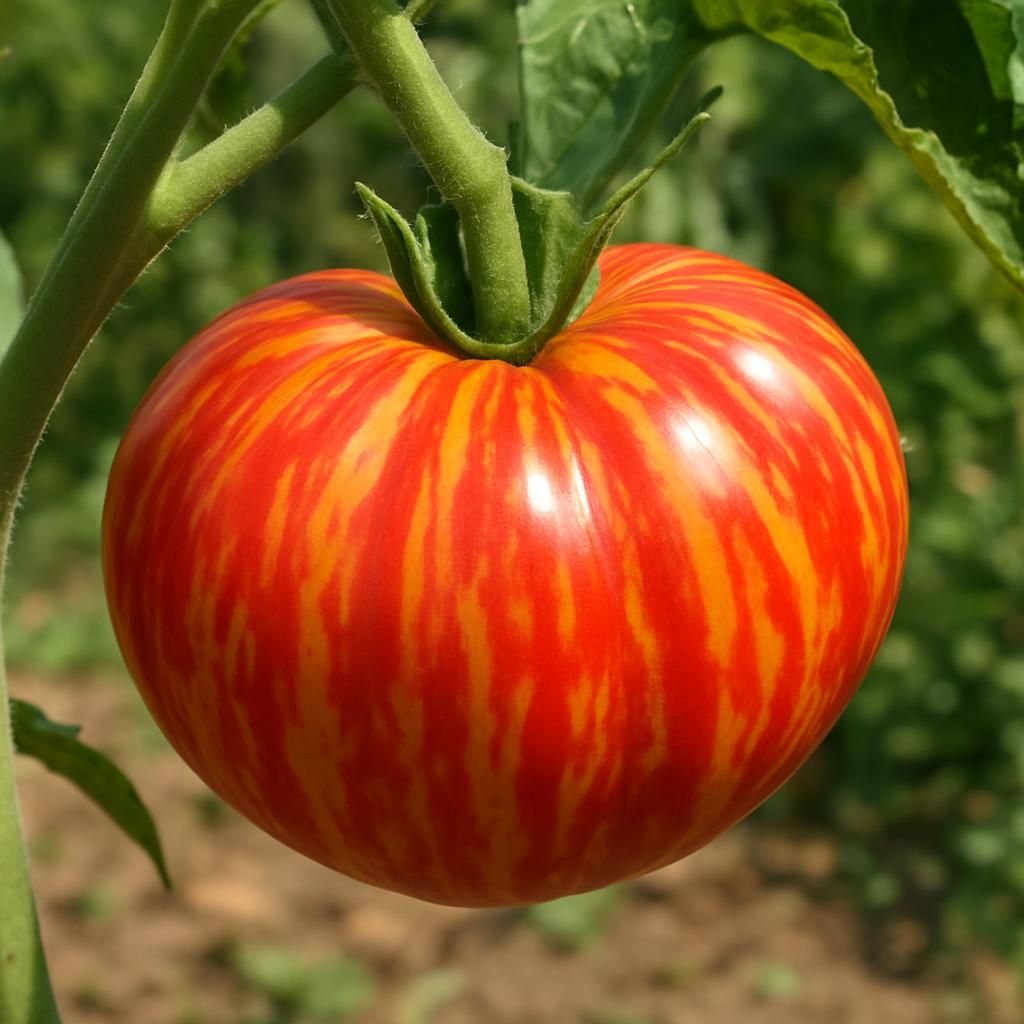
Introduction to Mr. Stripey Tomato
Mr. Stripey Tomato is an heirloom beefsteak variety renowned for its dramatic red-and-yellow striped fruits that can reach 1–2 pounds each. Gardeners value it for its sweet, low-acid flavor, meaty texture, and reliable productivity in warm climates. As an indeterminate plant, it continues to set fruit throughout the growing season when properly supported and maintained.
This variety originated from traditional seed-saving practices and has become popular among small-scale producers seeking unique market offerings. Its striking appearance makes it stand out at farmers’ markets while delivering excellent eating quality for sandwiches, salads, and fresh preparations.
Botanical Profile of Mr. Stripey Tomato
Mr. Stripey belongs to the nightshade family (Solanaceae) and exhibits classic indeterminate growth with vigorous vines that require staking or caging. Fruits display a distinctive bicolored pattern caused by uneven chlorophyll distribution, creating bold stripes that intensify as the tomato ripens.
The plant produces large, slightly flattened fruits with few seeds and thick flesh. Leaves are compound and typical of tomato morphology, while flowers are self-pollinating yellow blooms that appear in clusters along the stems.
Soil, pH, and Climate Requirements for Mr. Stripey Tomato
Mr. Stripey Tomato performs best in well-drained, fertile loam enriched with organic matter. Consistent warmth and protection from late frosts are essential for successful production.
| Parameter | Ideal Range/Value | Notes |
|---|---|---|
| Soil Type | Loamy, well-drained | Incorporate compost for structure |
| Soil pH | 6.2–6.8 | Test annually; adjust with lime if needed |
| Temperature Range | 70–85°F (21–29°C) daytime | Night temps above 55°F (13°C) |
| Sunlight | Full sun (8+ hours) | Morning sun reduces disease risk |
| Spacing | 24–36 inches between plants | Rows 4–5 feet apart |
| Frost Tolerance | None | Transplant after last frost |
Step-by-Step Planting & Propagation
Start seeds indoors 6–8 weeks before the last expected frost date. Sow ¼ inch deep in sterile seed-starting mix and maintain 70–80°F soil temperature for rapid germination. Harden off seedlings for 7–10 days before transplanting.
Transplant outdoors once soil has warmed to at least 60°F and nighttime temperatures remain above 55°F. Dig holes twice the width of the root ball, incorporate compost, and plant deeply—burying two-thirds of the stem to encourage strong root development. Space plants 24–36 inches apart in rows 4–5 feet wide. Install stakes, cages, or trellises at planting time.
Care & Maintenance regimes for Mr. Stripey Tomato
Consistent moisture and fertility support continuous fruit production on indeterminate vines. Regular pruning improves airflow and reduces disease pressure.
| Task | Frequency | Details |
|---|---|---|
| Watering | 1–2 inches per week | Deep, infrequent watering; mulch to retain moisture |
| Fertilizer | Every 3–4 weeks after fruit set | Balanced organic fertilizer (5-5-5) or fish emulsion |
| Pruning | Weekly once plants reach 12 inches | Remove suckers below first flower cluster; maintain 1–2 main stems |
| Mulching | At transplant and mid-season | 2–3 inches of straw or shredded leaves |
| Support | Install at planting; tie weekly | Use soft ties to avoid stem damage |
Pests, Diseases & Organic Management
Common tomato pests include Aphids, Hornworms, and Spider Mites. Monitor plants weekly and use insecticidal soap or neem oil for early infestations. Handpick hornworms and destroy egg masses.
Diseases such as Early Blight, Late Blight, and Septoria Leaf Spot can reduce yields. Practice crop rotation, remove lower leaves, and avoid overhead watering. Copper-based fungicides provide organic control when applied preventively.
Harvesting, Curing & Optimal Storage
Harvest Mr. Stripey fruits when they show full color development and slight softening at the blossom end. Use pruning shears to cut stems, leaving a short green calyx attached. Pick at the breaker stage for shipping or allow full ripening on the vine for peak flavor.
Store ripe tomatoes at room temperature away from direct sun for up to one week. For longer storage, process into sauces or can whole. Avoid refrigeration, which diminishes flavor and texture.
Companion Planting for Mr. Stripey Tomato
Pair Mr. Stripey Tomato with aromatic herbs such as Thai Basil and Rosemary to deter pests. Marigold and Nasturtium repel nematodes and aphids while attracting beneficial insects.
Avoid planting near Potato or Corn to reduce shared disease risks. Lettuce and Carrot make compatible understory companions that benefit from the partial shade provided by tomato foliage.
For more on optimizing harvest windows, see The Overlooked Art of Seasonal Harvest Timing for Small Farm Profit.