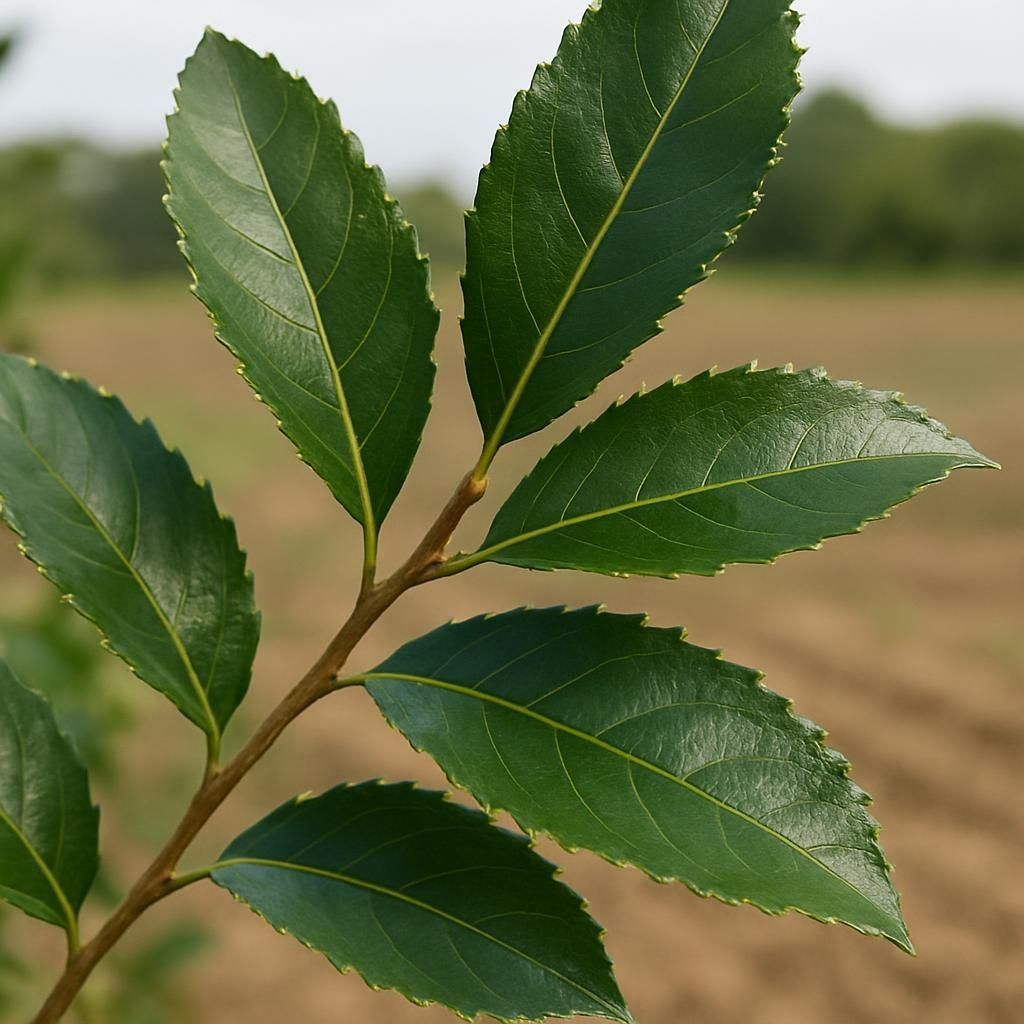
Introduction to Mate (Ilex paraguariensis)
Mate (Ilex paraguariensis), commonly known as yerba mate, is a perennial evergreen tree native to the subtropical regions of South America, particularly Paraguay, southern Brazil, and northeastern Argentina. It has been cultivated for centuries for its leaves, which are harvested, dried, and traditionally consumed as a stimulating infusion rich in caffeine, theobromine, and antioxidants. The crop plays a significant role in both cultural heritage and commercial agriculture across its native range, with global demand steadily increasing due to interest in natural energy beverages. Professional growers focus on sustainable practices that preserve soil health and maintain long-term productivity of plantations that can remain productive for 30–50 years.
Botanical Profile of Mate (Ilex paraguariensis)
Ilex paraguariensis belongs to the Aquifoliaceae family and grows as a small to medium evergreen tree reaching 4–15 meters in height under cultivation, though wild specimens can exceed 20 meters. The plant features glossy, dark green, lanceolate leaves with serrated margins and produces small, white, four-petaled flowers in spring. Female trees bear small red drupes containing 4–5 seeds. The species is dioecious, requiring both male and female plants for seed production, though most commercial plantations propagate vegetatively to ensure uniformity. Leaves contain 0.7–1.7% caffeine along with chlorogenic acids and saponins that contribute to the characteristic bitter flavor and health properties of the infusion.
Soil, pH, and Climate Requirements for Mate (Ilex paraguariensis)
Successful commercial production of mate demands specific environmental conditions that mimic its native understory habitat in the Atlantic Forest region.
| Parameter | Ideal Range | Notes |
|---|---|---|
| Soil Type | Deep, well-drained sandy loam to clay loam | Avoid compacted or waterlogged soils |
| Soil pH | 5.0–6.5 | Strongly acidic to moderately acidic |
| Temperature Range | 15–28°C (59–82°F) | Frost sensitive below –4°C |
| Annual Rainfall | 1200–2500 mm | Evenly distributed or supplemental irrigation required |
| Altitude | 200–800 m | Higher altitudes may reduce growth rate |
| Light Requirements | Partial shade to full sun | Young plants benefit from 30–50% shade |
| Relative Humidity | 70–90% | Critical during establishment |
Step-by-Step Planting & Propagation
- Site Selection and Preparation: Choose a location with deep, acidic soils and good drainage. Clear competing vegetation and incorporate organic matter such as well-rotted compost or leaf mold to improve structure.
- Propagation Method: Commercial plantations predominantly use semi-hardwood cuttings taken from high-yielding female clones in late winter. Cuttings 15–20 cm long with 2–3 leaves are treated with rooting hormone and placed in a shaded mist propagation house.
- Seed Propagation (alternative): Fresh seeds require 4–6 months of cold stratification at 4–8°C before sowing in sterile media. Germination can take 6–18 months and is less uniform than cuttings.
- Nursery Phase: Rooted cuttings are grown in 2–3 liter containers under 50% shade for 8–12 months until they reach 30–40 cm in height.
- Field Planting: Transplant seedlings or cuttings at the start of the rainy season. Recommended spacing is 2.5 m × 2.5 m for high-density systems or 3 m × 3 m for traditional plantations, equating to 1,100–1,600 plants per hectare.
- Initial Shade Management: Install temporary shade cloth or interplant with fast-growing nurse trees such as Gliricidia during the first two years to reduce transplant shock.
Care & Maintenance regimes for Mate (Ilex paraguariensis)
Consistent cultural practices are essential for sustained leaf quality and tree longevity.
| Practice | Schedule / Rate | Details |
|---|---|---|
| Watering | 25–40 mm per week during dry periods | Drip irrigation preferred; avoid waterlogging |
| Fertilizer | Year 1–3: 80–120 g NPK 10-5-10 per plant twice yearly; Mature: 200–300 g NPK 12-6-12 per tree annually split into 3 applications | Supplement with 2–3 kg composted manure per tree |
| Pruning | Formative pruning at 12 and 24 months; Production pruning every 12–18 months after harvest | Maintain open vase shape at 1.8–2.2 m height; remove dead wood |
| Mulching | 5–8 cm organic mulch renewed twice yearly | Use leaf litter or wood chips to conserve moisture and suppress weeds |
| Weed Control | Manual or mechanical every 4–6 weeks for first 3 years | Avoid herbicides near young root zones |
Pests, Diseases & Organic Management
Mate plantations face several insect and disease pressures that can be managed through integrated organic approaches.
Common pests include Aphids, Mealybugs, Scale insects, and Spider mites. These sap-feeding insects are controlled by introducing natural predators such as lady beetles and lacewings, followed by applications of neem oil or insecticidal soap during early infestations. Leafminers may occasionally damage young foliage and are best managed by removing affected leaves and maintaining tree vigor.
Major diseases include Phytophthora root and collar rot, which thrives in poorly drained soils, and various leaf spot fungi such as Alternaria and Cercospora. Prevention relies on proper site drainage, avoiding over-irrigation, and removing fallen leaves. In severe cases, copper-based fungicides approved for organic use can be applied. Regular monitoring and maintaining biodiversity through companion planting help reduce disease incidence.
Harvesting, Curing & Optimal Storage
Commercial harvesting begins when trees reach 3–4 years of age. The primary harvest occurs in late autumn to early winter when caffeine and polyphenol content peak. Skilled workers hand-pick the youngest, most tender shoots (approximately the top 30–40 cm), taking care not to damage the apical meristem. A secondary lighter harvest may occur in early spring.
Immediately after harvest, leaves undergo a rapid blanching or “zapecado” process (brief exposure to high heat) to inactivate enzymes, followed by drying at 80–100°C for several hours. Traditional sun-drying or mechanical dryers are used depending on scale. After drying to 8–10% moisture, leaves are coarsely ground or left in larger fragments and allowed to age (mature) for 6–18 months in controlled humidity to develop flavor.
Store finished yerba mate in airtight, light-proof containers at 15–20°C with relative humidity below 60%. Properly stored product retains quality for 18–24 months. Avoid exposure to strong odors, as the leaves readily absorb external aromas.
Companion Planting for Mate (Ilex paraguariensis)
Strategic companion planting enhances biodiversity, improves soil fertility, and provides natural pest suppression in mate plantations. Nitrogen-fixing species such as Gliricidia and Pigeon pea planted in alley rows supply organic nitrogen and create beneficial microclimates. Aromatic herbs including Rosemary and Thyme deter aphids and mealybugs while attracting pollinators. Leguminous ground covers like Clover and Hairy vetch reduce soil erosion and improve moisture retention. Flowering companions such as Marigold and Nasturtium provide habitat for predatory insects. Avoid planting heavy feeders like Corn or Tomato in close proximity, as they compete for nutrients and may increase disease pressure.