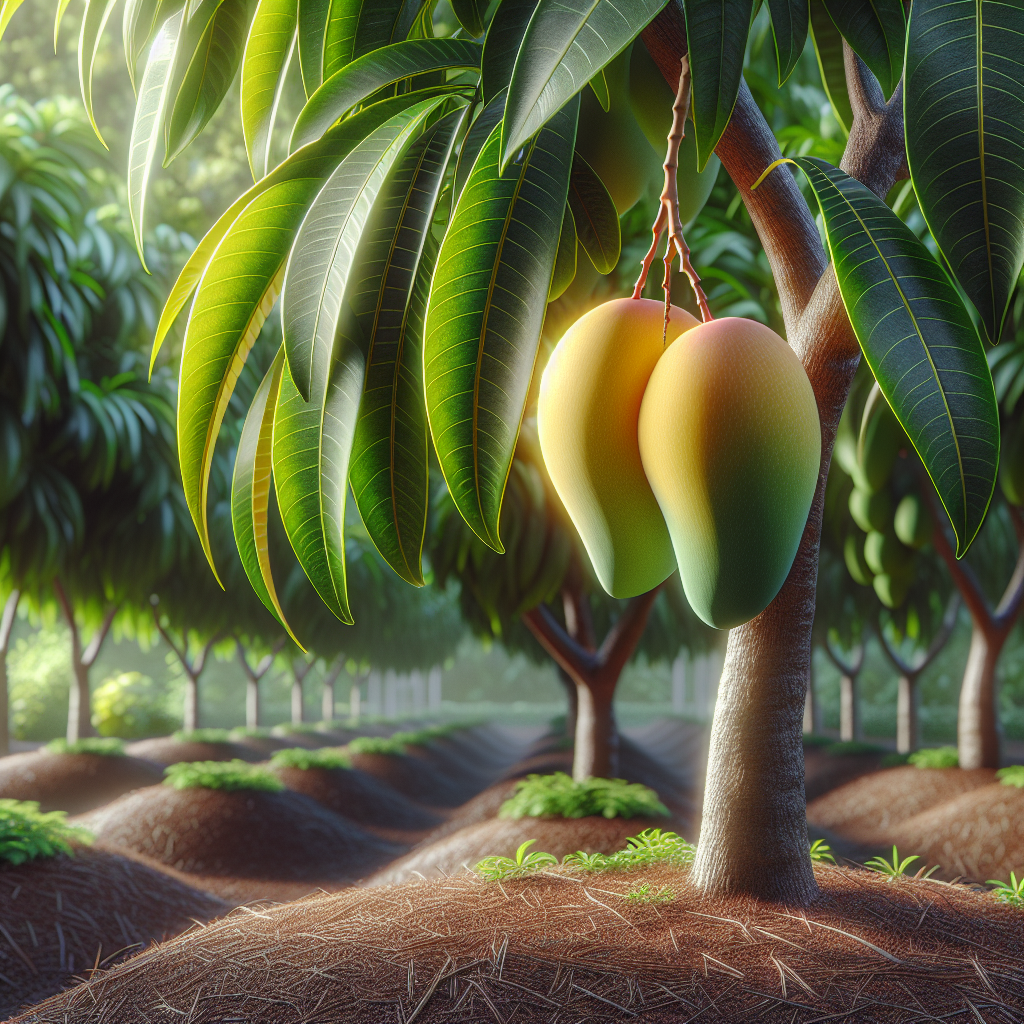
Introduction to Mallika Mango
Developed in India from a controlled cross between the renowned cultivars Neelum and Dasheri, this variety was bred to combine exceptional flavor with manageable tree habit and reliable productivity. The fruit is widely respected among mango enthusiasts for its concentrated sweetness, floral-citrus aroma, and smooth flesh, often ranking above more commercial cultivars in blind taste tests.
One of the most important things to understand is that this is not a mango that always shows its best qualities if left to fully color on the tree. Mallika often performs best when harvested at physiological maturity while still green to green-yellow, then ripened indoors. When this step is done correctly, the flesh develops a complex, honeyed profile with melon, citrus, and tropical notes and very low fiber. When harvested too early, flavor can be flat; when left too long on the tree in humid conditions, internal breakdown or uneven ripening may occur.
The tree is especially attractive for growers who want premium fruit quality in a somewhat smaller framework than many large seedling mangoes. In warm tropical and subtropical regions it can be grown in home orchards, high-density plantings, and even large containers for several years if carefully root-managed. For a broader species overview, see our Mango guide.
Botanical Profile of Mallika Mango
This cultivar belongs to the Anacardiaceae family, the same botanical family as cashew and pistachio. Like other mangoes, it is an evergreen tree with leathery, lanceolate leaves, reddish to bronze flush growth when young, and terminal panicles bearing hundreds to thousands of small flowers.
Mallika is generally described as semi-dwarf to medium in vigor, though its ultimate size depends strongly on climate, rootstock, soil depth, and pruning intensity. In open ground without training it can reach roughly 10-15 feet in home landscapes with regular pruning, and much larger if neglected over many years in frost-free tropical climates. The canopy tends to be compact, upright to somewhat spreading, which makes structural training easier than in very vigorous cultivars.
Flowering is usually profuse under dry, mildly cool induction conditions. Panicles contain both male and hermaphroditic flowers, but fruit set depends heavily on pollinator activity, relative humidity, temperature during bloom, and tree nutrition. A heavy bloom does not guarantee a heavy crop; in fact, excessive nitrogen before flowering may increase vegetative flush at the expense of floral stability.
Fruit are medium-sized, commonly in the 10-20 ounce range, oblong-elliptic, and develop a yellow background with some pink or orange blush under good light exposure, though external color is less reliable than maturity cues. The flesh is deep orange, nearly fiberless, aromatic, and very sweet, frequently with soluble solids exceeding many commercial shipping varieties. The seed is monoembryonic, meaning seedlings will not come true to type. Because of this, serious growers propagate Mallika by grafting rather than by seed.
Compared with some commercial export mangoes, Mallika is chosen more for flavor than for rugged shipping ability. Its postharvest behavior is distinctive: if harvested mature but firm, it ripens beautifully; if tree-ripened too long, it can become overly soft, develop jelly-seed tendencies in some climates, or lose the balanced acid-sugar profile that makes it outstanding.
Soil, pH, and Climate Requirements for Mallika Mango
This variety performs best in deep, well-drained soils with strong aeration and no prolonged perched water table. Ideal textures are sandy loam, loam, or gravelly loam with enough organic matter to support microbial activity but not so much water retention that roots remain saturated after rain. Heavy clay can be used only if drainage is aggressively improved through mounding, raised berms, subsoiling, and organic surface mulching rather than deep incorporation.
The preferred pH range is about 5.5 to 7.5, with an optimal target near 6.0 to 6.8. Trees can survive outside this range, but nutrient availability becomes less efficient. In alkaline soils above pH 7.8, iron, zinc, and manganese deficiencies are common, showing as interveinal chlorosis on newer leaves, reduced flush vigor, and smaller fruit. In very acidic soils below pH 5.2, calcium and magnesium imbalance may weaken root performance and reduce overall tree resilience.
Drainage matters more than richness. Mango roots need oxygen. If water sits in the planting zone for more than 24-48 hours after irrigation or rain, fine feeder roots begin to decline, and root rot organisms become more aggressive. A simple field test is to dig a 12-18 inch hole, fill it with water, and confirm it drains within several hours. If it remains full the next day, plant on a raised mound at least 12-24 inches high.
Temperature is critical. Mallika thrives in tropical to warm subtropical conditions with average growing temperatures of 75-95°F (24-35°C). It tolerates brief heat above 100°F if soil moisture is adequate and mulch moderates root-zone temperature, but prolonged hot dry winds can scorch new flush and reduce fruit retention. Young trees are very sensitive to frost; injury can occur around 32°F (0°C), and significant damage often begins below 29°F (-2°C). Mature trees may recover from light frost, but flowering and crop potential can be badly affected.
Annual rainfall of 30-60 inches can support vigorous growth if there is a dry period around flowering and fruit maturation. Constant humidity and wet bloom weather increase Anthracnose pressure and reduce fruit set. This variety particularly benefits from a distinct dry season or from managed irrigation that mimics one. In areas with monsoonal rains, post-monsoon planting is often ideal because the tree establishes in warm soil without being battered by peak rainfall.
Full sun is non-negotiable for high fruit quality. Trees need at least 8 hours of direct sunlight daily. Shaded canopies become sparse, flower less reliably, and produce fruit with lower sugar accumulation and weaker color.
Step-by-Step Planting & Propagation
Always begin with a healthy grafted tree from a reputable nursery. A quality tree should have a clearly visible graft union, disease-free leaves, a straight central framework or well-balanced scaffold structure, and a root system that is not circling heavily in the pot. Avoid rootbound plants with roots spiraling densely along the container wall, because establishment may be slow unless roots are corrected at planting.
For field planting, choose a site with excellent air drainage, full sun, and enough space for a mature canopy. In home orchards, spacing of 12-18 feet works well when annual pruning is practiced. In more extensive plantings with lower pruning intensity, 18-25 feet is safer.
Prepare the site by removing perennial weeds in at least a 3-4 foot radius. Do not create a rich compost pocket in otherwise poor soil; this can encourage roots to stay confined. Instead, plant mostly into native soil. If drainage is marginal, build a broad mound or berm rather than digging deeply.
Planting steps:
- Water the nursery tree thoroughly a few hours before planting.
- Dig a hole only as deep as the root ball and 2-3 times as wide.
- Gently remove the container and inspect roots. If circling roots are present, make 3-4 shallow vertical cuts and tease roots outward.
- Set the tree so the top of the root ball sits slightly above surrounding grade, usually 1-2 inches high to allow for settling.
- Keep the graft union well above soil level.
- Backfill with native soil only, firming lightly to remove large air pockets.
- Water deeply to settle the soil.
- Apply 3-5 inches of coarse mulch over the root zone, keeping mulch 6-8 inches away from the trunk.
For the first 2-4 weeks after planting, irrigate enough to keep the root ball evenly moist but never swampy. As a practical guide, the upper 2 inches of soil may dry slightly between irrigations, but the root ball itself should not become powder-dry. If leaves droop in the morning, the tree is likely too dry. If leaves yellow, the soil smells sour, or the tree stalls despite warmth, overwatering is likely.
Propagation by seed is unsuitable for maintaining cultivar identity because Mallika is monoembryonic. Professional propagation is done by veneer grafting, cleft grafting, or side grafting onto vigorous mango rootstocks adapted to local soil and climate. Scion wood should be mature, pencil-thick, disease-free, and taken from non-flushing shoots. Grafting success is highest when rootstock is in active growth but not overly soft, and when humidity is high enough to prevent desiccation while temperatures remain warm.
Container culture is possible, especially in frost-prone regions where winter protection is required. Start with a container around 15-25 gallons using a very fast-draining mix: coarse pine bark fines, sharp sand or perlite, and a stable composted component. Ensure multiple drainage holes. Repot or root-prune every 2-3 years to avoid root congestion and declining vigor.
Care & Maintenance regimes for Mallika Mango
Irrigation should change with tree age, soil type, and growth stage rather than following a fixed calendar. Newly planted trees need frequent but moderate watering until roots move into surrounding soil. In sandy soils this may mean 2-3 irrigations per week during hot weather; in loam, once every 4-7 days may be enough. Mature trees need deeper, less frequent irrigation. During active vegetative growth, aim to moisten soil to 18-24 inches deep, then allow the top several inches to dry before watering again.
The most productive moisture regime is one that avoids extremes. Chronic saturation suppresses root respiration and encourages Phytophthora. Visible signs include dull yellow-green leaves, weak flushes, leaf drop from the interior canopy, blackened feeder roots, and sometimes gummosis near the base. Drought stress, on the other hand, causes folded leaves, marginal browning on tender flush, fruit drop, and small fruit size. During fruit enlargement, severe swings from dry to wet can contribute to splitting or internal quality issues.
A practical strategy is to reduce irrigation before expected flowering to discourage excessive vegetative flush, then resume measured watering once fruit set is secure. Never impose severe drought on young trees; floral induction is only useful on established trees with healthy structure.
Nutrition should be moderate and balanced. Overfed mango trees become leafy and unproductive. In the establishment phase, use light, split applications of a fertilizer with modest nitrogen and adequate potassium, magnesium, and micronutrients. For example, 3-4 small feedings through the warm season are preferable to one heavy dose. Mature bearing trees usually benefit from lower nitrogen and relatively higher potassium approaching flowering and fruit development.
Micronutrients are often the hidden factor in mango performance. Zinc, boron, manganese, and iron play major roles in flowering, fruit set, and leaf function. In alkaline soils, foliar micronutrient sprays after harvest and again before bloom can correct deficiencies more effectively than soil application. Boron must be applied carefully because excess is toxic.
Pruning is essential to keep Mallika productive and manageable. After planting, head lanky nursery trees to encourage branching if needed. Build a low framework with 3-4 well-spaced scaffold branches. After each vegetative flush hardens, tip-prune shoots lightly to increase canopy density in young trees. Once fruiting begins, prune immediately after harvest. Remove dead wood, crossing branches, upright water shoots, and dense interior growth. Maintain a canopy height that allows harvest without ladders where possible.
This variety responds well to annual size control. In small orchards, keeping trees around 8-12 feet is realistic with disciplined postharvest pruning. Delayed pruning can remove future flowering terminals, so avoid heavy cuts close to bloom season.
Mulching improves root-zone temperature stability, moisture retention, and soil biology. Use arborist wood chips, leaf mold, or coarse composted plant residues. Keep mulch off the trunk to prevent collar rot. Living groundcovers such as Clover can be useful in outer rows or interspaces if they are kept from competing directly with the trunk zone.
Flower and fruit management are often overlooked. Young trees should not be allowed to carry heavy crops too early. Remove most fruit in the first bearing year if canopy size is still limited; otherwise branch structure can be distorted and growth slowed. On mature trees, thinning is rarely mandatory but may improve fruit size and reduce limb breakage when clusters are excessive.
For broader nutrient and organic soil-building concepts, see soil health tips.
Pests, Diseases & Organic Management
Anthracnose is one of the most significant diseases, especially in humid climates. It attacks flowers, young fruit, leaves, and twigs, causing black lesions, blossom blight, poor fruit set, and postharvest spotting. The best organic management begins with airflow: open canopy structure, full sun, drip irrigation instead of overhead watering, and sanitation of diseased panicles. Copper-based sprays applied preventively before and during bloom can reduce infection pressure, but timing is more important than repeated rescue spraying.
Powdery mildew can appear in drier climates with cool nights and warm days during bloom. Symptoms include white powdery growth on panicles, flower abortion, and fruitlet drop. Sulfur products can help if applied early, but avoid sulfur during very high heat and never combine it too closely with oil sprays.
Bacterial black spot may occur in some regions, producing angular black lesions on leaves and fruit with cracking. Windbreaks, sanitation, and reduced mechanical injury help limit spread.
Fruit flies are major pests in many tropical and subtropical areas. Females sting ripening fruit, and larvae develop inside. Management includes orchard sanitation, prompt pickup of fallen fruit, bait traps, protein bait sprays approved for organic systems, and harvesting at mature-green stage before the fruit becomes highly attractive.
Scale insects, Mealybugs, and Aphids feed on sap and excrete honeydew, encouraging sooty mold. Heavy infestations weaken flowering shoots and can affect fruit finish. Control starts with ant management, since ants protect these pests. Horticultural oils and insecticidal soaps are effective on crawlers and light infestations when coverage is thorough. Avoid spraying open blooms when pollinators are active.
Mango seed weevil is a quarantine pest in some regions and must be managed according to local regulations. Stem borers and Bark-eating caterpillars can also appear on stressed trees; healthy, well-maintained trees are less attractive to them.
Organic disease suppression is strongest when the tree is not overirrigated or overfertilized. Soft, lush growth is more susceptible. Prune for light penetration, maintain calcium and potassium sufficiency, remove mummified fruit, and avoid wounding trunks with tools.
Harvesting, Curing & Optimal Storage
Harvest timing is where many growers either unlock or waste Mallika's full potential. Do not rely solely on external color. Physiological maturity is better judged by shoulder development near the stem, fullness of the cheeks, a slight lightening of ground color, and the number of days from fruit set typical for your climate. Mature fruit feel solid and dense, not rubbery.
Unlike some cultivars that are excellent tree-ripe, this variety is often best picked mature-green and ripened off the tree. Cut fruit with short stems rather than pulling, because latex burn can stain the skin and damage quality. Place harvested fruit stem-end down for several minutes so sap drains away from the peel.
After harvest, keep fruit in a shaded, ventilated place at roughly 70-80°F (21-27°C) for ripening. A single layer is best. Many growers wrap each fruit loosely in paper or place them on trays to reduce bruising. Ripening usually takes 5-10 days depending on maturity at harvest and ambient temperature. Properly ripened fruit will soften slightly, develop stronger aroma near the stem, and show richer yellow-orange background color.
Do not refrigerate unripe fruit. Cold storage below about 55°F (13°C) can cause chilling injury, poor flavor development, uneven softening, and grayish flesh. Once fully ripe, fruit can be held briefly at 50-55°F (10-13°C) for several days, but flavor is best when consumed soon after ripening.
If fruit are harvested too early, they may remain starchy, flat, or resinous. If harvested too late or left in rain near maturity, internal breakdown, spongy texture, or fermentation-like off notes may appear. For market growers, repeated selective harvests every few days usually produce better quality than stripping the entire tree at once.
For fresh use, eat at peak softness while the fruit still has resilience. For processing, fully ripe fruit can be pureed and frozen. Because the flesh is low in fiber, it performs especially well in desserts, smoothies, and premium pulp applications.
Companion Planting for Mallika Mango
Companion planting around a mango tree should support soil health, pollination, and pest balance without competing heavily for water in the critical root zone. The best companions are generally shallow-rooted, low-growing, and easy to cut back.
Leguminous covers are especially useful because they moderate erosion, improve soil aggregation, and add biologically active residues. Clover works well in cooler subtropical margins or in irrigated interrows, while annual legumes can be used seasonally in warmer climates. Keep a weed-free ring 2-4 feet around young trunks so companion plants do not steal moisture from establishing roots.
Aromatic flowering herbs such as Thyme can attract beneficial insects while occupying little vertical space. In drier regions, thyme is well suited to the same sharp drainage mango prefers. Taller insectary plants like Yarrow can be placed beyond the drip line where they draw hoverflies, parasitoid wasps, and predatory insects without shading the tree.
In home orchards, Nasturtium can serve as a seasonal living mulch and pollinator attractor, though it should be managed so it does not create excessive humidity against the trunk. Avoid dense, thirsty companions such as bananas directly beside the tree unless water and fertility are abundant and spacing is generous.
The guiding principle is simple: support the orchard ecology around the tree, not directly under its crown where root competition is strongest. Sparse, managed companions in the outer root zone usually outperform crowded polycultures packed against the trunk.