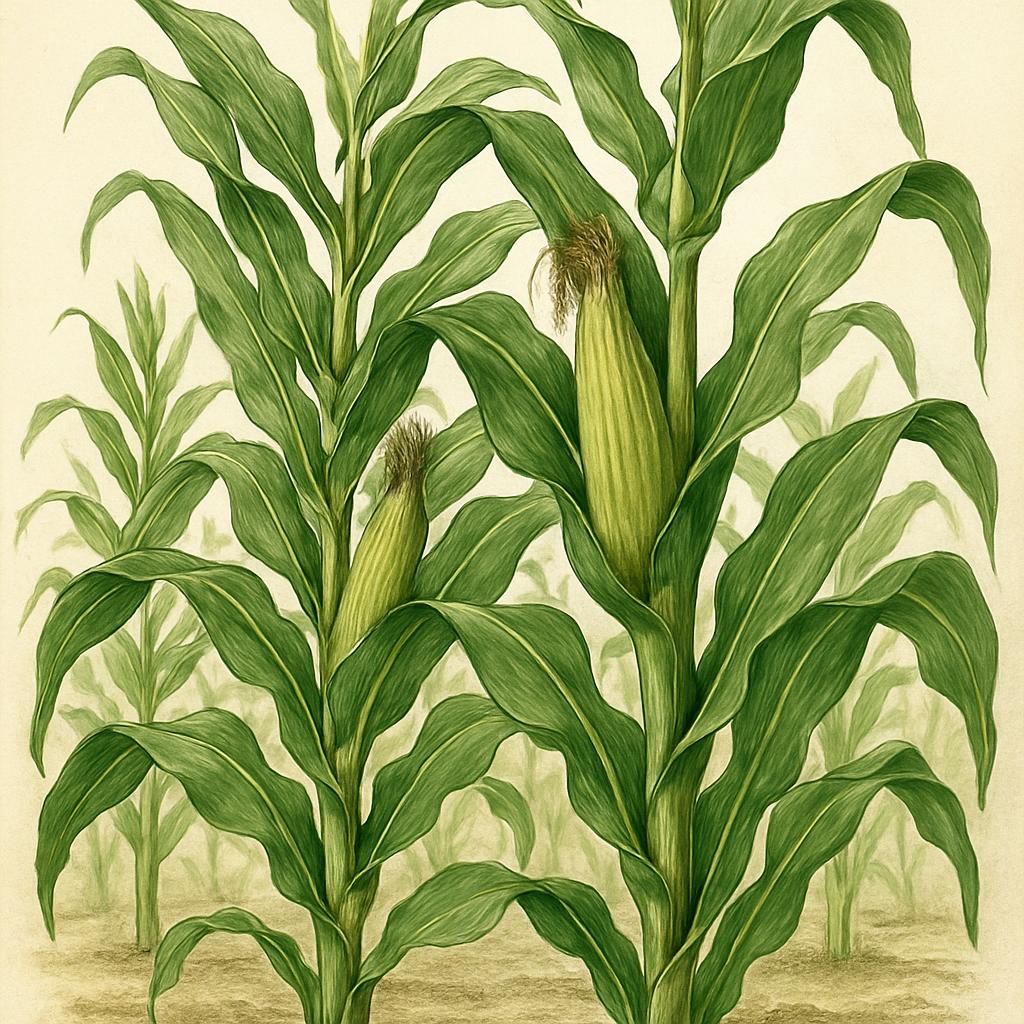
Introduction to Maize (Tuxpeño)
Maize, scientifically known as Zea mays, is a staple crop grown extensively worldwide due to its versatility and adaptability to various climates. The Tuxpeño variety, originating from Mexico, is particularly valued for its resilience and quality. Historically, it has played a crucial role in food security, providing essential nutrients and serving as animal fodder.
Botanical Profile of Maize (Tuxpeño)
The Tuxpeño variety of maize belongs to the Poaceae family. It is an annual grass that grows tall and robust, characterized by its fibrous stalk and broad leaves. The plant produces ears that are the fruit, each containing rows of kernels rich in carbohydrates, proteins, and fats. These kernels vary in color, typically yellow or white.
Soil, pH, and Climate Requirements for Maize (Tuxpeño)
Growing Maize (Tuxpeño) requires specific environmental conditions to ensure high yields.
| Parameter | Ideal Conditions |
|---|---|
| Soil Type | Loamy, well-drained |
| Soil pH | 5.5 - 7.5 |
| Temperature | 20°C - 30°C |
| Rainfall | 500mm - 800mm annually |
Step-by-Step Planting & Propagation
- Seed Selection: Choose high-quality Tuxpeño maize seeds from a reputable supplier to ensure optimal germination rates.
- Site Preparation: Prepare the field by plowing and harrowing to achieve a fine tilth. Ensure the soil is free from debris and weeds.
- Sowing: Plant the seeds 2-3 cm deep, spaced about 30 cm apart in rows that are 75 cm apart. This spacing optimizes sunlight exposure and nutrient absorption.
- Water Management: Irrigate immediately after sowing to facilitate germination and establish the crop.
- Germination: Germination typically occurs within 5-10 days, depending on soil temperature and moisture.
Care & Maintenance regimes for Maize (Tuxpeño)
Ensuring healthy growth involves a regimented care schedule for watering, fertilization, and protection against pests.
| Regime | Schedule |
|---|---|
| Watering | Weekly, increase during dry spells |
| Fertilizer | NPK 10:10:10, at planting and after 4 weeks |
| Pruning | Remove damaged or diseased leaves as needed |
Pests, Diseases & Organic Management
Tuxpeño maize is susceptible to a variety of pests and diseases including Spider Mites, Corn Earworm, and European Corn Borer. Diseases such as Common Rust and Stewart's Wilt can also affect the crop.
Organic Management Strategies:
- Crop Rotation: Implement crop rotation with Soybeans or Chickpeas to disrupt the life cycles of maize-specific pests.
- Neem Oil: Use neem oil to control aphid populations organically.
- Biological Controls: Introduce natural predators like ladybirds to manage pest populations.
Harvesting, Curing & Optimal Storage
Maize (Tuxpeño) is typically ready for harvest 90-120 days after planting. The ears should be full and kernels well-formed. Harvest by hand or using mechanized harvesters.
Curing: Allow the ears to dry on the stalk if conditions permit. Otherwise, husk the ears and dry them in a well-ventilated area.
Storage: Store dried maize in a cool, dry place, ideally in sealed containers to prevent pest infestation.
Companion Planting for Maize (Tuxpeño)
Companion planting enhances maize growth by involving beneficial plants. Ideal companions include Beans and Squash which supplement nitrogen in the soil and minimize weed growth. Avoid planting near Sweet Corn (Honey Select) to prevent cross-pollination issues.
For additional strategies on resilient planting practices, explore Summer Companion Planting: 10 Organic Pairings to Boost Small Farm Resilience.
For more detailed botanical insights into maize varieties, check out the comprehensive guide on Corn (crop) varieties.