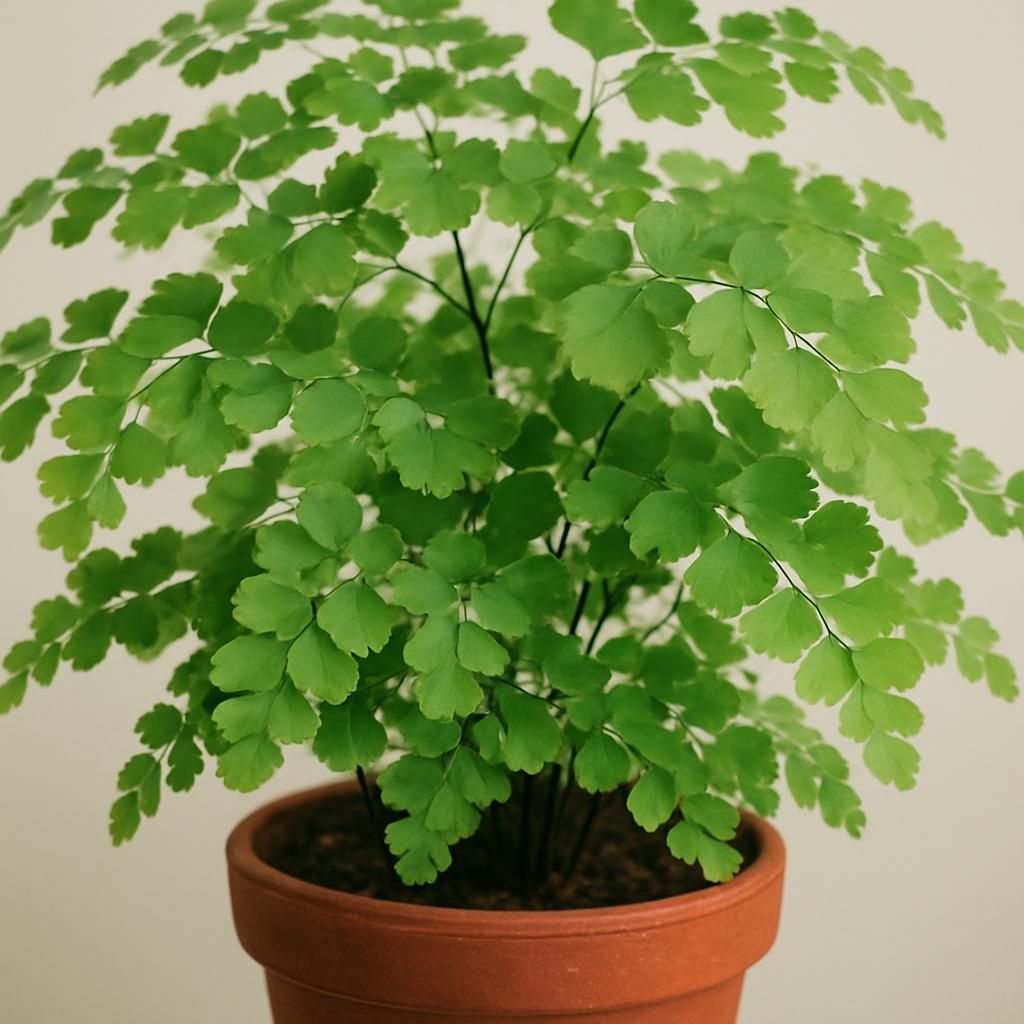
Introduction to Maidenhair Fern
Maidenhair fern (Adiantum spp.) is one of the most elegant and widely cultivated ferns in both ornamental horticulture and specialized agriculture. Its delicate, fan-shaped fronds and wiry black stems make it a favorite for shaded borders, terrariums, and high-humidity greenhouse production. Unlike many ferns that tolerate neglect, maidenhair fern demands precise moisture and humidity management, rewarding growers with lush, vibrant foliage when conditions are met.
Professionally managed maidenhair fern crops are increasingly grown for the cut-foliage and potted-plant markets. Its fine texture pairs well with floral arrangements and high-end interior landscapes. Because it does not produce edible parts or fiber, cultivation focuses entirely on vegetative health, disease prevention, and aesthetic quality. Growers who master its requirements often achieve premium pricing due to consistent demand and limited local supply.
Successful production requires replicating the cool, moist, dappled-light environments found in its native temperate and subtropical habitats. This guide covers every stage from soil preparation through long-term maintenance, with emphasis on sustainable, organic practices that minimize chemical inputs while maximizing plant vigor.
Botanical Profile of Maidenhair Fern
Maidenhair fern belongs to the genus Adiantum within the Pteridaceae family. Most commercial cultivars derive from Adiantum capillus-veneris or Adiantum raddianum. The plant produces compound fronds composed of small, wedge-shaped pinnae arranged along slender, dark rachises. Rhizomes are short-creeping and covered with brown scales, allowing the plant to spread slowly in suitable media.
Fronds emerge in a characteristic unfurling pattern known as circinate vernation. New growth is particularly sensitive to drying air and fluctuating moisture levels. Sporangia form along the margins of fertile pinnae and release spores when mature; however, most commercial propagation relies on division rather than spore culture.
The species is evergreen in mild climates but may go dormant or suffer frond dieback during prolonged cold or drought. Understanding its botanical preferences enables growers to anticipate stress signals early and adjust cultural practices accordingly.
Soil, pH, and Climate Requirements for Maidenhair Fern
Maidenhair fern performs best in a light, airy, moisture-retentive yet freely draining substrate. Heavy clay or compacted soils lead to root rot, while overly sandy mixes dry too quickly. Organic matter content should exceed 30 percent to maintain consistent humidity around the rhizome.
| Parameter | Ideal Range | Notes |
|---|---|---|
| Soil Type | Peat-perlite or coir-perlite mix | 50-60% organic component for moisture retention |
| pH | 6.0–7.0 | Slightly acidic to neutral; avoid alkaline conditions |
| Temperature (Day) | 18–24 °C (65–75 °F) | Consistent warmth promotes steady frond production |
| Temperature (Night) | 15–18 °C (59–65 °F) | Cooler nights reduce disease pressure |
| Relative Humidity | 60–80% | Critical for preventing frond desiccation |
| Light | Bright indirect or dappled shade | 1,000–2,500 lux; avoid direct midday sun |
| Spacing (Pots) | 20–30 cm between plants | Allows air circulation while maximizing density |
Climate considerations include protection from frost and strong winds. In USDA zones 9–11, maidenhair fern can remain outdoors year-round in sheltered microclimates. In cooler regions, move container-grown plants indoors or into heated greenhouses before temperatures drop below 10 °C.
Step-by-Step Planting & Propagation
- Select healthy stock plants free of spider mites and root rot. Divide rhizomes in early spring just before new growth begins.
- Prepare a sterile, well-draining mix of 2 parts fine orchid bark, 1 part perlite, and 1 part high-quality peat or coco coir.
- Fill 10–15 cm pots or cell trays, moisten the medium, and allow excess water to drain.
- Plant divisions so the rhizome sits just below the surface; firm gently and water thoroughly.
- Place in a shaded propagation area with 70–80% humidity and temperatures of 20–22 °C.
- Mist daily or use a humidity dome for the first 10–14 days until new fronds emerge.
- Once established (4–6 weeks), gradually acclimate plants to normal growing humidity levels.
Spore propagation is possible but slower. Collect mature spores from the underside of fertile fronds, sow on sterilized peat-perlite, and maintain high humidity until prothalli form. This method is mainly used for breeding new cultivars rather than commercial production.
Care & Maintenance regimes for Maidenhair Fern
Consistent moisture without waterlogging is the single most important factor. Allow the top 1 cm of medium to dry slightly between waterings, then irrigate thoroughly. Overly wet conditions encourage pythium and phytophthora.
| Task | Frequency | Details |
|---|---|---|
| Watering | Every 2–4 days | Use room-temperature, low-mineral water; bottom-water to avoid wetting fronds |
| Fertilizer | Every 4 weeks (growing season) | Dilute balanced liquid fertilizer (10-10-10) at ¼ strength; reduce in winter |
| Pruning | As needed | Remove yellow or damaged fronds at base with sterilized scissors; never cut more than 30% of foliage at once |
| Humidity Boost | Daily mist or pebble tray | Maintain 60–80% RH; group plants to create microclimate |
| Repotting | Every 18–24 months | Move to next size pot when roots fill container; refresh medium completely |
Monitor for salt buildup from hard water; flush pots monthly with distilled or rainwater. Reduce fertilizer applications during short-day winter months when growth slows.
Pests, Diseases & Organic Management
Common pests include spider mites, mealybugs, scale insects, and fungus gnats. Early detection through weekly scouting prevents outbreaks. Introduce predatory mites or apply neem oil and insecticidal soap at first sign of infestation.
Fungal diseases such as botrytis, rhizoctonia, and pythium thrive in stagnant air and overly wet media. Improve ventilation, avoid overhead watering, and drench with beneficial Bacillus subtilis or Trichoderma-based products as preventative measures.
Cultural controls remain the foundation of organic management: maintain proper spacing, remove debris promptly, and sterilize tools between plants. Quarantine new stock for at least 30 days before introducing it to production areas.
Harvesting, Curing & Optimal Storage
Although maidenhair fern is not harvested for food, fronds are cut for floral and decorative use. Harvest when fronds reach full expansion but before spore release. Use sharp, sterilized shears and cut at the base of the stipe.
Post-harvest, place stems immediately in cool, clean water (4–8 °C) for 2–4 hours to hydrate. Store upright in perforated sleeves at 90–95% humidity and 2–5 °C for up to 7–10 days. Avoid ethylene exposure from ripening fruit, which accelerates frond yellowing.
For potted plant sales, allow plants to reach 25–30 cm diameter before marketing. Label with care instructions emphasizing consistent moisture and indirect light.
Companion Planting for Maidenhair Fern
Maidenhair fern pairs well with other shade-tolerant species that share similar moisture and humidity needs. Compatible companions include Boston fern (Nephrolepis exaltata), peace lily, and calathea species. These combinations create attractive, high-humidity displays for interior landscapes.
Avoid planting near aggressive spreaders or heavy feeders that may outcompete the delicate rhizomes. In greenhouse settings, interplant with Thai basil or rosemary in separate containers to provide natural pest-repellent volatiles without direct root competition.
Crop rotation within greenhouse benches every 18–24 months helps break pest and disease cycles while maintaining soil health through periodic solarization or steam pasteurization of media.