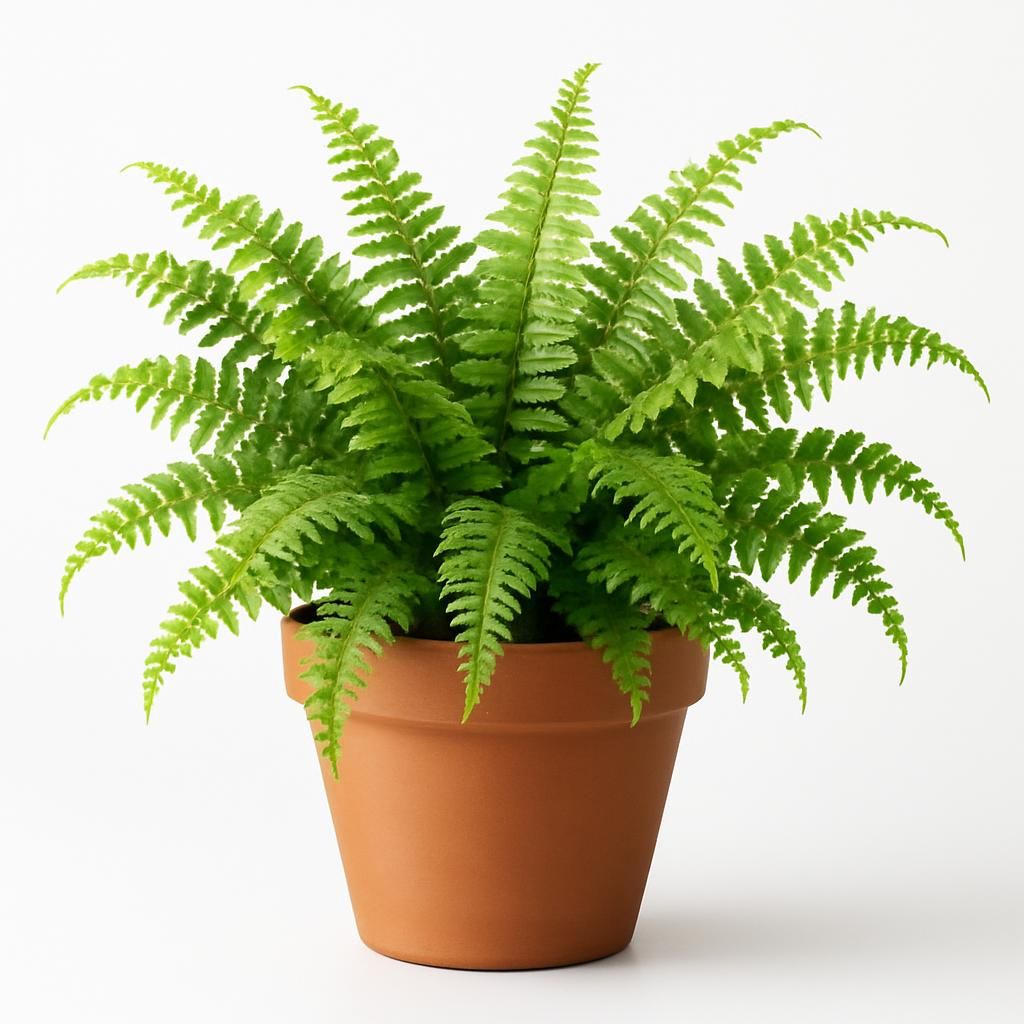
Introduction to Boston fern
The Boston fern (Nephrolepis exaltata) remains one of the most widely cultivated ornamental ferns worldwide due to its elegant, feathery fronds and reliable growth habit. Originally collected from tropical and subtropical regions, this species has become a staple in homes, offices, and commercial interiorscapes because of its ability to thrive in moderate light while actively filtering airborne pollutants. Commercial growers value the Boston fern for its consistent demand and relatively straightforward cultural requirements when humidity and watering are properly managed.
Beyond aesthetics, Boston ferns contribute measurable air-quality benefits by removing formaldehyde, xylene, and toluene from indoor environments. Their dense foliage also increases localized humidity, making them useful companion plants in mixed tropical displays. Because they are non-toxic to humans and pets, they are frequently specified for healthcare facilities, schools, and residential settings where safety is paramount.
Successful commercial production hinges on replicating the moist, well-aerated conditions of their native understory habitat. This guide details every production stage from substrate formulation to harvest-ready specimen size, incorporating current best practices for both small-scale and greenhouse-scale operations.
Botanical Profile of Boston fern
Nephrolepis exaltata belongs to the family Nephrolepidaceae. The species is characterized by long, pinnate fronds that can reach 2–4 feet in length under optimal conditions. Each frond consists of numerous lanceolate pinnae arranged along a central rachis. The plant produces wiry stolons and small, rounded tubers that store carbohydrates and enable vegetative spread.
Fronds emerge as tightly coiled fiddleheads that unfurl over several weeks. Mature plants form a symmetrical, vase-shaped clump. Sporangia appear as small, round sori on the underside of fertile fronds; Boston fern cultivars rarely produce viable spores in cultivation and are propagated vegetatively. The species exhibits moderate growth rates, typically adding 6–12 inches of frond length per growing season when provided consistent moisture and nutrition.
Soil, pH, and Climate Requirements for Boston fern
Boston ferns demand a lightweight, highly aerated growing medium that retains moisture without becoming waterlogged. Commercial mixes typically combine peat moss, perlite, and pine bark fines in ratios that maintain 60–70% total porosity. The ideal pH range is slightly acidic, supporting efficient uptake of iron and manganese.
Temperature and humidity must be tightly controlled for premium frond quality. Daytime temperatures of 65–75 °F (18–24 °C) paired with nighttime temperatures no lower than 55 °F (13 °C) prevent physiological stress. Relative humidity should remain above 50% year-round; levels below 40% result in tip burn and frond desiccation.
| Parameter | Ideal Range/Value | Notes |
|---|---|---|
| Soil pH | 5.5 – 6.5 | Maintain with acidifying fertilizers |
| Temperature (day) | 65–75 °F (18–24 °C) | Avoid sudden fluctuations |
| Temperature (night) | 55–65 °F (13–18 °C) | Minimum tolerance 50 °F (10 °C) |
| Relative Humidity | 50–70% | Use humidifiers or misting in dry climates |
| Light | 1,000–2,500 foot-candles | Bright indirect; avoid direct midday sun |
| EC (electrical conductivity) | 0.8–1.2 mS/cm | Leach monthly to prevent salt buildup |
Step-by-Step Planting & Propagation
Division of established clumps is the most reliable propagation method for commercial growers. Begin by removing the parent plant from its container and gently teasing apart the root ball into sections, each containing at least three healthy fronds and a portion of rhizome with roots. Use a sterile knife to sever any connecting stolons cleanly.
Prepare 6-inch or larger pots with the recommended peat-perlite-bark mix. Position each division so the crown sits at the same depth as the original plant. Firm the medium gently around the roots and water thoroughly to settle the substrate. Place newly potted divisions under 70% shade cloth for 7–10 days while maintaining high humidity to reduce transplant shock.
For large-scale production, runners with small plantlets can be pinned into adjacent pots; once roots form (usually 4–6 weeks), sever the stolon and grow on as independent plants. Tissue culture is increasingly used by wholesale nurseries to produce disease-free stock, though it requires laboratory facilities.
Care & Maintenance regimes for Boston fern
Consistent moisture without saturation is critical. Allow the top inch of medium to dry between waterings, then irrigate until water drains freely from the pot base. Overwatering quickly leads to root rot, while underwatering causes frond curling and browning.
Fertilization should be moderate and balanced. Use a water-soluble 20-20-20 fertilizer at 150–200 ppm nitrogen every two weeks during active growth (spring through early autumn). Reduce to monthly applications or switch to a controlled-release formulation during winter slowdown. Monthly leaching with clear water prevents fertilizer salt accumulation.
Pruning maintains plant shape and removes damaged tissue. Remove yellow or brown fronds at the base with clean shears. Periodic grooming improves air circulation and reduces pest habitat.
| Task | Frequency | Details |
|---|---|---|
| Watering | Every 4–7 days | Water thoroughly; allow top 1 inch to dry between waterings |
| Fertilizer | Every 14 days (growing) | 150–200 ppm N balanced formula; reduce in winter |
| Leaching | Monthly | Flush with clear water to remove salts |
| Pruning/Grooming | Every 4–6 weeks | Remove dead or damaged fronds at base; thin dense clumps |
| Repotting | Every 12–18 months | Move up one pot size when roots fill container; spring is optimal |
Pests, Diseases & Organic Management
Common insect pests include Aphids, Mealybugs, Spider Mites, and Scale insects. Regular inspection of frond undersides allows early detection. Organic controls begin with strong water sprays to dislodge soft-bodied insects, followed by applications of insecticidal soap or neem oil at labeled rates. Maintain good air circulation to discourage mite outbreaks.
Root and crown rots caused by Pythium and Phytophthora are the primary disease concerns. Prevention relies on sterile media, proper watering intervals, and avoidance of over-fertilization. If infection occurs, discard severely affected plants and treat remaining stock with a biological fungicide containing Bacillus subtilis or Trichoderma species.
Fungal leaf spots may appear under prolonged leaf wetness; improve spacing and reduce overhead irrigation. Quarantine new acquisitions for 30 days to prevent introduction of pests and pathogens.
Harvesting, Curing & Optimal Storage
Boston ferns are typically sold as finished potted specimens rather than harvested for biomass. When preparing plants for retail, groom fronds 48 hours before shipping to remove any damaged tissue. Maintain plants at 60–65 °F (15–18 °C) with 60% humidity during transport to minimize stress.
For long-term holding, keep plants under 1,500 foot-candles of light and water only when the medium surface begins to dry. Avoid ethylene exposure from ripening fruit, which accelerates frond senescence. Under these conditions, quality can be maintained for 8–12 weeks.
Companion Planting for Boston fern
Boston ferns pair effectively with other humidity-loving tropicals. Peace Lily and Spider Plant provide contrasting foliage textures while sharing similar light and moisture needs. In greenhouse benches, interplanting with Thai Basil or Parsley creates microclimates that benefit all species through increased transpiration.
Avoid placing Boston ferns near Tomato or other solanaceous crops, as these can harbor shared pests such as whiteflies. In mixed interior displays, position ferns on the north or east side of taller plants to receive filtered light while contributing humidity to the group.
Strategic companion arrangements also enhance visual merchandising: combining ferns with flowering African Violet creates appealing color and texture contrasts that increase retail appeal.