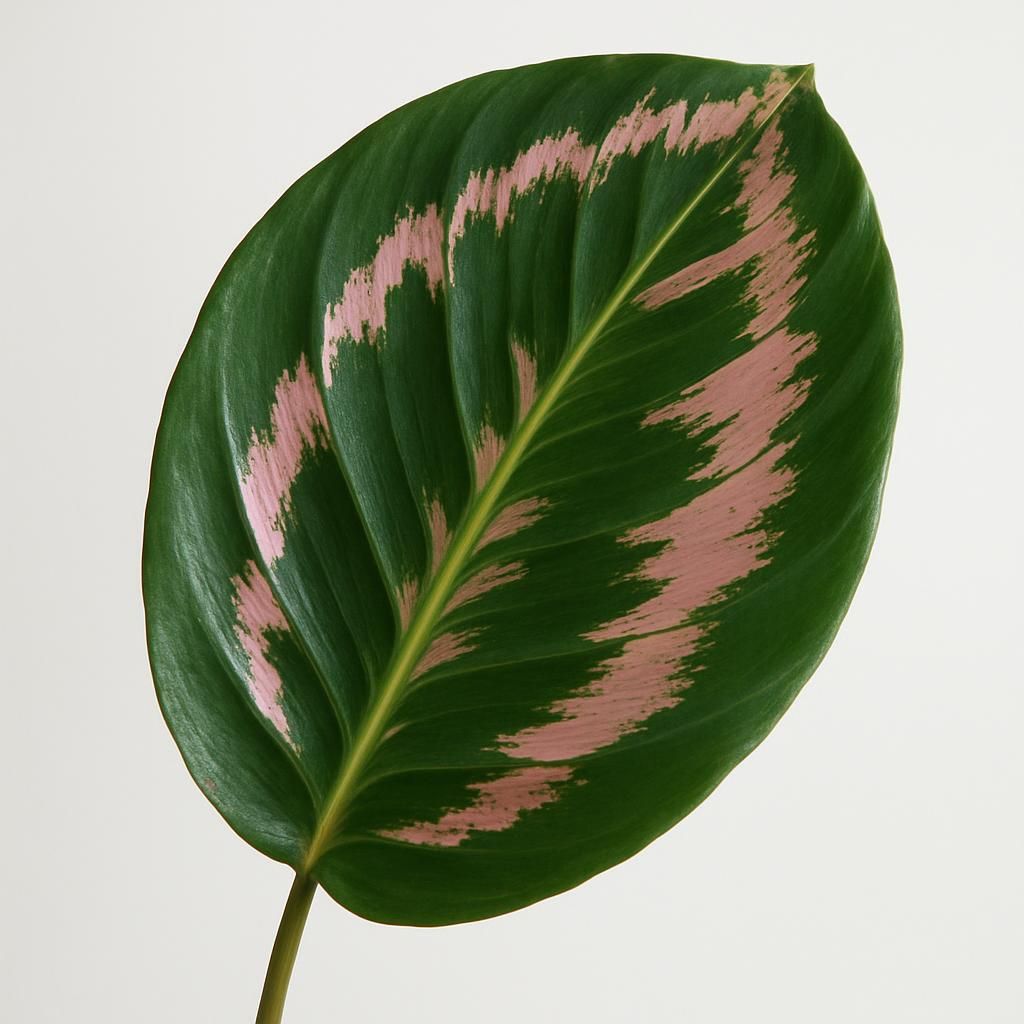
Introduction to calathea
Calathea comprises over 300 species of rhizomatous perennials native to the understory of tropical rainforests in South and Central America. These plants are cultivated worldwide for their dramatic, patterned leaves that fold upward at night in a behavior known as nyctinasty. In commercial horticulture, calathea serves both the ornamental houseplant market and specialty cut-foliage trade. Successful production demands replicating the warm, humid, low-light conditions of its rainforest habitat while preventing common physiological disorders.
Botanical Profile of calathea
Calathea belongs to the Marantaceae family and features broad, often variegated leaves with intricate patterns of greens, purples, pinks, and whites. Rhizomes store carbohydrates and allow vegetative spread. Flowers are typically small, tubular, and inconspicuous, emerging from colorful bracts. Leaf undersides frequently display deep burgundy or purple coloration. Popular species include Calathea roseopicta, Calathea orbifolia, Calathea makoyana, and Calathea lancifolia. The genus exhibits high sensitivity to fluoride, salts, and inconsistent moisture.
Soil, pH, and Climate Requirements for calathea (MUST INCLUDE A MARKDOWN TABLE OF IDEAL CONDITIONS)
Calathea thrives in loose, well-aerated, moisture-retentive substrates with excellent drainage. Avoid heavy clay soils or those amended with high levels of perlite that dry too rapidly. Ideal growing media incorporate coco coir, fine bark, worm castings, and leaf mold. Maintain consistent temperatures between 65–80 °F (18–27 °C) with minimum nighttime temperatures above 60 °F (15 °C). Relative humidity should remain above 50 %, preferably 60–80 %. Provide bright indirect light or filtered shade; direct sun scorches foliage.
| Parameter | Ideal Range | Notes |
|---|---|---|
| Soil pH | 6.0–6.8 | Slightly acidic; avoid alkaline conditions |
| Temperature (Day) | 70–80 °F (21–27 °C) | Optimal photosynthesis range |
| Temperature (Night) | 60–68 °F (15–20 °C) | Prevents chilling injury |
| Relative Humidity | 60–80 % | Use humidifiers or pebble trays |
| Light | 1000–2500 lux (bright indirect) | East or north-facing windows ideal |
| Soil Mix | 40 % coco coir, 30 % fine bark, 20 % worm castings, 10 % perlite | Ensure 20–30 % air-filled porosity |
| EC / Fertility | 0.8–1.2 mS/cm | Low salt sensitivity; flush monthly |
Step-by-Step Planting & Propagation
- Select healthy, disease-free rhizome divisions or tissue-cultured liners. Each division should contain at least two leaves and visible roots.
- Prepare sterile containers with drainage holes and the soil mix described above. Pre-moisten the medium to field capacity.
- Plant rhizomes horizontally 1–2 inches deep, ensuring the growing point remains at or slightly above soil level.
- Water thoroughly after planting and maintain high humidity with a clear dome or propagation tent for the first 10–14 days.
- Position under 1500–2000 lux for two weeks, then gradually increase to production light levels.
- Begin light fertilization at 25 % strength after new growth appears (typically 3–4 weeks).
Care & Maintenance regimes for calathea (MUST INCLUDE A MARKDOWN TABLE OF WATER, FERTILIZER, AND PRUNING SCHEDULES)
Consistent moisture without waterlogging is critical. Allow the top 1 inch of soil to dry between waterings. Use room-temperature, filtered, or rainwater to avoid fluoride and chlorine damage. Fertilize with a balanced, water-soluble formula low in salts. Prune only damaged or yellowing leaves at the base to maintain aesthetics and reduce disease pressure.
| Season | Watering Frequency | Fertilizer Schedule | Pruning Action |
|---|---|---|---|
| Spring | Every 5–7 days; keep evenly moist | 20-20-20 at ½ strength every 4 weeks | Remove winter-damaged foliage |
| Summer | Every 4–5 days; increase humidity | 10-10-10 liquid feed every 3 weeks | Trim dead leaf margins; shape as needed |
| Autumn | Every 7–10 days; reduce volume | 5-5-5 at ¼ strength monthly | Remove senescing leaves |
| Winter | Every 10–14 days; allow slight dry | Suspend or apply ½ strength every 6 weeks | Minimal; only remove necrotic tissue |
Pests, Diseases & Organic Management
Common arthropod pests include spider mites, mealybugs, and scale. Monitor leaf undersides weekly. Organic controls begin with strong water sprays followed by neem oil or insecticidal soap applications at 7–10 day intervals. Root and crown rots caused by Pythium and Phytophthora develop under overwatering; improve drainage and apply beneficial Trichoderma or Bacillus subtilis drenches. Leaf spot diseases respond to improved airflow and copper-based organic fungicides. Always quarantine new plants for 30 days.
Harvesting, Curing & Optimal Storage
Calathea is harvested primarily for foliage. Cut leaves at the base with sharp, sterilized shears when fully expanded and blemish-free. Place stems immediately in clean water with floral preservative. For potted plants sold at retail, maintain 65–75 °F and 60 % humidity during transport. Curing is minimal; allow cut foliage to hydrate 4–6 hours before packing. Store upright in perforated sleeves at 55–65 °F for up to 7 days. Avoid ethylene exposure from ripening fruit.
Companion Planting for calathea
Calathea pairs well with other humidity-loving tropicals such as Thai Basil and ferns in mixed planters. Avoid proximity to high-light crops like tomato that may cast excessive shade or compete for humidity. In greenhouse benches, interplant with peace lilies or elephant ear garlic to create microclimates. These combinations improve humidity retention and reduce pest pressure through biodiversity.