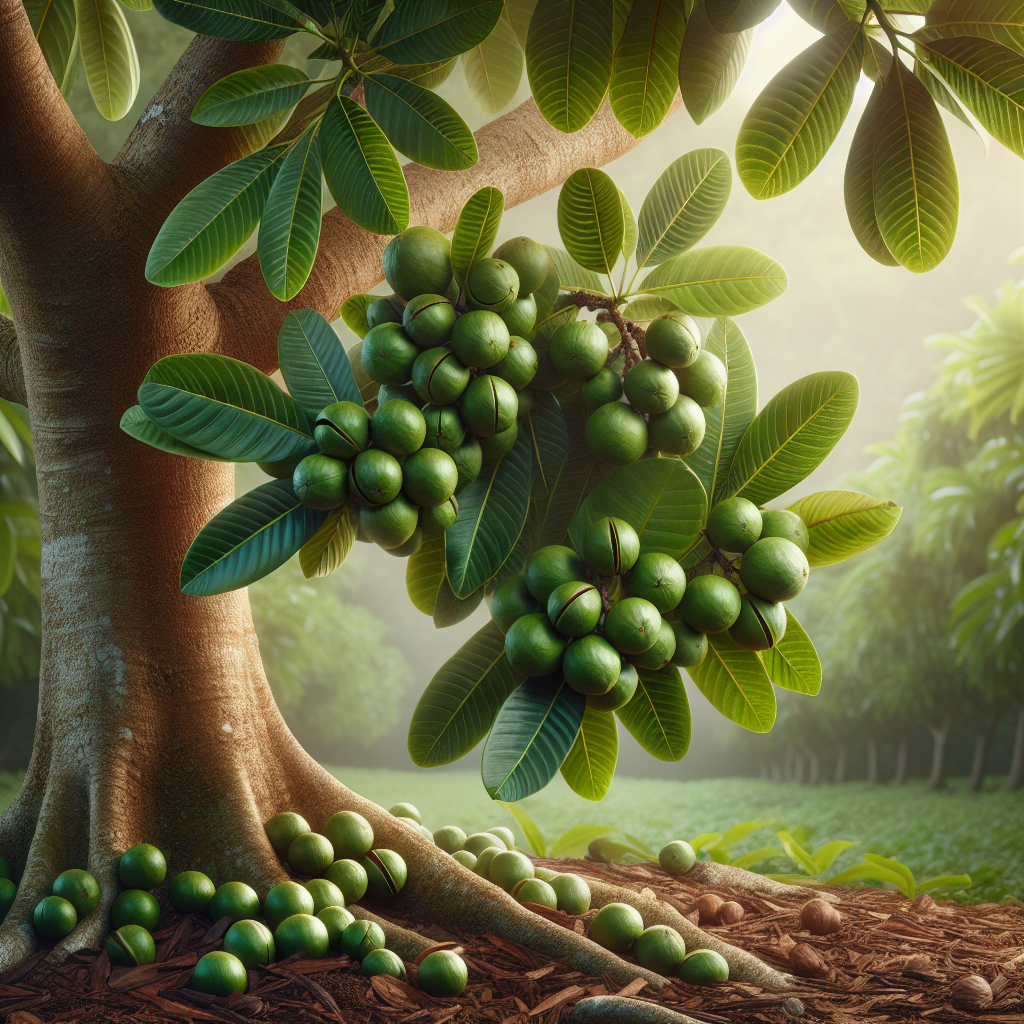
Introduction to Macadamia (Keaau)
A well-managed planting of this Hawaiian cultivar can be one of the most rewarding long-term nut investments in warm climates, but it is not a casual tree crop. Keaau is generally associated with the commercial macadamia tradition of Hawai'i, where cultivar selection focused on kernel recovery, shell characteristics, bearing habit, and adaptation to volcanic soils and wet tropical uplands. In practical terms, growers choose named macadamia cultivars because seedling trees vary too much in vigor, nut size, kernel percentage, and time to bearing.
This cultivar is typically grown for rich, buttery kernels with premium fresh-eating and processing quality. Like most commercial macadamias, it performs best when orchard design is planned for decades, not seasons. Trees may remain productive for 40 years or more, and mistakes made at planting—poor drainage, overcrowding, weak windbreaks, or low-quality nursery stock—can reduce profitability for the life of the orchard.
Although often treated as a simple evergreen nut tree, macadamia is physiologically sensitive in several ways. It dislikes waterlogged soil, can shed flowers or young nuts under stress, and responds strongly to nitrogen, potassium, boron, and calcium balance. Its root system is relatively delicate and benefits from low-disturbance management, heavy organic mulching, and protection from compaction. For growers familiar with orchard crops, the closest management mindset is a blend of subtropical fruit care and premium nut production; some irrigation and canopy principles overlap with avocado culture.
For broader orchard floor and soil-building ideas, see soil health strategies.
Botanical Profile of Macadamia (Keaau)
This cultivar belongs to the Proteaceae family, a botanically distinctive group that includes plants adapted to low-phosphorus soils. Commercial macadamias are primarily derived from Macadamia integrifolia and, in some cases, hybridized with M. tetraphylla. Keaau is generally treated as an M. integrifolia-type cultivar, meaning it typically produces smoother-shelled nuts and kernels with the classic sweet, mild, creamy flavor preferred in premium markets.
Trees are evergreen, medium to large, with dense canopies if left unpruned. Mature height can exceed 30 feet, and in favorable tropical conditions may reach 40 feet or more, though commercial systems usually manage them lower for harvest efficiency and light penetration. Leaves are leathery, glossy, and arranged in whorls, often with a pronounced dark green upper surface. New growth flushes are softer, lighter green, and more vulnerable to insect feeding and fungal spotting.
Flowering occurs on racemes—long, pendant flower spikes bearing many small cream to white flowers. Pollination is improved by insect activity, especially bees, and even cultivars considered reasonably self-fertile often set better with cross-pollination from other flowering-compatible macadamias nearby. Nut set is naturally inefficient: a tree may produce abundant racemes, but only a small fraction mature into harvestable nuts.
The fruit is technically a follicle enclosing a very hard-shelled seed, the edible kernel. One of the key commercial traits in any named cultivar is kernel recovery, meaning the proportion of edible kernel relative to nut-in-shell weight. Good cultivars also show relatively consistent shell thickness, kernel size, and cracking behavior after curing.
Keaau is valued where growers want a cultivar selected under Hawaiian conditions rather than a random seedling population. As with all macadamias, orchard performance still depends heavily on site: the same cultivar may behave very differently on deep, free-draining volcanic loam than on shallow, compacted clay.
Soil, pH, and Climate Requirements for Macadamia (Keaau)
The ideal soil is deep, friable, well-aerated, and fast draining while still able to hold steady moisture. A minimum effective rooting depth of 3 feet is desirable; deeper is better. The tree performs best in loam to sandy loam or well-structured volcanic soils rich in organic matter. Heavy clay is risky unless extensively mounded and drained, because macadamia roots are highly susceptible to decline in low-oxygen conditions.
Target soil pH is 5.0 to 6.5, with optimum performance often around 5.5 to 6.0. Above about 6.8, micronutrient availability can decline, especially iron, manganese, and zinc. Very alkaline soils often produce chlorosis, weak flushes, and poor nut fill unless aggressively corrected. Extremely acidic soils below pH 4.8 may lead to aluminum or manganese toxicity and poor root function.
Drainage is non-negotiable. After a heavy irrigation or storm, water should infiltrate and drain from the upper root zone within 24 hours. If test holes remain saturated at 18 to 24 inches depth after a day, the site is unsuitable without major drainage intervention. Symptoms of chronic overwatering include dull, yellow-green foliage, reduced flush vigor, leaf drop from inner canopy zones, blackened fine roots, and sudden tree collapse under heat stress despite wet soil.
Consistent moisture is important, particularly from flowering through kernel fill, but the soil should never remain swampy. In established orchards, the most productive range is usually moist but aerated soil in the upper 12 to 24 inches, not repeated saturation. Tensiometer-guided irrigation is ideal; many orchards aim to irrigate before soil tension becomes severe, often around 20 to 35 centibars in loamy soils, while avoiding prolonged near-zero saturated conditions.
Climatically, this cultivar prefers tropical to warm subtropical environments with mild seasonal temperature swings. Ideal mean temperatures are roughly 68 to 82°F. Growth slows below 55°F, and frost can injure young trees; temperatures below 28 to 30°F may cause serious damage. Excessive heat above 95°F, especially when paired with low humidity and hot wind, can scorch foliage, reduce pollen viability, and increase nut drop.
Rainfall in the range of 40 to 80 inches annually can support strong growth if it is reasonably distributed and the soil drains well. In wet tropical districts, disease pressure becomes a major limiting factor, so air movement and canopy management are critical. Wind is one of the most overlooked constraints. Macadamias have brittle branches and can lose limbs under strong gusts, especially when heavily loaded. Planting on exposed ridges without windbreaks often leads to chronic canopy distortion and lower yields.
Full sun is best for bearing. Young trees tolerate slight shelter while establishing, but mature production demands good light interception across the canopy.
Step-by-Step Planting & Propagation
Use grafted nursery trees rather than seedlings. Seedling macadamias are highly variable and may take longer to bear, often 7 to 10 years or more, while well-grown grafted trees can begin meaningful production in 4 to 6 years under good management. Choose trees with a clearly healed graft union, balanced branching, a fibrous root system, and no circling roots or waterlogging damage in the container.
- Select the site carefully. Choose elevated or gently sloping ground with excellent air and water drainage. Avoid frost pockets, compacted depressions, and locations exposed to prevailing high winds.
- Test the soil. Conduct a full soil analysis for pH, organic matter, phosphorus, potassium, calcium, magnesium, and micronutrients. Correct major issues before planting rather than after establishment.
- Prepare drainage first. If drainage is marginal, install subsurface drainage or plant on broad mounds 12 to 24 inches high and 4 to 8 feet wide. Macadamias respond better to raised planting than to deep hole planting in wet soils.
- Set spacing according to system. Traditional orchards may use 24 to 30 feet between trees and rows. Higher-density systems may begin tighter, such as 18 to 22 feet, but require planned thinning or pruning as canopies expand.
- Dig a broad, shallow planting hole. Make the hole 2 to 3 times the container width but no deeper than the root ball. Planting too deep is a common cause of decline.
- Plant with the root flare slightly proud. The top of the root ball should sit level with or slightly above surrounding soil. Backfill with native soil rather than a heavily amended pocket that discourages outward root growth.
- Water in thoroughly. Apply enough water to settle soil around roots, then allow the surface to begin drying slightly before the next irrigation. Do not keep newly planted trees continuously saturated.
- Mulch heavily but correctly. Apply 3 to 6 inches of coarse organic mulch over a wide area, ideally 3 to 5 feet from the trunk in all directions, but keep a 6-inch mulch-free ring around the trunk to prevent collar rot.
- Stake only if necessary. In windy sites, use flexible ties and remove supports once the tree is stable. Over-staking can weaken trunk development.
- Protect from sunburn and wind. Young trunks may benefit from white tree paint diluted 1:1 with water if solar exposure is intense.
Propagation is primarily by grafting selected scions onto seedling rootstocks. Side veneer or cleft grafting is commonly used in nurseries. Air-layering and cuttings are generally unreliable at commercial scale due to poor rooting and weak establishment. If raising rootstocks from seed, use fresh nuts, as viability declines with storage. Even then, seedling propagation is for rootstock production, not true-to-type orchard planting.
Care & Maintenance regimes for Macadamia (Keaau)
Irrigation should be steady and moderate. Young trees in their first 1 to 2 years need frequent light-to-moderate watering to keep the root zone evenly moist. In warm conditions, this may mean 2 to 4 irrigations per week in sandy soil, less often in loam. The goal is moisture penetration to 12 to 18 inches without puddling or chronic saturation. A simple field test is to dig 6 to 8 inches down: soil should feel cool and lightly cohesive, not soupy, gray, or foul-smelling.
Established trees need deeper irrigation, typically wetting the upper 18 to 24 inches of soil where feeder roots are active. Water demand rises from pre-flowering through nut filling. Drought stress during this period can cause raceme abortion, small nuts, shriveled kernels, and premature nut drop. Signs of underwatering include leaf folding, reduced flush length, excessive nut shed, and dry, pale mulch with powdery subsoil beneath. Signs of overwatering include persistent moss or algae on soil, sour odor, weak chlorotic leaves, and fine root death.
Nutrition should be based on leaf analysis and soil testing, not guesswork. Macadamias require nitrogen for canopy renewal, potassium for nut production, calcium for tissue strength, and boron in small but critical amounts for flowering and nut set. Split applications are far better than one heavy annual dose.
A practical feeding framework for bearing trees is:
- Light, frequent nitrogen applications during active growth rather than large single doses.
- Strong potassium support where cropping is heavy.
- Boron only in carefully measured amounts; excess boron can be toxic.
- Limited phosphorus unless deficiency is confirmed, because Proteaceae species can be sensitive to excessive phosphorus.
- Regular additions of composted organic matter or chipped prunings to maintain biological activity and moisture buffering.
Pruning should aim for light penetration, manageable height, and structurally sound scaffold limbs. During the first 3 years, shape the tree to develop a strong trunk and well-spaced primary branches. Remove low, weak, crossing, or inward-growing shoots. In mature orchards, thin dense interior wood, remove dead branches, and maintain alley access for harvest. Severe topping can trigger unproductive vegetative regrowth and sunburn on exposed limbs, so reduction cuts should be gradual.
Weed management is especially important in the establishment phase. Grass competition within 3 to 4 feet of the trunk can dramatically slow growth. Maintain a weed-free or heavily mulched tree row. Avoid deep cultivation because feeder roots are shallow and easily damaged.
Pollination improves with bee activity and mixed cultivar plantings. Even where Keaau is planted as a main cultivar, interplanting with compatible pollenizers can improve set and stability of yields. Orchard diversity also spreads flowering risk across weather events.
Pests, Diseases & Organic Management
The most serious problems depend on region, but humid tropical production commonly faces fungal pressure, insect feeding on flowers and young nuts, and rodent losses at harvest. Good sanitation and canopy airflow are the foundation of organic management.
Common disease issues include husk spot, flower blights, anthracnose-type lesions, and root diseases associated with poor drainage. Flowering and early nut development are especially vulnerable during prolonged rain, heavy dew, and dense, shaded canopies. Remove dead wood, mow or manage alley vegetation to improve airflow, and avoid overhead irrigation during bloom if possible.
root rot risk rises sharply in poorly drained soils or where mulch is piled against trunks. Prevention is more effective than treatment: plant high, maintain oxygenated soil, and never let emitters keep the crown area constantly wet.
Insect pests may include stink bugs, lace bugs, thrips, scale insects, and boring insects depending on local conditions. Flower and nut-feeding bugs can puncture developing nuts, causing black spotting, distortion, or premature drop. Scale infestations often appear on stressed trees and are worsened by excessive nitrogen and dusty conditions.
Organic management strategies include:
- Monitoring racemes, new flushes, and nut clusters weekly during high-risk periods.
- Conserving beneficial insects through reduced broad-spectrum sprays.
- Using horticultural oils or insecticidal soaps only when pressure justifies treatment and only under safe temperature conditions.
- Removing heavily infested twigs and pruning for light and airflow.
- Encouraging predator habitat with flowering strips placed away from the trunk zone.
- Using trunk guards or bait stations where rodents steal fallen nuts.
Nutritional balance is itself a pest management tool. Overly lush, nitrogen-heavy growth attracts soft-bodied pests and creates dense shade that favors fungal outbreaks. Trees with adequate calcium, potassium, and micronutrient balance generally hold foliage better and recover faster from moderate pest pressure.
Watch for symptom patterns rather than isolated blemishes. Uniform chlorosis often indicates root or nutrient issues, while patchy black spotting on nuts after wet weather points more toward fungal disease. Sudden branch dieback on one side may suggest root damage, canker, or mechanical injury rather than a foliar pest.
Harvesting, Curing & Optimal Storage
Macadamias are usually harvested after natural drop rather than picked immature from the tree. Nuts are mature when the husk splits and the nut falls, or when dropped nuts have reached full shell and kernel development. Frequent collection is important, especially in wet climates where nuts can mold, germinate, or be eaten by rodents if left on the ground.
During harvest season, gather fallen nuts every few days; in rainy weather, daily collection is better. Remove the outer husk as soon as possible after pickup. Delayed dehusking traps moisture and heat, which encourages discoloration, off-flavors, and fungal growth.
After dehusking, begin curing immediately. Fresh nuts-in-shell contain too much moisture for cracking and safe storage. Initial air-drying in a shaded, well-ventilated space reduces moisture gradually. Nuts should be spread in shallow layers, never piled deeply where heat can build. Commercial curing often aims to reduce kernel moisture to around 1.5 to 3% for best texture and shelf stability, though exact targets vary by market and cracking method.
If drying is too fast at high temperatures, kernels may case-harden or crack internally. Gentle curing is preferable, often starting at ambient airflow and moving to controlled low-temperature drying if needed. Once cured, nuts crack more cleanly and kernels develop the crisp texture associated with premium macadamias.
Store cured nuts in cool, dry, dark conditions. Because macadamia kernels are rich in oil, they can become rancid if exposed to heat, oxygen, or light for long periods. In-shell storage extends life compared with cracked kernels, but only if the nuts are properly dried first. Kernels store best in airtight packaging under refrigeration or freezing for long-term quality retention.
Quality sorting matters. Reject nuts with mold, insect holes, unusual lightness, shriveled kernels, or fermented odor. Premium lots are uniform in size, fully filled, pale cream in color, and free of brown spotting.
Companion Planting for Macadamia (Keaau)
In young orchards, companion planting should support soil cover, pollinator activity, and biological resilience without competing aggressively for water. The best companions are low-growing or manageable species placed outside the immediate trunk zone.
Clover is one of the most useful understory companions because it provides living ground cover, suppresses erosion, supports pollinators, and contributes biologically fixed nitrogen to the orchard floor system. It is especially valuable in alleys or strip plantings between tree rows.
Yarrow is a strong choice for beneficial insect support. Its long flowering window attracts parasitoids and predatory insects while occupying relatively little root space compared with larger shrubs. It works well along borders or in managed insectary strips.
Thyme can serve as a drought-tolerant aromatic groundcover in drier orchard edges and around infrastructure zones. Its flowers attract pollinators, and its compact habit helps reduce bare soil.
Nasturtium is useful in small-scale mixed orchards where a sacrificial or insect-attracting companion is desired. It draws pollinators and beneficial insects and can add diversity to orchard margins, though in very wet climates it should be monitored so it does not become overly rank.
Avoid heavy-feeding annual vegetables close to young trees, and avoid any companion that requires deep cultivation near the root zone. The first priority is always establishment of the orchard tree, so keep the area within 3 feet of young trunks mulched, weed-controlled, and free of dense companion roots.