Introduction to longan
The longan psyllid, scientifically known as Blastopsylla longanae, is a highly destructive pest targeting longan trees, particularly in tropical and subtropical regions. This small, jumping insect belongs to the Psyllidae family and feeds on plant sap, causing significant damage to foliage and fruit production. First identified in Southeast Asia, it has spread to longan-growing areas worldwide, including Florida, Hawaii, and parts of Australia, where it poses a major threat to commercial orchards and home gardens.
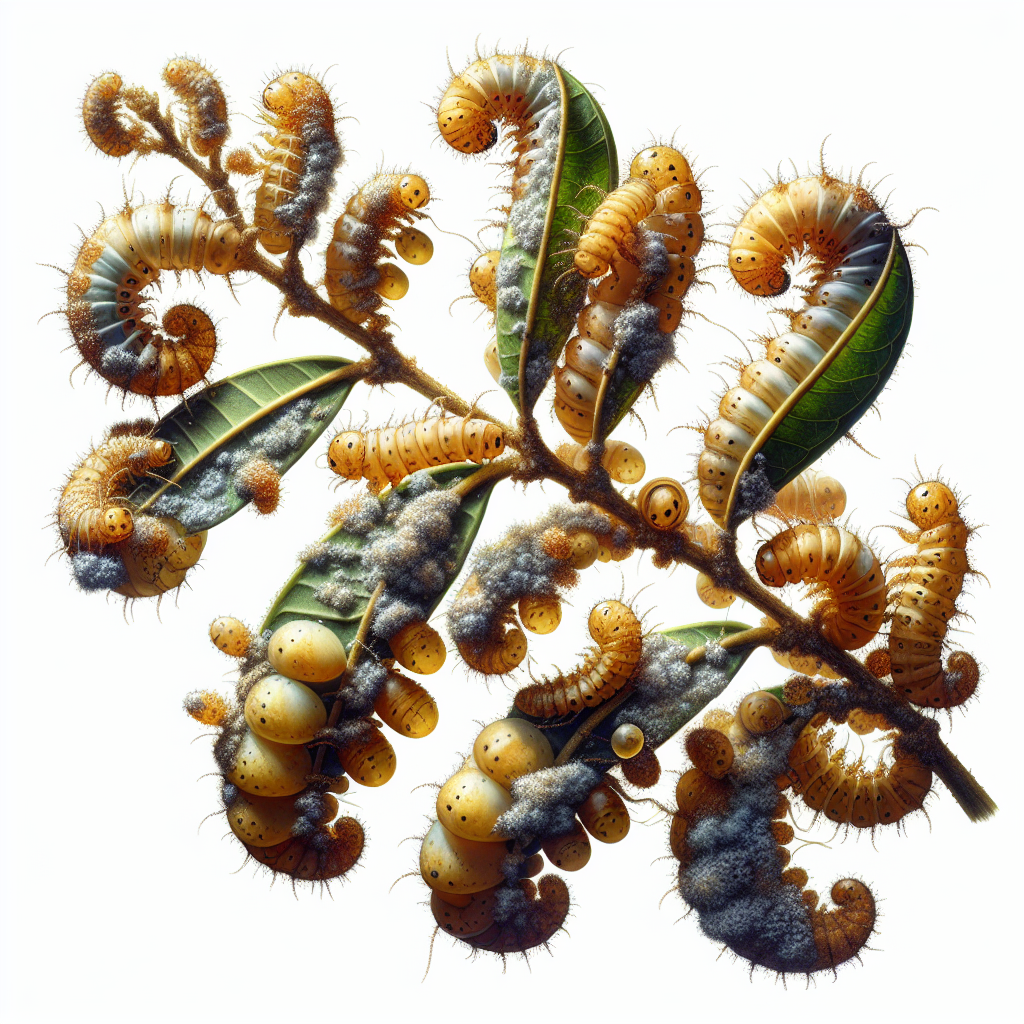
Longan psyllids thrive in warm, humid environments, multiplying rapidly during the growing season. Adults are tiny (about 2-3 mm long), pear-shaped, with translucent wings and a distinctive jumping ability reminiscent of miniature cicadas. Nymphs are flat, scale-like, and covered in waxy filaments that protect them from predators and sprays. Infestations often start on new growth, leading to curled leaves, sticky honeydew excretion, and black sooty mold that blocks photosynthesis.
Economic impacts are severe: yields can drop by 50-80% in unmanaged orchards, with sooty mold rendering fruit unmarketable. Early detection is crucial, as populations explode in favorable conditions. This guide provides farmers and growers with diagnostic tools, lifecycle insights, and proven organic management strategies to protect their longan crops. For more on related sap-suckers, see our entry on psyllids.
Understanding this pest's biology is key to integrated pest management (IPM). Unlike broader pests like aphids, longan psyllids are host-specific, rarely affecting nearby mango or lychee trees. However, their honeydew attracts ants, complicating control efforts. Check out this Spring Pest Patrol: Organic AI Strategies to Shield Your Crops from Common Invaders for broader seasonal tips.
Identifying Symptoms & Damage
Spotting longan psyllid infestations early can save your orchard. Look for these hallmark signs on new flushes of growth:
- Leaf Curling and Distortion: Tender young leaves twist and cup upward, often turning yellow or bronze. Severe cases cause leaves to shrivel and drop prematurely.
- Honeydew Production: Shiny, sticky droplets coat leaves, stems, and fruit. This exudate is the psyllid's waste from sap-feeding.
- Sooty Mold: Black, velvety fungal growth develops on honeydew, giving foliage a charred appearance. It reduces photosynthesis by up to 30%.
- Nymphal Presence: Tiny, orange-pink crawlers (nymphs) clustered on leaf undersides, surrounded by white, waxy tubes resembling cotton candy.
- Adult Sightings: Minute green or yellow insects jumping when disturbed, often visible on shoots.
Damage progresses from cosmetic to yield-robbing. Light infestations stunt growth; heavy ones defoliate trees, weakening them against anthracnose or drought. Fruit clusters may abort, and surviving fruit becomes misshapen with sooty coatings, slashing market value.
Differentiate from similar pests: Unlike spider mites, no fine webbing; unlike mealybugs, nymphs have tubular wax. Use a 10x hand lens for confirmation. Scout weekly during flush periods, tapping branches over white paper to detect jumpers.
Lifecycle and Progression of longan
Longan psyllids complete their lifecycle in 20-30 days under optimal conditions (25-30°C, high humidity). Understanding stages aids targeted control:
- Eggs: Tiny, yellow, laid in clusters (10-20) on leaf undersides. Hatch in 3-5 days.
- Nymphs (5 Instars): Flattened, non-mobile, 0.3-1.5 mm long. Feed voraciously, producing honeydew and wax. Develop in 10-15 days.
- Adults: Winged, 2-3 mm, live 2-4 weeks. Females lay 100-300 eggs. Multiple generations (8-12/year) overlap in tropics.
Populations peak during rainy seasons, synchronizing with longan flushes. Overwinter as nymphs in mild climates. Progression: Eggs → crawlers (mobile, vulnerable) → settled nymphs (protected) → pupae → adults. Disrupt early crawler stage for best results.
Environmental Triggers & Risk Factors
Longan psyllids explode under specific conditions:
- High Humidity (>70%) and Warmth (24-32°C): Ideal for egg hatch and nymph survival.
- New Growth Flushes: Preferred feeding site; excessive nitrogen fertilizers trigger tender shoots.
- Ant Attendance: Ants farm psyllids for honeydew, protecting them from predators.
- Poor Airflow: Dense canopies in neglected orchards trap moisture.
- Nearby Hosts: Infested lychee or rambutan spread via wind/dispersal.
Risk factors include monoculture orchards, overhead irrigation, and drought-stressed trees (susceptible to secondary sooty mold). Climate change extends active seasons, per recent studies in Florida.
Organic Control & Treatment Plans
Prioritize IPM: Monitor, cultural, biological, then organic sprays. Avoid broad-spectrum insecticides to preserve predators.
Cultural Controls:
- Prune for airflow; remove infested tips.
- Balance NPK fertilizers; avoid excess nitrogen.
- Reflective mulches deter adults.
Biological Controls:
- Encourage predators: Ladybugs, lacewings, parasitic wasps (Tamarixia radiata). Release 1,000/ha.
- Neem oil (0.5-1%) or insecticidal soap smothers crawlers weekly for 3 applications.
Treatment Plans:
- Mild Infestation: Horticultural oil + systemic neem (azadirachtin) at crawler stage.
- Moderate: Kaolin clay barrier + spinosad (organic-approved) rotations.
- Severe: Combine with yellow sticky traps (20/tree) and ant baits (boric acid).
Apply evenings to spare bees. Rotate modes to prevent resistance. Expect 70-90% control in 4 weeks.
Preventing longan in the Future
Prevention beats cure:
- Scout Regularly: Weekly checks during flushes.
- Quarantine New Plants: Inspect imports.
- Resistant Varieties: 'Kohala' or 'Biew Kiew' show tolerance.
- Sanitation: Destroy debris; weed understory.
- Barrier Methods: Copper tape on trunks deters ants.
- Companion Planting: Marigold repels via scents.
Long-term: Diverse plantings with mango reduce monoculture risks. Monitor with apps for hyper-local alerts.
Crops Most Affected by longan
Primarily longan (Dimocarpus longan), but spills to relatives:
- Lychee (Litchi chinensis): 20-30% damage.
- Rambutan (Nephelium lappaceum): Minor.
- Rare on mango or avocado.
Tropical fruit orchards hit hardest; commercial longan loses $millions yearly.