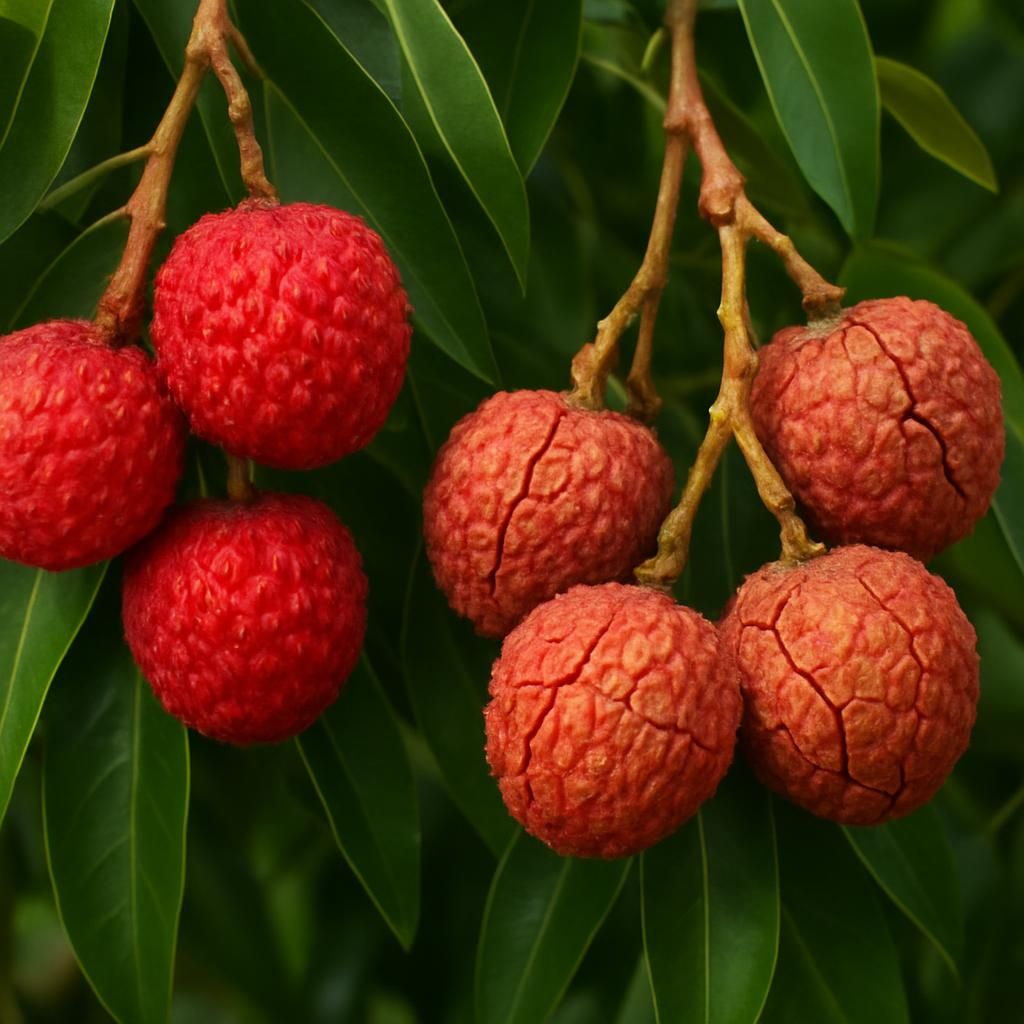
Introduction to Lychee
Lychee (Litchi chinensis) is a high-value subtropical evergreen tree prized for its sweet, aromatic fruit. Grown commercially in regions with distinct dry winters and warm, humid summers, the crop is susceptible to several physiological disorders, fungal pathogens, and insect pests that can significantly reduce yield and fruit quality. This definitive guide provides professional diagnostic criteria and management strategies based on integrated pest and disease management principles.
Identifying Symptoms & Damage
Lychee disorders manifest through distinctive foliar, fruit, and tree symptoms. Common signs include irregular leaf yellowing, marginal necrosis, fruit cracking, and premature drop. In severe cases, branch dieback and canopy thinning occur. Accurate identification relies on observing symptom patterns, timing relative to growth stages, and environmental conditions. Early detection of Anthracnose lesions on fruit or leaves is critical for timely intervention.
Lifecycle and Progression of Lychee
Lychee trees follow an annual growth cycle influenced by temperature, water availability, and nutrient status. The table below outlines key phenological stages and associated risks.
| Stage | Duration | Key Characteristics | Associated Risks |
|---|---|---|---|
| Flowering | 2–4 weeks | Panicles emerge; pollination occurs | Poor fruit set from low humidity or mango hoppers |
| Fruit Set | 3–5 weeks | Small green fruit develop | Fruit cracking from irregular irrigation |
| Fruit Growth | 8–12 weeks | Rapid aril expansion | Stem-end rot and post-harvest fungal decay |
| Harvest & Dormancy | 4–8 weeks post-harvest | Leaf flush and root growth | Nutrient depletion leading to alternate bearing |
Environmental Triggers & Risk Factors
Lychee production is highly sensitive to climatic extremes. Temperatures below 0 °C damage flowers, while sustained humidity above 85 % promotes fungal infections. Soil pH outside the optimal 5.5–6.5 range restricts micronutrient uptake, increasing susceptibility to disorders. Water stress during fruit development causes cracking; conversely, waterlogging induces root hypoxia and secondary root rots. High nitrogen fertilization late in the season delays maturity and elevates pest pressure.
Organic Control & Treatment Plans
An integrated organic approach combines cultural, biological, and approved organic inputs. The following table summarizes treatment options and recommended frequencies.
| Treatment Option | Target Issue | Application Frequency | Rate / Notes |
|---|---|---|---|
| Neem oil emulsion (0.5 %) | Scale insects, mealybugs | Every 10–14 days during flush | Spray thoroughly; avoid peak heat |
| Bacillus thuringiensis (Bt) | Lepidopteran larvae | At first sign of feeding | 1–2 L/ha; reapply after rain |
| Compost tea + seaweed extract | Nutrient boost & disease suppression | Bi-weekly during growth | Foliar and soil drench |
| Sulfur-based fungicide | Powdery mildew | Preventive at flowering | 2–3 kg/ha; rotate with copper |
| Reflective mulch | Fruit flies | Season-long | Maintain 10 cm layer around trunk |
Preventing Lychee in the Future
Prevention begins with site selection and continues through orchard management. Choose well-drained slopes with wind protection and maintain 6 m × 6 m spacing for air circulation. Implement The Overlooked Art of Crop Rotation for Small Farm Resilience by alternating lychee with cover crops such as sunn hemp. Regular soil testing, balanced organic fertilization, and timely pruning reduce stress and pest habitat. Monitor with yellow sticky traps and maintain biodiversity through hedgerows.
Crops Most Affected by Lychee
While lychee-specific disorders are primary, related subtropical crops share similar pressures. Mango, Longan, and Avocado frequently experience overlapping issues such as anthracnose, fruit flies, and nutrient imbalances. Monitoring these neighboring crops provides early warning for lychee orchards.