Introduction to longan
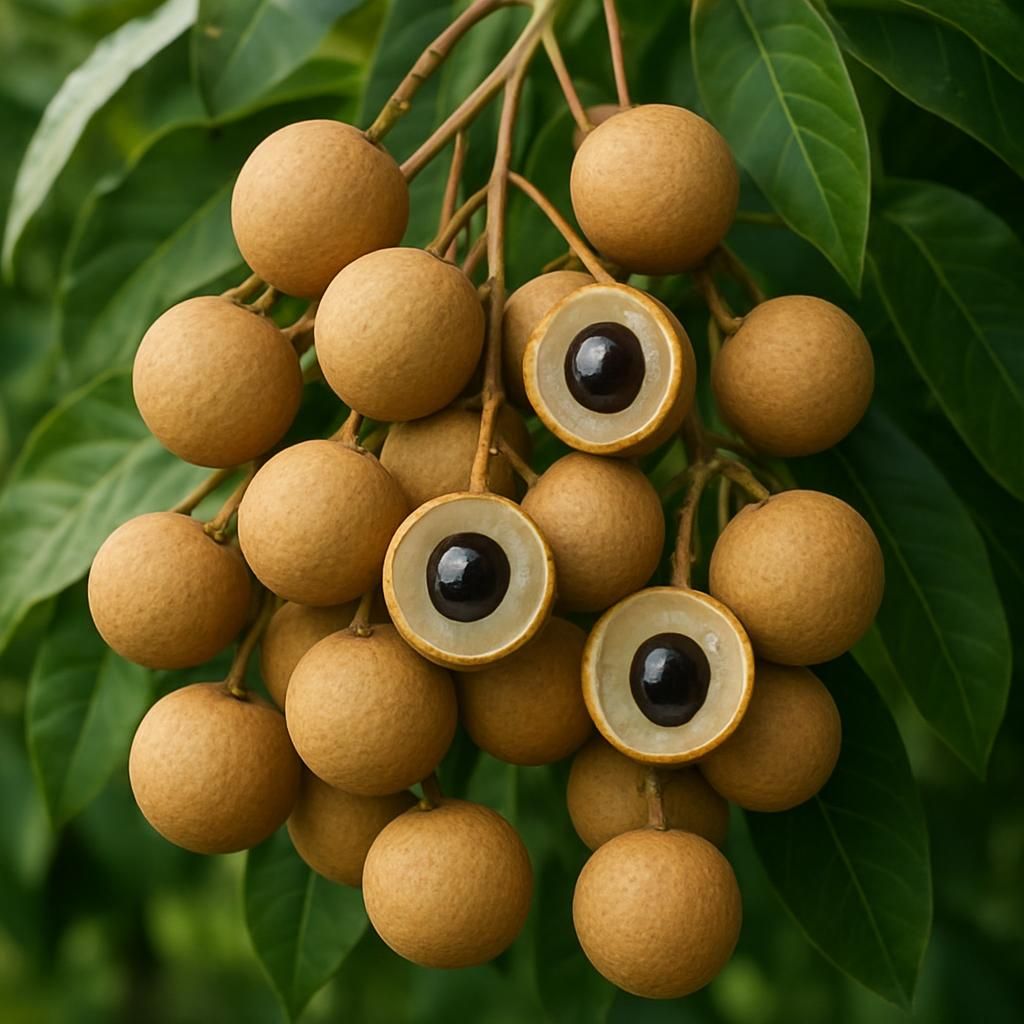
Longan (Dimocarpus longan) is a high-value subtropical fruit crop belonging to the Sapindaceae family. Native to southern China and parts of Southeast Asia, it produces clusters of small round fruits with sweet, juicy, translucent flesh surrounding a single shiny seed. The tree is valued both for fresh fruit markets and for processing into dried longans, juices, and preserves. Commercial growers appreciate longan for its relatively long shelf life compared to Mango and its consistent demand in Asian and export markets.
Botanical Profile of longan
Longan trees are medium to large evergreen with dense rounded canopies, compound leaves, and small yellowish-white flowers borne in panicles. Mature trees reach 10–12 m in height under optimal conditions but can be kept smaller through regular pruning. The fruit develops in loose clusters of 20–100 berries, each 1.5–2.5 cm in diameter. The thin brownish rind cracks easily at maturity, revealing the sweet edible aril. Flowering occurs in late winter to early spring, with fruit maturing 4–5 months later depending on cultivar and climate.
Soil, pH, and Climate Requirements for longan (MUST INCLUDE A MARKDOWN TABLE OF IDEAL CONDITIONS)
Longan thrives in well-drained sandy loam to loam soils with good organic matter content. The crop is sensitive to waterlogging and saline conditions. It performs best in subtropical to tropical climates with distinct dry and wet seasons.
| Parameter | Ideal Range | Notes |
|---|---|---|
| Soil Type | Sandy loam to loam | Deep, well-drained profiles essential |
| Soil pH | 5.5 – 6.5 | Slightly acidic to neutral |
| Temperature | 20–32 °C daytime | Frost below –1 °C damages young trees |
| Annual Rainfall | 1200–2000 mm | Supplemental irrigation in dry periods |
| Relative Humidity | 60–80 % | Higher humidity favors flowering |
| Elevation | 0–600 m | Lower elevations preferred for commercial production |
Step-by-Step Planting & Propagation
Longan is primarily propagated by air-layering (marcotting) or grafting onto seedling rootstocks to ensure true-to-type plants. Select healthy 1-year-old marcots or grafted plants with well-developed root systems. Prepare planting holes 60 cm × 60 cm × 60 cm filled with a mixture of topsoil, compost, and 200 g of balanced organic fertilizer. Space trees 8–10 m apart in square or hexagonal layouts. Plant at the beginning of the rainy season, firm the soil around the root ball, and water thoroughly. Stake young trees and apply a 5–10 cm layer of organic mulch, keeping mulch 10 cm away from the trunk.
Care & Maintenance regimes for longan (MUST INCLUDE A MARKDOWN TABLE OF WATER, FERTILIZER, AND PRUNING SCHEDULES)
Consistent irrigation, balanced nutrition, and annual pruning are essential for sustained productivity. Young trees require more frequent watering until established, while mature trees benefit from regulated deficit irrigation to promote flowering.
| Growth Stage | Watering Schedule | Fertilizer Application | Pruning Schedule |
|---|---|---|---|
| Year 1–2 | 2–3 times/week (10–15 L/tree) | 200 g NPK 15-15-15 every 3 months | Formative pruning after each flush |
| Year 3–5 | Weekly deep irrigation (30–50 L) | 500 g NPK + 2 kg compost twice yearly | Remove crossing branches and water shoots |
| Mature Bearing | 40–60 L every 7–10 days (adjust to rainfall) | 1 kg NPK + micronutrients post-harvest | Light annual prune after harvest + tip pruning to maintain canopy |
Pests, Diseases & Organic Management
Major insect pests include Aphids, Mealybugs, and Mites. Regular monitoring and releases of beneficial insects such as lady beetles and lacewings provide effective biological control. Fungal issues such as Anthracnose and Phytophthora root rot can be managed through improved drainage, resistant rootstocks, and copper-based sprays during wet periods. Neem oil and horticultural oils are useful for soft-bodied pests, while kaolin clay particle films deter fruit flies and reduce sunscald.
Harvesting, Curing & Optimal Storage
Longan fruits reach maturity 140–160 days after flowering when the rind color turns light brown and the flesh becomes sweet. Harvest entire clusters with pruning shears, leaving a short stem. Sort fruit immediately, discarding damaged or cracked specimens. Pre-cool to 5–7 °C within 4 hours of harvest. Store at 3–5 °C and 90–95 % relative humidity for up to 3–4 weeks. For longer storage, sulfur fumigation or modified atmosphere packaging can extend shelf life to 6–8 weeks.
Companion Planting for longan
Longan benefits from nitrogen-fixing companions such as Pigeon pea and Gliricidia planted in alley rows. These legumes improve soil fertility and provide partial shade for young trees. Low-growing herbs like Thai Basil and Rosemary planted in the understory help repel pests and attract pollinators. Avoid planting heavy feeders such as Banana in close proximity, as they compete for nutrients and water.