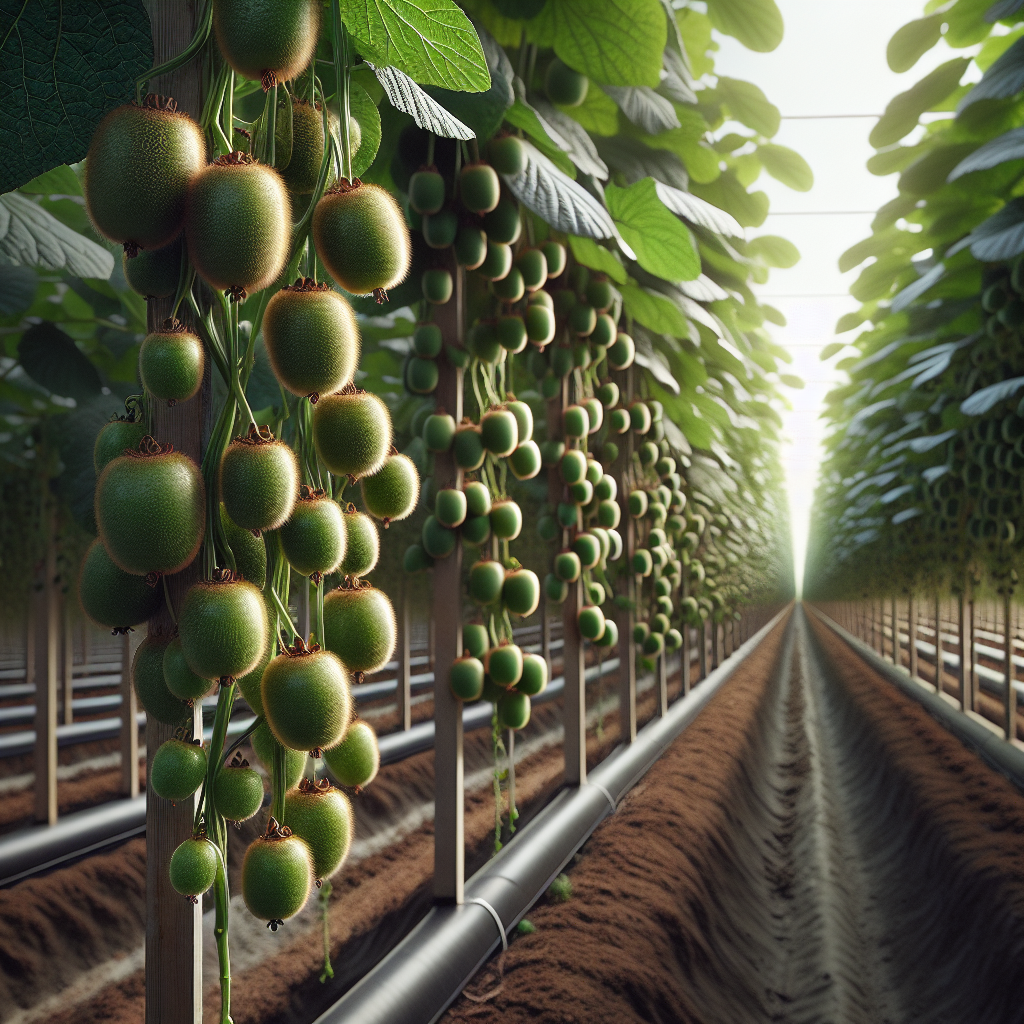
Introduction to Kiwi (Arctic)
Arctic kiwi is among the most cold-tolerant fruiting vines available to temperate and northern growers, making it highly valuable where standard fuzzy kiwi struggles or dies back. Unlike the supermarket kiwi most people know, this plant produces small grape-sized to olive-sized fruit with smooth edible skin, so the berries are typically eaten whole. The flavor is often described as sweet, aromatic, and bright, with notes that can resemble kiwi, gooseberry, and melon depending on ripeness and cultivar.
In horticulture, “Arctic kiwi” most often refers to Actinidia kolomikta, though the name is sometimes loosely applied to other hardy kiwis. True A. kolomikta is prized not only for fruit but also for ornamental foliage, especially on male plants, whose leaves can develop striking white and pink variegation in spring. That ornamental beauty can mislead growers into thinking it is a low-maintenance landscape vine; in reality, productive fruiting requires orchard-style management.
Historically, this species originates from northeastern Asia, including parts of Russia, Korea, Japan, and China, where it evolved under harsh winter conditions. That heritage explains its extreme cold hardiness, with mature dormant vines tolerating temperatures far below those tolerated by common kiwifruit. However, its Achilles' heel is not deep winter cold but early spring growth: buds can break dormancy early and young shoots are vulnerable to late frost. For cold-climate success, the key is not merely winter survival but frost avoidance during bud break and flowering.
Growers choosing Arctic kiwi should understand one major biological trait from the start: most vines are dioecious, meaning male and female flowers occur on separate plants. Without a compatible male nearby, female vines will flower but fail to set a meaningful crop. This single planning detail is responsible for a large percentage of disappointing home plantings.
For growers comparing species, see our hardy kiwi guide for another cold-climate option with somewhat different vigor and fruiting behavior.
Botanical Profile of Kiwi (Arctic)
This species belongs to the Actinidiaceae family and is a deciduous woody climber with twining growth. The vine can reach 10-20 feet or more under cultivation, though size depends heavily on pruning, support structure, fertility, and age. Stems are slender when young but become woody with age, and productive fruiting occurs primarily on current-season growth arising from one-year-old wood.
Leaves are alternate, usually ovate to broadly elliptic, with fine serration and a delicate texture. The foliage is thinner and often more ornamental than that of larger kiwifruit species. Male plants often show stronger variegation than females, especially once mature and grown in good light. This pink-white flushing is attractive but should not be mistaken for nutrient deficiency or disease.
Flowers are small, usually white, lightly fragrant, and appear in late spring. Female flowers contain a prominent ovary and functional stigmas, while male flowers produce abundant pollen but no functional fruit. Pollination is carried by insects, particularly bees, though the flowers are less showy than many orchard crops and may not attract as many pollinators if competing bloom is limited nearby.
Fruit are smooth-skinned berries, usually green to yellow-green at maturity, smaller than commercial fuzzy kiwi and softer when fully ripe. Skin is edible and lacks the dense fuzz of Kiwi. Seed size is tiny, and fruit texture is tender when properly matured. The crop is highly perishable compared with apples or pears and must be handled gently.
Botanically, Arctic kiwi differs from Actinidia deliciosa and Actinidia chinensis in several important ways: much greater cold tolerance, smaller fruit, earlier dormancy break, and often a shorter path to bearing under good management. It also tends to be less tolerant of heat stress than standard kiwi, especially in areas with hot dry summers and high nighttime temperatures.
Soil, pH, and Climate Requirements for Kiwi (Arctic)
This vine performs best in deep, fertile, moisture-retentive but sharply drained soils. The ideal texture is a well-structured loam or sandy loam rich in organic matter, with enough fine particles to hold moisture but enough pore space to prevent root suffocation. Heavy clay can work only if it is improved and mounded, because kiwi roots are sensitive to standing water and oxygen deprivation.
Optimal soil pH is slightly acidic, generally 5.5-6.8. It will tolerate near-neutral soils, but growth and micronutrient uptake are usually best on the acidic side. Above pH 7.2, iron and manganese availability often decline, producing interveinal chlorosis on young leaves. Below about pH 5.0, root stress and nutrient imbalance can also reduce vigor. A pre-plant soil test is strongly recommended, followed by pH correction before installation because adjusting pH under an established trellis is much harder.
Organic matter should ideally be 4-7% in mineral soils. Before planting, incorporate well-finished compost rather than raw manure. Fresh manure can create excess salts and rank vegetative growth. Arctic kiwi roots are relatively shallow and fibrous, so the top 8-12 inches of soil should be loose, biologically active, and consistently moist.
Drainage is non-negotiable. If water stands longer than 24 hours after heavy rain, the site is risky. Root rot pressure rises rapidly in saturated soils, especially during cool spring weather. A practical field test is to dig a hole 12-18 inches deep, fill it with water, and confirm that it drains within several hours on a typical soil day. Raised berms 8-12 inches high can greatly improve performance in marginal soils.
Climate preference is cool-temperate to cold-temperate. Mature vines can tolerate extreme winter lows, often to around USDA zone 3 or 4 depending on provenance, but fruiting success is best in zones where late spring freezes are not routine during bloom. Ideal sites provide 150-180 frost-free days, though the vine itself can live in colder places. Summer conditions should be warm rather than intensely hot. Repeated exposure to temperatures above 86-90°F (30-32°C), especially with dry wind, can scorch leaves and reduce fruit quality unless irrigation and mulching are excellent.
Full sun is preferred for fruiting, but in hot inland climates light afternoon shade can reduce stress. In northern regions, a south- or east-facing slope may warm too early in spring, causing premature bud break; a slightly cooler north- or northeast-facing exposure can delay growth enough to avoid frost injury. That counterintuitive siting decision often makes the difference between annual crops and repeated flower loss.
Wind protection matters. Tender spring shoots are brittle, and strong wind can shred leaves, break new growth, and reduce pollinator activity. A sheltered site with good air drainage is ideal: protected from prevailing winds but not in a frost pocket.
If you are improving long-term site fertility and structure before planting, this broader soil strategy article is useful: soil health tips.
Step-by-Step Planting & Propagation
Start with named nursery stock rather than seedlings if fruit production is the goal. Seed-grown Arctic kiwi is genetically variable, slow to evaluate, and unpredictable in sex. Purchase at least one male for every 5-8 female vines, though exact ratios depend on trellis layout and pollinator activity. In small plantings, one male can usually serve several females if planted within 25-35 feet.
- Choose the site carefully. Select a location with excellent drainage, deep soil, and protection from spring frost pockets. Avoid low basins where cold air settles.
- Install the support before planting. A kiwi vine is not a light trellis crop. Build a heavy-duty trellis using rot-resistant posts or anchored metal posts. End posts should be well braced. A T-bar or pergola style works well. Use high-tensile wire or equivalent support able to carry mature vine weight, wet foliage, and fruit.
- Prepare the soil deeply. Loosen a 3-4 foot diameter area per plant. Mix in compost, but avoid creating a small amended pocket in dense surrounding soil, which can trap water. If drainage is questionable, plant on a mound or raised row.
- Plant in early spring while dormant. In cold regions, spring planting is preferred over fall because young roots need a full season to establish before extreme winter. Position the crown at the same depth as it grew in the container or nursery field.
- Water in thoroughly. After planting, irrigate enough to settle the soil completely around roots. Then apply 2-4 inches of mulch, keeping it 2-3 inches away from the stem to prevent crown rot.
- Head back if needed. If the nursery plant is weak or poorly branched, prune to a strong bud to encourage a vigorous leader. If it already has a suitable leader, tie that to a training stake.
- Train one main trunk. During year one, select the strongest upright shoot and remove competitors. Tie it loosely to a bamboo cane or vertical wire. Once it reaches the trellis wire, pinch to encourage two cordons, one in each direction.
- Control first-year fruiting. Remove flowers on young vines for the first 1-2 years so energy goes into framework development.
Propagation is possible by softwood cuttings, hardwood cuttings, layering, or seed, but cuttings and layering are preferred for true-to-type plants. Softwood cuttings taken in early summer root best under mist with bottom heat and sterile medium. Hardwood cuttings can root, but success is lower and slower. Layering is straightforward: peg a flexible shoot into moist soil, cover a node, and separate the rooted section the following season.
Grafting is uncommon for most home and small-farm systems, but clonal propagation remains essential because sex and fruit quality traits must be preserved.
Spacing depends on trellis style. For a single-wire cordon system, 10-15 feet between vines is typical. Rows should be 12-16 feet apart for access, airflow, and light penetration. Do not overpack; shaded interior canopies become less fruitful and more disease-prone.
Care & Maintenance regimes for Kiwi (Arctic)
Water management must be precise. Arctic kiwi likes even moisture, not constant saturation. As a rule, the root zone should stay consistently moist in the top 6-10 inches during active growth. In practical terms, squeeze a handful of soil from 4-6 inches deep: it should feel cool and hold together lightly, not drip water and not crumble into dry dust. During establishment, provide roughly 1-1.5 inches of water per week from rain or irrigation, split into deep applications. In sandy soils or hot weather, mature vines may require more frequent irrigation.
Signs of underwatering include drooping leaves in the morning, marginal browning, small fruit, premature fruit drop, and weak shoot extension. Signs of overwatering include yellowing leaves despite wet soil, stunted growth, soft crown tissue, fungal odor in the root zone, and a general dull, limp canopy that does not recover after cool nights. Persistent sogginess is far more dangerous than brief dryness.
Mulching is highly beneficial. Use shredded bark, leaf mold, straw, or composted wood chips to moderate soil temperature and reduce moisture swings. Maintain a mulch ring at least 2-3 feet wide around each trunk. Because roots are shallow, avoid aggressive cultivation beneath vines.
Nutrient management should emphasize balance over heavy feeding. Excess nitrogen creates rampant vine growth, delayed hardening, reduced flowering, and greater winter injury risk. In spring, apply a modest nitrogen source once growth begins, then reassess vigor. Mature vines often need only light annual feeding if soil organic matter is good. A general target for orchard situations is modest nitrogen split between early spring and early summer, avoiding late-summer applications that stimulate tender growth. Potassium and calcium are important for fruit quality and cane strength; use soil and leaf analysis where possible.
Pruning is the core management skill for kiwi. Without it, the vine becomes a dense, unproductive tangle. Winter pruning is done in full dormancy, ideally late winter before sap flow is strong. Remove dead, tangled, weak, and overcrowded wood. Retain well-spaced one-year-old canes arising from permanent cordons, shortening them to an appropriate bud count depending on vigor and trellis space. Fruiting occurs on shoots emerging from these canes.
Summer pruning is equally important. Cut back excessively long vegetative shoots, open the canopy to light, and prevent the trellis from becoming a mat of growth. Good summer pruning improves bud formation for the following year and reduces disease pressure by increasing air movement.
Pollination management is often overlooked. Place male vines so bees can easily move through the planting. Male bloom must overlap female bloom; not all cultivars are perfectly synchronized. In poor pollination years, fruit set may be light even on healthy vines. Encourage pollinators by maintaining flowering habitat nearby, such as yarrow and thyme, while avoiding insecticide use during bloom.
Winter protection for mature vines is usually unnecessary in suitable regions, but young trunks benefit from protection against rodent damage, sunscald, and rapid temperature swings. Tree guards or white trunk wraps can help. In late-frost regions, temporary row-cover fabric over small trained vines or orchard frost strategies may save the crop.
Pests, Diseases & Organic Management
Arctic kiwi is generally less pest-ridden than many fruit crops, but problems do occur, especially as plantings age and canopy density increases. The best organic strategy is prevention through site choice, sanitation, airflow, and balanced fertility.
Common insect issues include leafrollers, Japanese beetles, scale insects, aphids, and spider mites. leafrollers chew leaves and may web foliage or feed on flowers. Japanese beetles skeletonize foliage and can reduce photosynthetic capacity significantly during peak summer. aphids cluster on tender new growth and excrete honeydew, while spider mites become more severe in hot, dusty conditions.
Organic controls begin with monitoring. Inspect the underside of leaves weekly in spring and early summer. Hand-pick beetles in small plantings, use trap crops away from the vines if pressure is severe, and avoid placing beetle traps directly beside the planting because they can increase local populations. Strong water sprays can suppress aphids on small vines. Insecticidal soap or neem-based products may help when applied carefully, but never during hot sun or active pollinator periods.
Diseases often stem from wet foliage and poor drainage. root rots and crown rots are the most serious because affected vines may decline irreversibly. Waterlogged soils, mulch piled against trunks, and overly frequent shallow irrigation all increase risk. leaf spots can occur in humid weather, typically causing cosmetic damage unless severe. Botrytis and other fruit rots can affect ripening fruit in wet seasons or overcrowded canopies.
Cultural disease prevention includes:
- planting in well-drained soil,
- training vines to an open structure,
- removing diseased wood promptly,
- cleaning fallen fruit and leaves where disease pressure is high,
- keeping irrigation off foliage when possible,
- sterilizing pruning tools after cutting suspect tissue.
bacterial canker is a concern in some kiwifruit systems globally, though it is more notorious in other Actinidia species. Still, avoid pruning during wet weather, and protect vines from unnecessary wounding. Balanced nutrition matters here too; overfertilized, lush tissue is often more susceptible.
Wildlife can be a surprisingly serious issue. Cats are sometimes attracted to Actinidia species similarly to catnip-like plants and may damage young vines by rubbing or chewing. Deer browse new shoots, and rodents can girdle trunks in winter. Fencing and trunk protection are often necessary in rural plantings.
Harvesting, Curing & Optimal Storage
Harvest timing is one of the trickiest parts of growing Arctic kiwi because fruit often softens rapidly and can drop when fully ripe. Unlike some tree fruits, the visual cues are subtle. Fruit are usually harvested when they have reached full size, background color lightens somewhat, seeds darken, and soluble solids begin to rise, but before berries become overly soft on the vine.
For home and small-market use, taste is the final guide. Properly mature fruit will separate easily with a gentle lift and slight twist. If picked too early, flavor is flat and texture can remain starchy or sour. If left too long, fruit may split, soften excessively, or be lost to birds and insects.
Harvest by hand into shallow containers no more than a few layers deep. The skins are smooth and delicate; bruised fruit quickly deteriorate. Pick during the cool part of the day and keep harvested fruit shaded immediately. Do not wash until just before use unless food safety requires it, because added surface moisture shortens storage life.
There is no true curing stage in the way onions or sweet potatoes are cured, but a brief conditioning period at cool room temperature can help even out ripening if fruit were harvested slightly firm. For short-term holding, refrigerate at 32-36°F (0-2°C) with high relative humidity around 90-95%. At these conditions, carefully picked fruit may hold for 1-3 weeks depending on cultivar and ripeness at harvest. Fully ripe fruit generally store only a few days.
Ethylene exposure can accelerate softening, so do not store Arctic kiwi next to high-ethylene fruit unless you intentionally want faster ripening. For local marketing, this crop is best sold as a premium, highly seasonal fruit with minimal postharvest delay.
Companion Planting for Kiwi (Arctic)
Companion planting around Arctic kiwi should support soil stability, pollinator activity, and low-competition ground coverage rather than compete heavily with the vine’s shallow root system. The best companions are generally low-growing insectary plants or managed living mulches kept outside the immediate trunk zone.
clover is one of the most useful companions in row middles or adjacent alleys. It suppresses weeds, supports beneficial insects, and contributes biologically fixed nitrogen when managed as a living mulch. Keep it mowed low and avoid allowing dense clover right against the trunk, where excess humidity and vole habitat can become problems.
yarrow is excellent nearby for attracting predatory wasps, hoverflies, and other beneficial insects. Its deep roots and drought tolerance make it suitable on row edges, and its flower umbels can improve pollinator traffic during the season.
thyme works well at sunny borders or pathway edges, where its low habit helps suppress weeds without climbing into the canopy. It attracts pollinators and tolerates relatively dry surface conditions, making it easier to manage than thirstier companions.
nasturtium can be useful as a seasonal insectary and visual indicator plant. It attracts pollinators and may draw some aphids away from more valuable growth, though it should be monitored rather than assumed to be a magic shield.
Avoid aggressive perennial grasses, large nutrient-hungry vegetables, or deep shade-casting shrubs under the trellis. Competition in the first 2-3 years can dramatically slow trunk establishment. Keep a vegetation-free circle around the base of each vine, then place companions outside that root-critical zone.
In commercial-style systems, many growers prefer a clean cultivated strip or heavy mulch under vines with beneficial companions restricted to alleyways. This approach usually gives the best balance between biodiversity and predictable production.