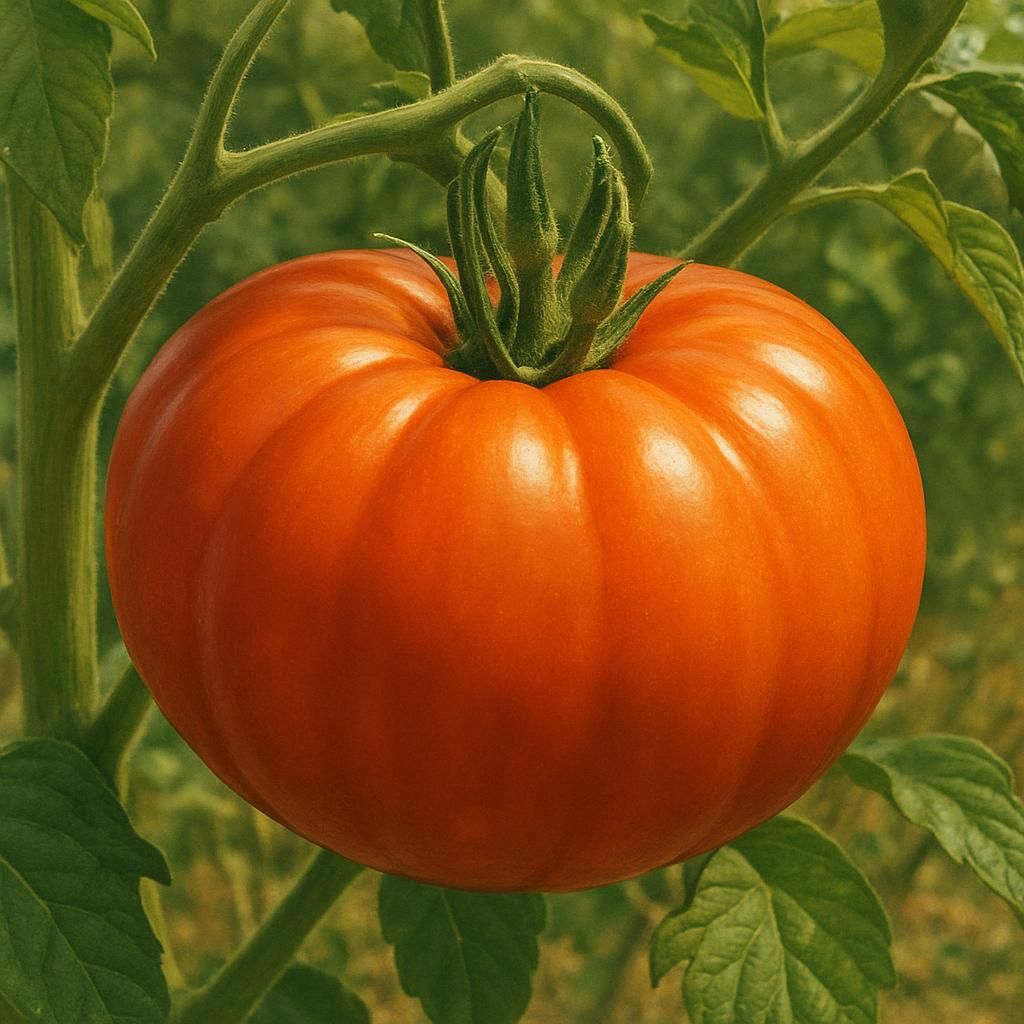
Introduction to Kellogg's Breakfast Tomato
Kellogg's Breakfast Tomato stands out among heirloom varieties for its vibrant orange hue and rich, tropical sweetness. Originating from a chance seedling discovered in a box of Kellogg's cereal, this cultivar was preserved and popularized by dedicated seed savers. Gardeners value it for its large, meaty fruits that reach 1–2 pounds, low acidity, and high yields in suitable conditions. Its determinate growth habit makes it well-suited to both home gardens and small-scale commercial production.
Botanical Profile of Kellogg's Breakfast Tomato
Kellogg's Breakfast Tomato belongs to the nightshade family, Solanum lycopersicum. It exhibits indeterminate to semi-determinate growth with vigorous vines that benefit from sturdy support. The plants produce large, oblate to slightly flattened fruits with smooth, thin skins that ripen to a uniform deep orange. Internally, the flesh is dense and nearly seedless with few locules, contributing to its signature meaty texture. Flowers are typical of the species, self-pollinating with yellow petals, and fruit set occurs reliably in temperatures between 70–85°F (21–29°C).
Soil, pH, and Climate Requirements for Kellogg's Breakfast Tomato
Successful cultivation begins with understanding the precise environmental parameters this variety demands.
| Parameter | Ideal Range/Value | Notes |
|---|---|---|
| Soil Type | Loamy, well-drained, rich in organic matter | Avoid heavy clay; amend with compost |
| Soil pH | 6.2–6.8 | Slightly acidic for optimal nutrient uptake |
| Temperature Range | Day: 70–85°F (21–29°C); Night: 60–70°F (15–21°C) | Protect from frost; use row covers if needed |
| Sunlight | Full sun, minimum 8 hours daily | South-facing exposure maximizes production |
| Spacing | 24–36 inches between plants; 48–60 inches between rows | Stake or cage immediately after transplanting |
| Growing Season | 75–90 days to maturity | Warm-season crop; start indoors 6–8 weeks before last frost |
Step-by-Step Planting & Propagation
Start seeds indoors 6–8 weeks before the last expected frost. Sow seeds ¼ inch deep in sterile seed-starting mix and maintain soil temperature at 75–80°F (24–27°C) using a heat mat. Provide 14–16 hours of light daily with grow lights positioned 2–4 inches above seedlings. Harden off transplants for 7–10 days before planting outdoors once soil has warmed to at least 60°F (15°C). Transplant on a cloudy day or late afternoon to reduce transplant shock, burying the stem up to the first true leaves to encourage strong root development. Water thoroughly after planting and mulch immediately with 2–3 inches of organic straw or shredded leaves to conserve moisture and suppress weeds.
Care & Maintenance regimes for Kellogg's Breakfast Tomato
Consistent attention to watering, nutrition, and pruning ensures maximum fruit quality and plant health.
| Task | Frequency/Schedule | Details |
|---|---|---|
| Watering | 1–2 inches per week; deep watering 2–3 times weekly | Maintain even moisture; avoid overhead watering to reduce disease risk |
| Fertilizer | Side-dress with balanced organic fertilizer (5-5-5) at planting and again at first fruit set; supplement with fish emulsion or compost tea every 3–4 weeks | High nitrogen early, then shift to phosphorus and potassium for fruiting |
| Pruning | Remove suckers below first flower cluster; prune lower leaves touching soil weekly | Improves airflow and reduces disease pressure; stake or cage plants early |
Pests, Diseases & Organic Management
Kellogg's Breakfast Tomato can be affected by common tomato pests and diseases. Monitor regularly for aphids, hornworms, flea beetles, and spider mites. Use floating row covers early in the season and handpick larger pests. Apply neem oil or insecticidal soap for soft-bodied insects and introduce beneficial insects such as ladybugs and lacewings. Prevent fungal issues like early blight, late blight, and septoria leaf spot through crop rotation, proper spacing, and mulching. Copper-based fungicides or baking soda sprays provide organic control when applied preventively. Remove and destroy infected plant material at season's end.
Harvesting, Curing & Optimal Storage
Harvest fruits when they reach full orange color and yield slightly to gentle pressure. Pick in the morning for best flavor and store at room temperature away from direct sunlight. For longer storage, harvest mature green fruits and ripen indoors in a paper bag with an ethylene-producing fruit such as a banana. Fully ripe tomatoes keep 4–7 days at room temperature or up to two weeks in the refrigerator crisper if used for cooking. For preservation, can, freeze, or dehydrate excess harvest. Proper post-harvest handling preserves the variety's signature sweetness and nutritional value.
Companion Planting for Kellogg's Breakfast Tomato
Pair Kellogg's Breakfast Tomato with aromatic herbs and flowers that deter pests and enhance growth. Basil planted nearby repels aphids and improves flavor. Marigold and nasturtium act as trap crops for nematodes and aphids. Garlic and onion provide natural fungicidal properties. Avoid planting near fennel or walnuts, which can inhibit tomato growth. Strategic companion planting increases biodiversity and reduces the need for chemical interventions.