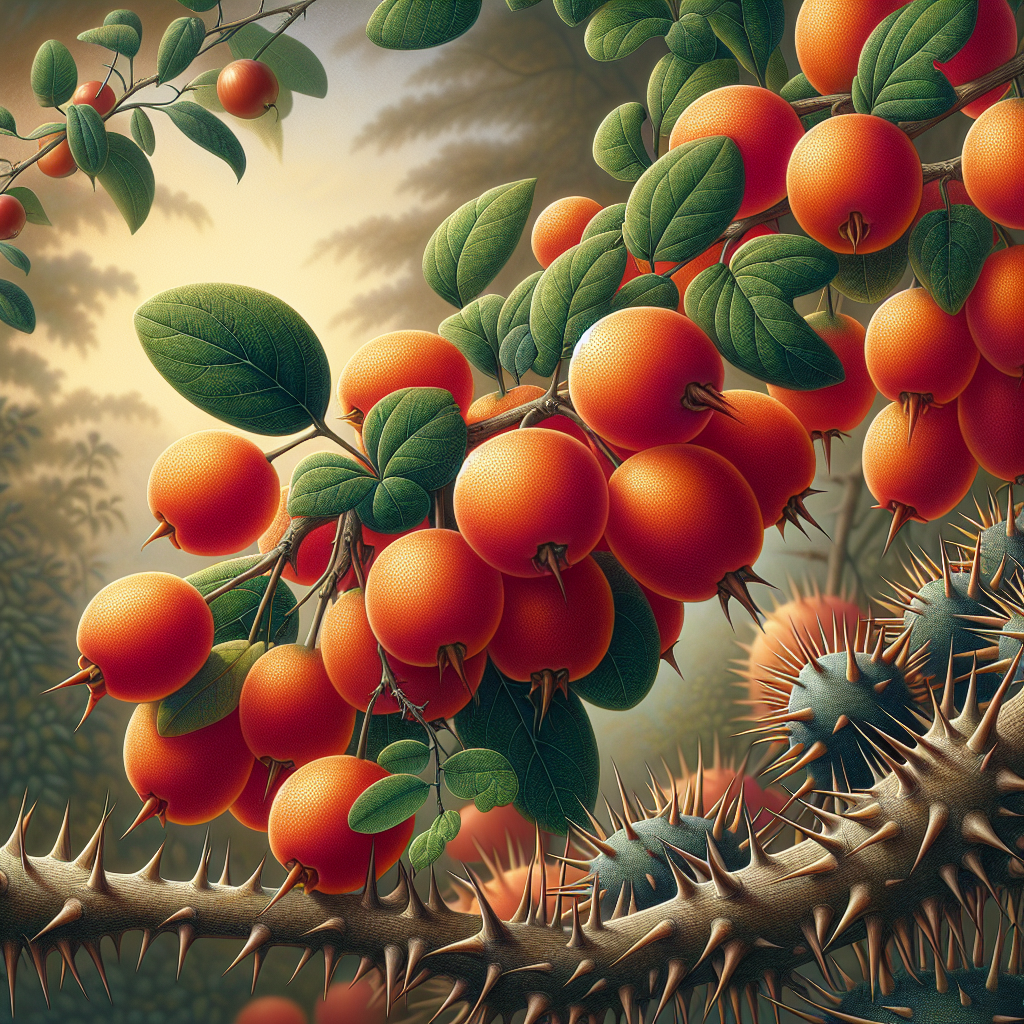
Introduction to Kei Apple (Dovyalis caffra)
Kei Apple, scientifically known as Dovyalis caffra, stands out as one of the most resilient fruit-producing plants for subtropical and warm temperate gardens. Native to the coastal regions of southern Africa, from the Kei River in South Africa to Mozambique, this species has been cultivated for centuries by local communities for its sharp-tasting, apple-like fruits packed with vitamin C—up to five times more than oranges. The plant's dense, thorny growth makes it an exceptional living fence, deterring livestock, wildlife, and even human intruders while producing a bountiful harvest.
What sets Kei Apple apart is its adaptability to marginal lands where many crops fail. It tolerates drought, salt spray, and poor soils, yet rewards dedicated growers with fruits that ripen from yellow-green to deep orange-red, offering a unique tart flavor perfect for fresh eating, jams, jellies, pies, and beverages. Commercial potential is growing in niche markets for superfoods and hedging, with yields up to 50-100 kg per mature bush. For small farms, integrating Kei Apple hedges can boost biodiversity, provide windbreaks, and generate side income. Guava (crop) shares similar subtropical traits but lacks the Kei Apple's defensive thorns.
This deep-dive guide draws from botanical research, field trials, and grower experiences to deliver professional-grade advice. Whether you're establishing a permaculture system or a commercial hedge row, mastering Kei Apple cultivation ensures resilient, profitable production even in climate-stressed environments. Expect first fruits in 2-3 years from seed, faster from cuttings, with trees living 30+ years.
Botanical Profile of Kei Apple (Dovyalis caffra)
Kei Apple belongs to the Flacourtiaceae family (now often classified under Salicaceae), a genus of about 18 species mostly endemic to Africa. Dovyalis caffra is a dioecious shrub or small tree, typically 3-6 meters tall and wide, though it can reach 9 meters in ideal conditions. Its branches are armed with fierce, 3-pronged spines up to 7 cm long, forming an impenetrable thicket ideal for barriers.
Leaves are simple, alternate, elliptic to obovate, 2-7 cm long, glossy green above and slightly hairy beneath, dropping briefly in severe drought. Male and female flowers are small (5-8 mm), greenish-white, borne separately on different plants—requiring both for fruit set unless parthenocarpic cultivars are used. Pollination is by insects, primarily bees.
Fruits are spherical drupes, 2.5-5 cm diameter, with 3-10 seeds embedded in juicy, acidic flesh. Unripe fruits are green and extremely tart due to high malic acid; ripe ones turn amber-orange with a pineapple-banana aroma. Nutritionally, 100g provides 50-100 mg vitamin C, plus antioxidants, fiber, and minerals. Seedlings exhibit juvenile thorniness that persists, unlike some Dovyalis species. Root systems are deep and extensive, aiding drought tolerance but requiring care during transplanting. For more on related tropical fruits, see Mango (crop).
Soil, pH, and Climate Requirements for Kei Apple (Dovyalis caffra)
Kei Apple's hallmark is its soil versatility, thriving in sands, loams, clays, and even heavy metal-contaminated sites—making it a pioneer species for reclamation. Optimal soil is well-drained, fertile loam with 20-40% organic matter, but it endures poor, rocky, or saline soils (EC up to 8 dS/m). Avoid waterlogged areas to prevent root rot. pH tolerance spans 5.0-8.5, ideally 6.0-7.5; test and amend with lime if below 5.5 or sulfur if above 8.0.
Climatically, USDA zones 9b-11 suit best, withstanding brief dips to -6°C but dying below -8°C. It demands full sun (6+ hours daily) and 800-1500 mm annual rainfall, though drought-hardy once established (surviving 6-12 months without water). High humidity aids fruit set, but it handles coastal winds and salt. In cooler zones, grow in pots or against south-facing walls for microclimate warmth. Summer maximums to 40°C are fine; prolonged heat above 45°C stresses young plants. Read why summer heatwaves challenge yields and organic fixes. Mulch heavily (10-15 cm organic) to retain moisture and suppress weeds.
Step-by-Step Planting & Propagation
Propagation Methods:
- Seeds: Fresh seeds germinate 70-90% in 2-4 weeks at 25-30°C. Extract from ripe fruit, wash, dry 1-2 days. Sow 1 cm deep in 50:50 sand:compost mix. Prick out at 10-15 cm, plant out at 6-12 months.
- Semi-hardwood Cuttings: Most reliable for clones. Take 10-15 cm cuttings in summer, dip in 3000 ppm IBA, root in mist under shade (80% success). Female clones preserve fruiting.
- Grafting: Budding or whip-and-tongue onto seedling rootstocks for dwarfing or disease resistance.
- Layering: Air-layer branches for quick plants.
Planting Steps:
- Site prep: Dig 60x60x60 cm holes, fill with compost-manure-soil (1:1:1). Space 3-5 m for hedges, 6-8 m for trees (1 male:5-10 females).
- Plant in spring/fall, after last frost. Water deeply, mulch.
- Initial care: Irrigate weekly first year (50-100 L/plant), then taper. Stake if needed.
- Density: 400-800 plants/ha for orchards. Expect 1-2 m growth year 1.
Care & Maintenance regimes for Kei Apple (Dovyalis caffra)
Watering: Deep, infrequent to encourage roots. 20-40 L/week mature plants in dry spells; deficit irrigation boosts flavor. Fertilization: Annual NPK 10-10-10 at 100-200 g/plant, split applications. Foliar micronutrients (Zn, Fe) if chlorosis appears. Compost tea monthly. Pruning: Annually post-harvest: remove dead/thorny interior, shape for air flow. Hedge trim 2-3 times/year. Weeding/Mulching: Suppress with cardboard + woodchips; no herbicides needed. Training: Single trunk for trees or multi-stem bush for hedges. Pollinator plants nearby enhance set.
Monitor growth: 1-2 m/year initially, fruiting year 3+. Thin fruits if overloaded.
Pests, Diseases & Organic Management
Kei Apple's thorns deter many pests, but vigilance is key. Common issues:
Pests: Aphids cluster on new growth—blast with water, neem oil. Scale insects on stems: alcohol swabs, predatory beetles. Fruit flies pierce ripe fruit: protein baits, bags. Birds love ripe apples—netting essential. Mealybugs: hort oil sprays.
Diseases: Phytophthora root rot in wet soils—improve drainage, phosphite drenches. Powdery mildew: sulfur sprays, spacing. Anthracnose on humid sites: copper fungicide, prune for airflow.
Organic IPM: Companion plant marigold for nematodes; release lacewings. Scout weekly. Why 90% of farms fail pest management—and organic fixes. Avoid overhead watering.
Harvesting, Curing & Optimal Storage
Harvest when fruits yellow-orange, firm-tart (Dec-Mar in south). Twist or clip to avoid spine injury; yield 20-50 kg/mature hedge. Ripe fruits store 1-2 weeks fridge (4-7°C), unripe 1 month. For processing, ripen at 20-25°C.
Post-Harvest: Sort, hydrocool to 10°C. Jelly: high-pectin, needs sugar. Dry fruits for snacks. Market fresh or value-add. Shelf life extends with waxing. Freezes well pulped.
Companion Planting for Kei Apple (Dovyalis caffra)
Leverage Kei Apple's hedge role: Pair with nitrogen-fixers like pigeon pea inside rows for soil enrichment. Underplant with thyme or yarrow to repel pests, attract pollinators. Avoid water-hungry crops; good with Thai basil, nasturtium for groundcover.
Benefits: Wind protection for strawberry guava; pest diversion. Why companion planting feels like guesswork—and fixes. Rotate with legumes to build soil.