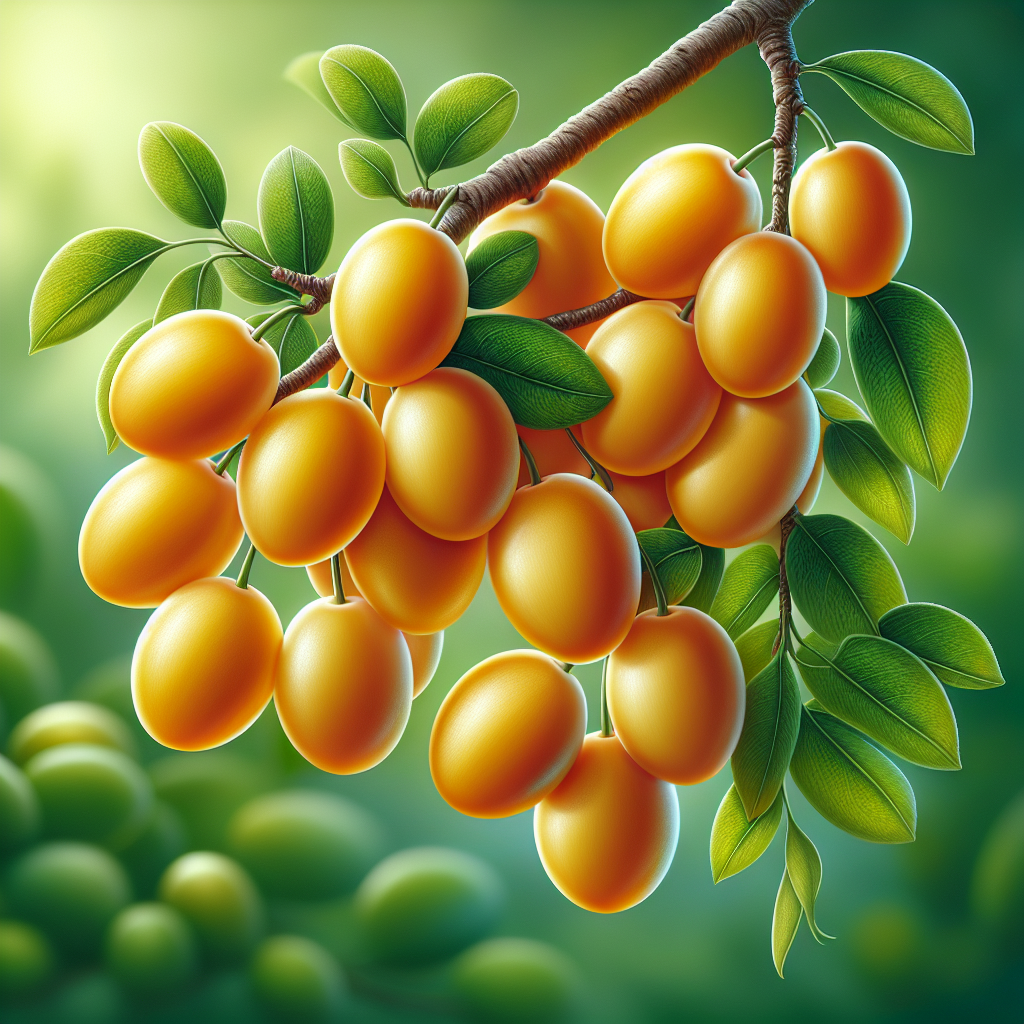
Introduction to June Plum (Dwarf)
June Plum (Dwarf) (Spondias dulcis 'Dwarf') is a compact variety of the popular tropical fruit tree native to the Indo-Malayan region and widely cultivated in the Caribbean, Central America, and Southeast Asia. Unlike its standard counterpart, which can reach 60 feet tall, the dwarf form grows to just 8-15 feet, making it perfect for small-scale farming, urban orchards, backyards, and even large container growing. The tree produces clusters of oblong, waxy-skinned fruits that ripen to a golden-yellow hue around June (hence the name), offering a unique pineapple-mango flavor profile with crisp, juicy flesh ideal for fresh eating, juicing, chutneys, or pickling.
This variety is prized for its precocious bearing—often fruiting within 2-3 years from planting—and high productivity, yielding 50-200 fruits per tree annually under good conditions. It's drought-tolerant once established, wind-resistant, and adaptable to marginal soils, but responds dramatically to proper care. Growers appreciate its ornamental value too, with glossy green leaves, attractive form, and fragrant flowers. Whether you're a hobbyist or commercial producer, June Plum (Dwarf) delivers reliable harvests in USDA zones 9-11, with protection needed in cooler areas. For more on related stone fruits, see Plum (crop).
Botanical Profile of June Plum (Dwarf)
Belonging to the Anacardiaceae family (related to mango and cashew), June Plum (Dwarf) is a semi-deciduous to evergreen tree with a dense, rounded canopy. Leaves are pinnate, 12-24 inches long, composed of 9-25 leaflets that emerge reddish-bronze before turning deep green. New growth is pinkish, adding seasonal interest. Flowers are small, fragrant, and borne in large panicles up to 10 inches long, primarily dioecious (separate male/female trees), though many cultivars are hermaphroditic or parthenocarpic for better fruit set.
Fruits are drupe-like, 2-4 inches long, with thin, waxy skin and a single large seed (pit) surrounded by fibrous flesh. Ripening takes 60-90 days from bloom, with peak production in June-July in the Northern Hemisphere. The dwarf habit results from genetic selection or grafting onto dwarfing rootstocks, limiting height while maintaining vigor. Trees are fast-growing, adding 3-5 feet per year initially, and can live 30+ years. Pollinators like bees are essential; plant multiple trees for cross-pollination to boost yields up to 30%. Nutritionally, fruits are rich in vitamin C (50mg/100g), vitamin A, fiber, and antioxidants, with 60-70 calories per medium fruit.
Soil, pH, and Climate Requirements for June Plum (Dwarf)
June Plum (Dwarf) excels in well-draining, fertile loamy soils but tolerates sandy, clay, or even rocky conditions if drainage is excellent—stagnant water causes root rot. Ideal pH is 5.5-7.5, slightly acidic to neutral; test soil and amend with lime if below 5.5 or sulfur if above 8.0. Incorporate 20-30% organic matter like compost or aged manure at planting to enhance microbial activity and nutrient retention. Mulch with 4-6 inches of wood chips or coconut coir to suppress weeds, retain moisture, and regulate soil temperature.
Thrives in full sun (6-8+ hours daily) in tropical/subtropical climates with average temperatures of 70-90°F (21-32°C). Minimum winter tolerance is 28°F (-2°C) for short periods; protect with frost cloth in zone 9. Prefers 40-60 inches annual rainfall, evenly distributed, but handles dry spells up to 2 months once established. High humidity (60-80%) aids fruit set, but good air circulation prevents fungal issues. In containers, use 20-30 gallon pots with potting mix amended with perlite for drainage. For heatwave strategies, check Why Summer Heatwaves Are Silently Killing Small Farm Yields - And 7 Organic Strategies to Fight Back. Avoid saline soils (>2,000 ppm); irrigate with low-EC water.
Step-by-Step Planting & Propagation
Propagation: Grafting (veneer or cleft) onto Spondias mombin or seedling rootstock is best for true-to-type dwarf trees, with 80-90% success. Air-layering works well for mature branches: girdle a 1-year-old pencil-thick branch, apply rooting hormone, wrap in moist sphagnum, and root in 6-8 weeks. Seeds germinate in 2-4 weeks at 77-86°F but produce variable offspring; stratify in wet sand for 30 days first. Cuttings root poorly without mist.
Planting Steps: 1. Select a sunny site with wind protection; space 12-15 feet apart for dwarfs. 2. Dig a 2x2x2 ft hole, mix native soil 50/50 with compost. 3. Plant grafted trees at same depth as nursery pot in spring post-frost. 4. Form a water basin around the trunk. 5. Stake if needed; water deeply (10-20 gallons). 6. Apply 4-6 inches mulch, keeping 6 inches from trunk. For bare-root, soak roots 1 hour pre-planting. Initial fertilizer: 1 lb 10-10-10 per tree, divided into 3 applications.
Container Growing: Use 25-gallon pots minimum; repot every 2 years. Bottom-drainage essential.
Care & Maintenance regimes for June Plum (Dwarf)
Watering: Deeply weekly (1-2 inches) first year; reduce to biweekly after. Drip irrigation ideal; avoid overhead to prevent disease. Mulch conserves 30% water.
Fertilization: Young trees: 1 lb NPK 8-3-9 per year, split 4x. Mature: 2-3 lbs annually, plus micronutrients (zinc, iron via foliar). Apply post-harvest and pre-bloom.
Pruning: Annual winter pruning shapes canopy, removes deadwood, opens center for light/air. Tip-prune to encourage bushiness; dwarf trees need minimal topping.
Training: Central leader or open vase; thin fruits to 6-inch spacing for size.
Weed control: Mulch + shallow cultivation. Monitor for nutrient deficiencies (yellow leaves = iron).
Pests, Diseases & Organic Management
Common Pests: Aphids cluster on new growth—blast with water or neem oil. Scale insects on bark: rub off or horticultural oil. Fruit flies pierce ripening plums—bag fruits or use traps. Mealybugs controlled with alcohol sprays.
Diseases: Anthracnose causes fruit spots—improve air flow, copper fungicide. Phytophthora root rot from poor drainage—solarize soil. Powdery mildew: sulfur spray. For broader strategies, see Why 90% of Small Farms Fail at Pest Management - And 8 Organic Fixes That Actually Work—wait, no blog link here, but integrated.
Organic IPM: Introduce ladybugs, plant marigold as trap crop. Scout weekly.
Harvesting, Curing & Optimal Storage
Harvest when fruits yellow and slightly soft at stem end, 150-200 days from bloom. Twist or clip with shears; yield peaks years 5-15. Fruits store 2-4 weeks at 50-55°F, 85-90% humidity. For longer, process into jam or freeze pulp. Mature trees drop ripe fruits—net ground to collect.
Companion Planting for June Plum (Dwarf)
Pair with nitrogen-fixers like pigeon pea for soil enrichment. Thai basil repels insects; guava provides cross-pollination benefits. Avoid potato (nematode risk). Nasturtium traps aphids. Interplant low-growers like ginger under canopy for shade tolerance and pest diversion. This boosts biodiversity, suppresses weeds, and enhances yields by 20%.