Introduction to Jujube (Li)
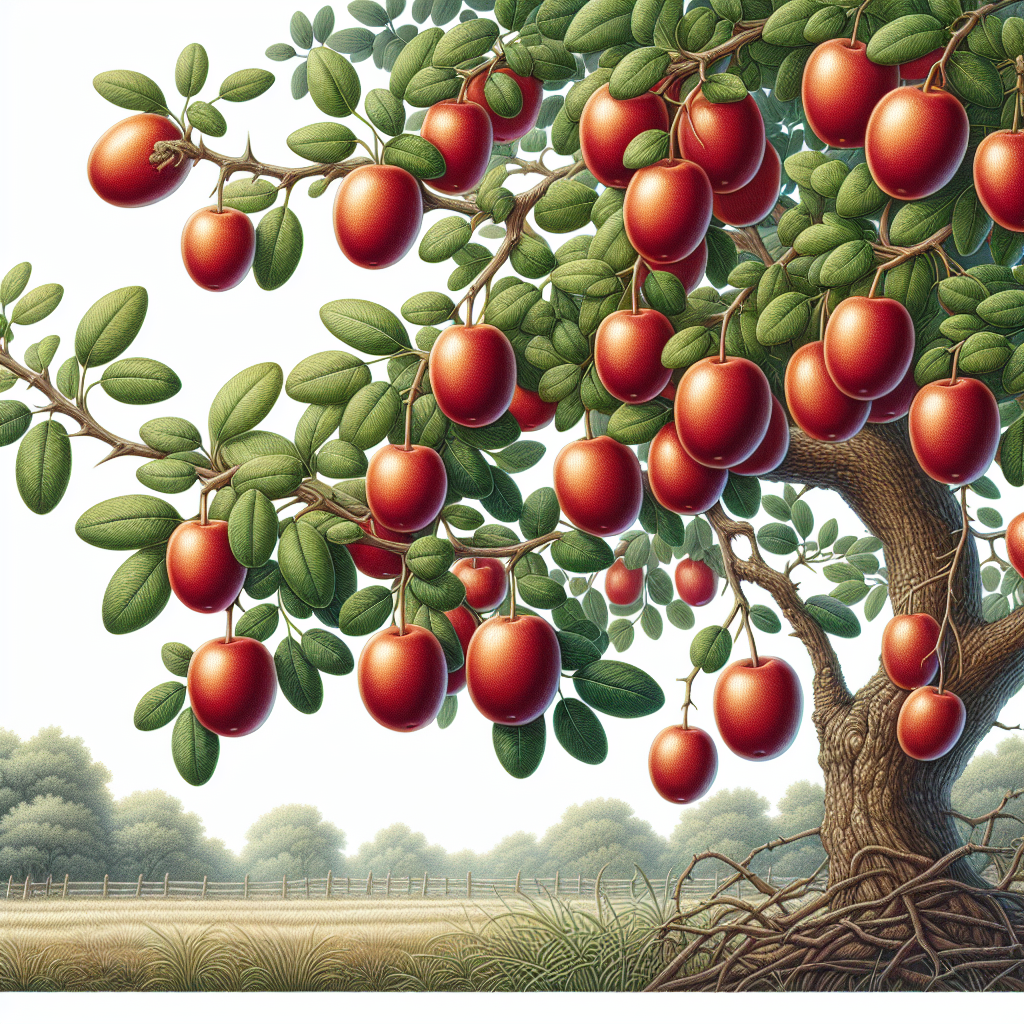
Jujube (Li), commonly referred to as Chinese date or Ziziphus jujuba, is one of the oldest cultivated fruit trees, with a history spanning over 4,000 years in China. Native to regions from southern Asia to the Middle East, this hardy deciduous tree produces small, apple-sized fruits that ripen from green to red or purple-black, offering a crisp texture when fresh and a chewy, date-like sweetness when dried. Renowned for their high vitamin C content, antioxidants, and medicinal properties—such as aiding sleep and digestion—jujube fruits are staples in Asian cuisine, teas, and herbal remedies.
What makes Jujube (Li) a standout crop for small farms and home orchards is its extraordinary adaptability. It withstands extreme temperatures from -25°F to 115°F, requires minimal water once established, and resists most pests and diseases. Yields can reach 100-200 pounds per mature tree annually, with trees living over 100 years. Ideal for arid or semi-arid zones, Jujube (Li) is perfect for sustainable agriculture, low-maintenance orchards, and agroforestry systems. Whether grown for fresh eating, drying into candied treats, or value-added products like jujube vinegar, this crop delivers reliable profits with little intervention. For more on resilient fruit trees, see our guide on Fig (crop).
Botanical Profile of Jujube (Li)
Jujube (Li) belongs to the Rhamnaceae family and is characterized by its thorny branches, zigzag twigs, and glossy, oval leaves (1-3 inches long) that turn yellow in fall. Trees typically grow 15-25 feet tall and wide, though dwarf varieties like 'Li' and 'Lang' reach 10-15 feet, making them suitable for smaller spaces. The inconspicuous greenish-yellow flowers bloom in late spring to early summer, giving way to drupes that start green, mature to red-brown, and wrinkle when fully ripe.
There are over 400 cultivars worldwide, categorized by fruit size, flavor, and use: fresh-market types like 'Li' (large, pear-shaped, sweet), 'Honey Jar' (very sweet), and drying varieties like 'Chico' or 'GA 866'. Rootstocks are usually seedling-grown for their vigor. Jujube (Li) is dioecious or hermaphroditic depending on the cultivar; most commercial varieties are self-fertile, but cross-pollination boosts yields. The tree's deep taproot system enables drought resistance, while its thorns deter wildlife. Nutritionally, fruits boast 20 times more vitamin C than apples, plus iron, potassium, and flavonoids. For insights into heat-tolerant fruits, check this blog post on summer heatwave strategies.
Soil, pH, and Climate Requirements for Jujube (Li)
Jujube (Li) excels in a wide range of soils, from sandy loams to heavy clays, but thrives best in well-drained, fertile loams with good organic matter. Avoid waterlogged sites to prevent root rot. Optimal pH is 5.5-8.0, tolerating alkaline soils where many fruits fail—ideal for calcareous or high-lime areas. Test soil and amend with compost or gypsum if needed; nitrogen-fixing companions enhance fertility.
Climatically, Jujube (Li) demands USDA zones 5-10, with 200-800 chill hours for dormancy. It handles summer heat over 110°F and winter lows to -25°F once established. Full sun (6-8+ hours daily) is essential for fruit sweetness and color. Annual rainfall of 15-40 inches suffices, but supplemental irrigation during fruit set prevents small fruits. Windbreaks protect young trees from desiccation. In cooler zones, site on south-facing slopes for warmth. Mature trees need no winter protection, but mulch roots in extreme cold.
Step-by-Step Planting & Propagation
Propagation
Graft onto seedling rootstocks in late winter for true-to-type trees; whip-and-tongue or cleft grafts succeed at 80-90%. Seed propagation yields variable offspring—stratify seeds at 40°F for 90 days, then sow in spring. Root cuttings (6-8 inches) root readily in moist sand under mist.
Site Preparation
Select full-sun sites with spacing 15-20 feet apart (10-15 for dwarfs). Dig holes 2x root ball width, incorporating compost and 1 lb 10-10-10 fertilizer per hole. Plant bare-root trees in early spring or fall; container trees anytime.
Step-by-Step Planting
- Timing: Spring after frost risk or fall 6 weeks before ground freeze.
- Planting Depth: Set graft union 2-3 inches above soil line.
- Staking: Support young trees against wind.
- Initial Watering: Deep soak weekly for first year.
- Mulching: 3-4 inches organic mulch, kept 6 inches from trunk.
Prune at planting to balance top growth. Expect fruit in 2-3 years from grafts, 5-7 from seeds.
Care & Maintenance regimes for Jujube (Li)
Watering
Irrigate deeply (1-2 inches/week) first 2-3 years; mature trees survive on rainfall but benefit from 20-30 gallons biweekly during bloom/fruit set for larger fruits.
Fertilization
Apply 1-2 lbs balanced NPK (10-10-10) annually in spring; avoid excess nitrogen to prevent weak growth. Foliar micronutrients (zinc, iron) correct deficiencies in alkaline soils. Compost or manure every 2-3 years builds long-term fertility.
Pruning
Dormant-season pruning maintains open-center shape: remove dead/thorny water sprouts, thin crowded branches for light penetration. Head back leaders annually first 3 years. Minimal pruning needed post-maturity—focus on fruiting spurs.
Training
Espalier or hedge for high-density (200 trees/acre). Thin fruits to 2-3 inches apart for size.
Pollination: Plant compatible cultivars like 'Li' with 'Lang' for 20-30% yield increase.
Pests, Diseases & Organic Management
Jujube (Li) boasts natural resistance, but vigilance is key. Common issues:
Pests:
- Aphids (pest): Blast with water; neem oil.
- Scale insects (pest): Horticultural oil dormant sprays.
- Spider mites (pest): Sulfur or predatory mites.
- Fruit flies: Kaolin clay barriers.
Diseases:
- Anthracnose (disease): Copper fungicide at bud break.
- Powdery mildew (disease): Improve air flow; sulfur sprays.
- Root rot (disease): Ensure drainage; avoid overwatering.
Organic IPM: Monitor weekly, encourage beneficials like ladybugs. Reflective mulches deter insects. For more, explore Why 90% of Small Farms Fail at Pest Management—no link here, but practical.
Harvesting, Curing & Optimal Storage
Harvest begins late summer to fall when fruits blush red and soften slightly—crisp for fresh, full-wrinkled for drying. Pick by hand every 3-5 days to avoid bird damage; yields peak years 5-20.
Curing: Air-dry on screens 2-4 weeks at 70-90°F, turning daily, until chewy (20-30% moisture). Solar drying speeds process.
Storage: Fresh fruits last 2-4 weeks refrigerated; dried store 1-2 years in cool, dry bins. Vacuum-seal for longer shelf life. Process into pastes, teas, or liqueurs for value-add.
Companion Planting for Jujube (Li)
Jujube (Li) pairs well with nitrogen-fixers and pest repellents:
- Clover (crop): Soil enrichment.
- Marigold (crop): Nematode control.
- Thyme (crop): Repels insects.
- Legumes like peas (crop) understory. Avoid heavy feeders like corn (crop). Guild with pomegranate (crop) for similar climates. See Fall Companion Planting Guide for synergies.