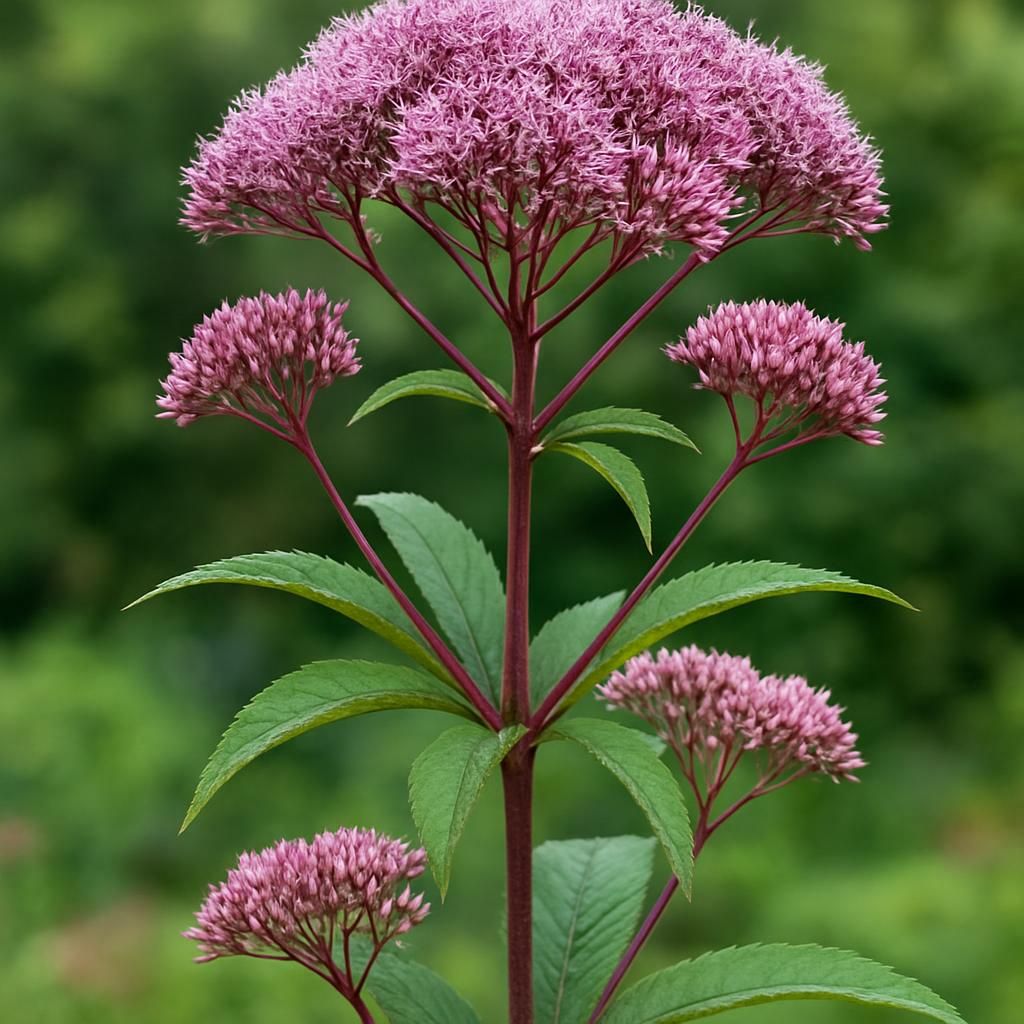
Introduction to Joe-Pye Weed
Joe-Pye Weed (Eutrochium dubium) is a robust native perennial that delivers dramatic height, fragrant mauve-pink flower clusters, and exceptional wildlife value. Gardeners and land managers value this species for its ability to thrive in moist sites where many other ornamentals fail. The plant forms dense clumps of sturdy stems reaching 3–7 feet tall and produces broad, lance-shaped leaves arranged in whorls. From late summer through early autumn, large, dome-shaped inflorescences appear, providing critical nectar sources for monarch butterflies, bees, and beneficial wasps. Because it tolerates periodic flooding yet remains upright, Joe-Pye Weed is a staple in rain gardens, bioswales, and native plant restorations.
Botanical Profile of Joe-Pye Weed
Eutrochium dubium belongs to the Asteraceae family. Stems are hollow, reddish-purple, and glabrous to slightly pubescent. Leaves are typically arranged in whorls of three to five, measuring 4–8 inches long with serrated margins and prominent veins. Flower heads consist of numerous tiny tubular florets that collectively form a showy, vanilla-scented cluster 6–12 inches across. Seeds are small achenes equipped with a pappus of fine bristles that facilitate wind dispersal. The plant spreads slowly via short rhizomes, forming large, long-lived colonies in favorable conditions.
Soil, pH, and Climate Requirements for Joe-Pye Weed (MUST INCLUDE A MARKDOWN TABLE OF IDEAL CONDITIONS)
Joe-Pye Weed performs best in consistently moist, organically rich soils with good structure. While it tolerates brief drought once established, prolonged dryness reduces flowering and plant vigor. The species is hardy in USDA zones 3–9 and prefers full sun to partial shade. In hotter climates, afternoon shade helps maintain foliage quality. The following table summarizes optimal growing parameters:
| Parameter | Ideal Range | Notes |
|---|---|---|
| Soil Type | Loamy, high in organic matter | Clay or sandy soils benefit from amendment |
| Soil pH | 5.5–7.5 | Slightly acidic to neutral preferred |
| Moisture | Consistently moist | Tolerates seasonal flooding |
| Temperature | 60–85°F daytime | Cold hardy to -40°F |
| Light | Full sun to partial shade | More sun yields denser flower heads |
| Spacing | 24–36 inches | Allows air circulation and clump expansion |
Step-by-Step Planting & Propagation
- Site Preparation: Choose a location with full to partial sun and amend heavy clay or sandy soil with 2–4 inches of compost. Remove weeds and loosen soil to 12 inches deep.
- Division: The most reliable propagation method is spring division of established clumps. Dig the entire root mass, separate healthy sections with 3–5 stems each, and replant immediately at the same depth.
- Seed Sowing: Collect ripe seed in late fall or purchase stratified seed. Sow directly outdoors in late fall or start indoors 8–10 weeks before last frost. Seeds require light to germinate; press firmly into moist seed-starting mix without covering.
- Cuttings: Take 4–6 inch softwood cuttings in early summer, dip in rooting hormone, and place in a moist 1:1 perlite-peat mix under high humidity until rooted (4–6 weeks).
- Transplanting: Space plants 24–36 inches apart. Water thoroughly after planting and apply a 2-inch layer of organic mulch to conserve moisture.
Care & Maintenance regimes for Joe-Pye Weed (MUST INCLUDE A MARKDOWN TABLE OF WATER, FERTILIZER, AND PRUNING SCHEDULES)
Joe-Pye Weed is low-maintenance once established but benefits from targeted seasonal care. Consistent moisture and moderate fertility encourage maximum bloom size. The maintenance schedule below provides clear guidance:
| Season | Watering Schedule | Fertilizer Application | Pruning & Maintenance |
|---|---|---|---|
| Spring | 1 inch per week if rainfall insufficient | Apply 1–2 inches compost or balanced organic fertilizer (5-5-5) at 2 lbs/100 sq ft | Cut back dead stems to 4–6 inches; divide overcrowded clumps |
| Summer | Maintain even moisture; increase during heat waves | Side-dress with aged manure or fish emulsion mid-June | Pinch stems at 18 inches to encourage branching and reduce flopping |
| Fall | Reduce watering as plants go dormant | No fertilizer needed | Cut stems to ground after first hard frost or leave for winter interest and wildlife |
| Winter | Minimal watering required | None | Remove debris only if fungal issues observed |
Pests, Diseases & Organic Management
Joe-Pye Weed is generally pest-resistant, yet a few issues can arise. Aphids may cluster on tender new growth in spring; a strong water spray or insecticidal soap provides control. Spider mites occasionally appear during hot, dry spells and are best managed with increased humidity and neem oil. Fungal leaf spots can develop in overly crowded plantings; ensure proper spacing and remove infected foliage. Powdery mildew is rare but may occur in shaded, stagnant air. Organic prevention includes good air circulation, morning watering, and application of potassium bicarbonate sprays at first sign of disease. Root rot can occur in persistently waterlogged, poorly drained soils; improve drainage rather than relying on chemical treatments.
Harvesting, Curing & Optimal Storage
Although primarily grown as an ornamental, Joe-Pye Weed has historical medicinal uses. Harvest flowering tops when 50–75% of florets are open, typically in late summer. Cut stems in early morning and bundle in small groups. Hang bundles upside down in a warm, dark, well-ventilated area for 7–14 days until fully dry. Once brittle, strip leaves and flowers from stems and store in airtight glass jars away from light and moisture. Properly dried material retains potency for up to two years. For seed saving, allow flower heads to fully mature and turn brown before collecting; store cleaned seed in paper envelopes in a cool, dry location.
Companion Planting for Joe-Pye Weed
Joe-Pye Weed pairs beautifully with other moisture-loving natives. Recommended companions include Joe-Pye Weed with Swamp Milkweed for monarch support, Cardinal Flower for vertical contrast, and Blue Flag Iris for early-season interest. Ferns such as Ostrich Fern provide textural contrast in partial shade. In rain gardens, combine with Soft Rush and Pickerelweed for layered wetland aesthetics. Avoid planting next to aggressive spreaders like Canada Goldenrod that may outcompete slower-growing perennials.
Joe-Pye Weed also benefits from proximity to Yarrow and Thyme, which attract predatory insects that help control aphids naturally.