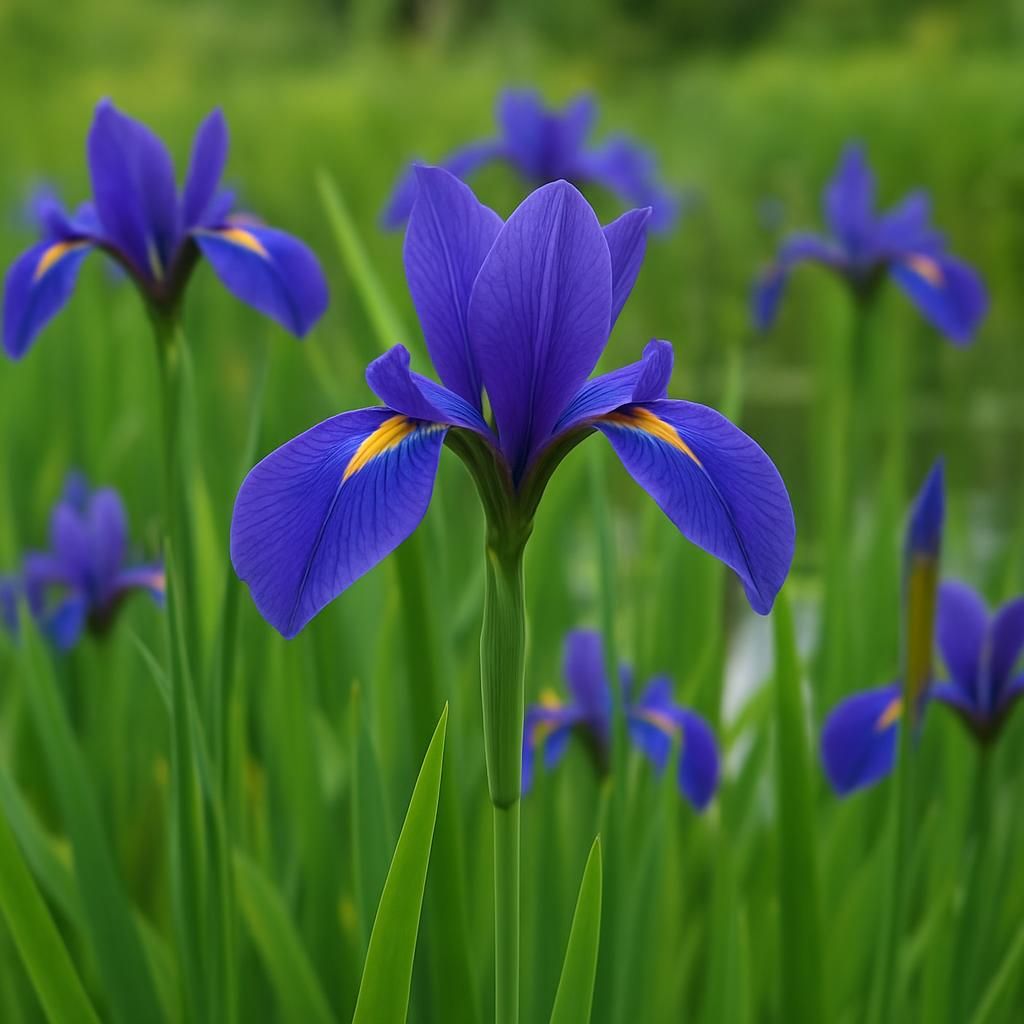
Introduction to Blue Flag Iris
Blue Flag Iris (Iris versicolor) is a native North American perennial that thrives in wetland margins, pond edges, and consistently moist garden beds. Valued for its vibrant blue to violet flowers and sword-like foliage, it serves both ornamental and ecological purposes by stabilizing soil and attracting pollinators. Commercial growers and home gardeners cultivate it for cut-flower production, wetland restoration, and as a low-maintenance accent in rain gardens.
This definitive growing guide provides professional-grade, practical advice for establishing and maintaining productive stands of Blue Flag Iris. Readers will learn precise soil, climate, and spacing requirements, step-by-step planting and propagation methods, seasonal care schedules, and organic strategies for managing common pests and diseases. The guide concludes with harvesting techniques and companion planting recommendations to maximize both yield and biodiversity.
Botanical Profile of Blue Flag Iris
Iris versicolor belongs to the Iridaceae family and is characterized by rhizomatous growth, linear leaves reaching 2–3 feet, and showy flowers with three upright petals and three drooping sepals marked with yellow or white signals. Bloom time occurs from late spring to early summer, with individual flowers lasting 3–5 days. The plant spreads slowly via underground rhizomes, forming dense clumps over 3–5 years.
Blue Flag Iris is distinct from the closely related Saffron Crocus by its preference for permanent moisture and taller stature. Unlike many other irises, it tolerates shallow standing water for short periods, making it suitable for constructed wetlands and bioswales. Its seeds are dispersed by water, contributing to natural colonization of riparian zones.
Soil, pH, and Climate Requirements for Blue Flag Iris
Blue Flag Iris performs best in fertile, moisture-retentive soils with high organic matter. Heavy clay or sandy soils should be amended to improve structure and water-holding capacity. The species is hardy in USDA zones 3–9 and tolerates full sun to partial shade, though flowering is most prolific with at least six hours of direct sunlight.
| Parameter | Ideal Range | Notes |
|---|---|---|
| Soil Type | Loamy to clay loam with high organic matter | Avoid compacted or excessively sandy soils |
| Soil pH | 6.0–7.0 | Slightly acidic to neutral; tolerate 5.5–7.5 |
| Soil Moisture | Consistently moist to wet | Tolerates brief inundation; never allow drying out |
| Temperature Range | 15–30 °C (59–86 °F) during active growth | Hardy to –40 °C (–40 °F) in winter |
| Sunlight | Full sun to partial shade | Minimum 6 hours direct sun for best blooms |
| Spacing | 30–45 cm (12–18 in) between plants | Rows 60–90 cm (24–36 in) apart |
Step-by-Step Planting & Propagation
Plant rhizomes in early spring or early fall when soil temperatures are between 10–15 °C. Choose healthy, firm rhizomes with visible growing points and trim any damaged or overly long roots. Dig planting holes or trenches 5–8 cm deep and space rhizomes 30–45 cm apart, ensuring the top of the rhizome sits just below the soil surface.
Water thoroughly after planting to settle the soil and eliminate air pockets. Maintain consistent moisture for the first 4–6 weeks until new growth emerges. For propagation, divide established clumps every 3–4 years in late summer or early fall. Each division should contain at least one fan of leaves and a portion of healthy rhizome.
Care & Maintenance regimes for Blue Flag Iris
Blue Flag Iris requires minimal intervention once established, but consistent moisture and periodic division keep plants vigorous. Mulch with 5–8 cm of organic material to suppress weeds and retain soil moisture. Remove spent flower stalks after blooming to redirect energy into rhizome development.
| Task | Frequency | Details |
|---|---|---|
| Watering | Weekly during active growth | Provide 2.5–5 cm (1–2 in) of water; increase in heat waves |
| Fertilizer | Early spring and post-bloom | Apply balanced organic fertilizer (e.g., 5-5-5) at 50 g/m²; avoid high-nitrogen formulas |
| Pruning / Division | Every 3–4 years in late summer | Divide clumps, discard old rhizome sections, replant healthy divisions |
Pests, Diseases & Organic Management
Common pests include aphids, slugs and snails, and iris borers. Monitor new growth in spring and use floating row covers or hand-picking for slug control. Neem oil or insecticidal soap effectively manages aphid populations without harming beneficial insects.
Fungal issues such as leaf spot diseases and rhizome rot can occur in overly wet or poorly drained conditions. Improve air circulation by proper spacing and remove infected foliage promptly. Apply copper-based fungicides only as a last resort and always follow label rates.
Harvesting, Curing & Optimal Storage
Harvest cut flowers when buds show color but before full opening for longest vase life (5–7 days). For rhizome harvest intended for propagation or medicinal use, lift plants in late summer after foliage begins to yellow. Rinse soil gently, trim leaves to 10 cm, and allow rhizomes to air-dry in a shaded, well-ventilated area for 24–48 hours.
Store cured rhizomes in mesh bags or crates at 4–7 °C with 60–70 % relative humidity. Check monthly for soft spots or mold and discard affected material. Properly cured rhizomes remain viable for planting up to six months.
Companion Planting for Blue Flag Iris
Blue Flag Iris pairs well with other moisture-loving perennials such as Joe-Pye weed, marsh marigold, and cardinal flower. These combinations enhance biodiversity and provide continuous bloom from spring through late summer. Avoid planting with aggressive spreaders like mint that may outcompete iris rhizomes.
For pest management, interplant with marigold or yarrow to attract beneficial insects that prey on aphids. In wetland restoration projects, combine with sedges and rushes to create a stable, multi-layered plant community that improves water quality and habitat value.