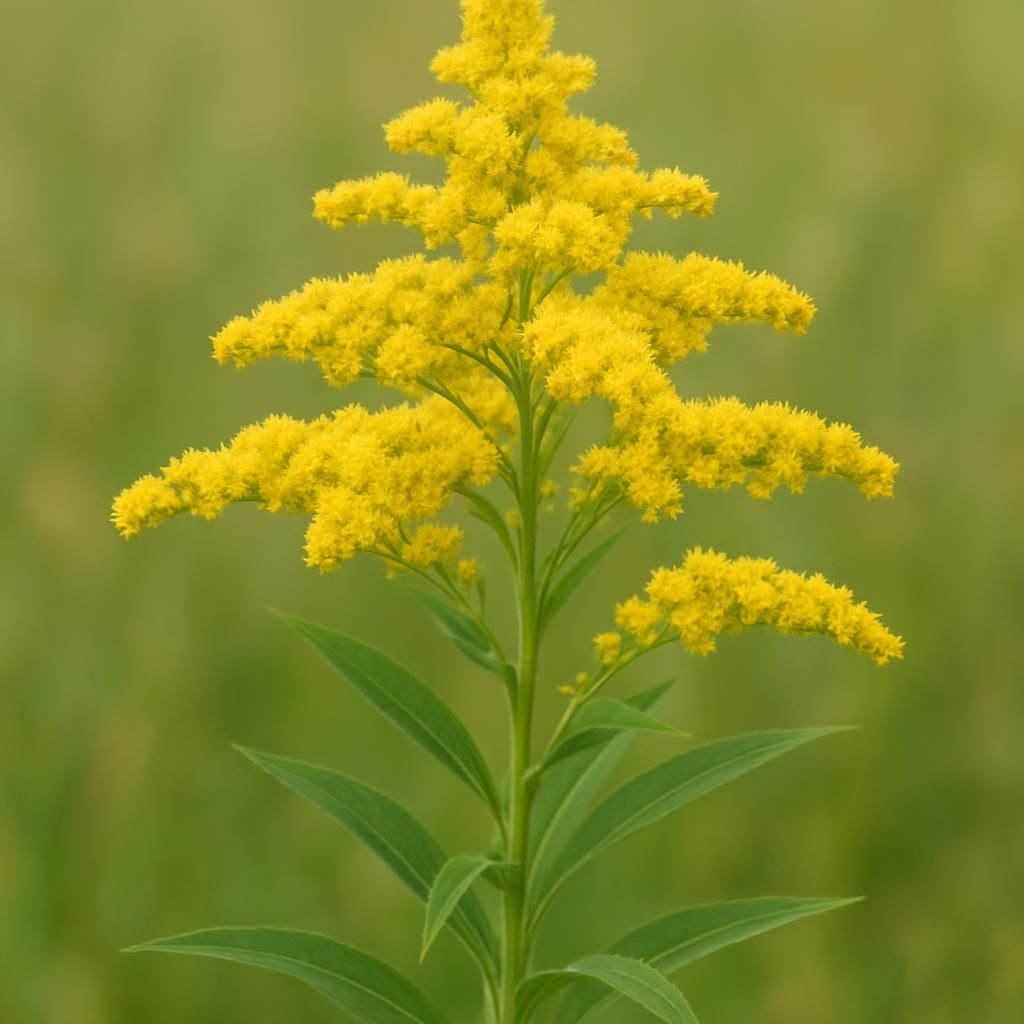
Introduction to Canada Goldenrod
Canada Goldenrod (Solidago canadensis) is a tall, clump-forming perennial native to North America. It produces bright yellow flower plumes from late summer through fall, supporting bees, butterflies, and other pollinators when few other blooms remain. The plant’s deep rhizomatous root system makes it excellent for soil stabilization on slopes and disturbed sites. In addition to its ecological value, Canada Goldenrod has a long history of use in traditional herbal medicine for urinary tract support and inflammation.
While often dismissed as a roadside weed, cultivated varieties offer controlled growth habits and improved ornamental value. Professional growers appreciate its low-maintenance nature once established and its ability to thrive in marginal soils. This guide delivers practical, field-tested recommendations for commercial and home-scale production.
Botanical Profile of Canada Goldenrod
Canada Goldenrod belongs to the Asteraceae family. Mature plants reach 3–5 feet (90–150 cm) in height with lance-shaped, alternate leaves that are finely toothed along the margins. The inflorescence consists of dense, pyramidal panicles of tiny ray and disc florets. Rhizomes spread aggressively, allowing the plant to form extensive colonies over time.
The species is highly adaptable and can tolerate a wide range of light and moisture conditions. In the wild it commonly occurs in meadows, prairies, and along forest edges. Cultivated selections may exhibit reduced rhizome vigor and more compact growth suitable for smaller landscapes.
Soil, pH, and Climate Requirements for Canada Goldenrod
Canada Goldenrod performs best in well-drained loamy soils but tolerates clay and sandy textures when drainage is adequate. The plant prefers full sun (minimum 6 hours) but will flower in partial shade at reduced density. Optimal soil pH ranges from slightly acidic to neutral.
| Parameter | Ideal Range | Notes |
|---|---|---|
| Soil Type | Loam to sandy loam | Clay acceptable with raised beds |
| Soil pH | 5.5 – 7.0 | Tolerates up to 7.5 |
| Temperature Range | 15–30 °C (59–86 °F) | Hardy to USDA Zone 3 (-40 °C) |
| Annual Rainfall | 400–1200 mm | Supplemental irrigation in drought |
| Light Requirement | Full sun to partial shade | Flowering reduced below 4 hours direct sun |
| Spacing | 30–45 cm (12–18 in) | 60 cm (24 in) for large cultivars |
Step-by-Step Planting & Propagation
- Site Preparation: Clear weeds and incorporate 5–7 cm of compost or well-rotted manure. Conduct a soil test and adjust pH if below 5.5 with agricultural lime.
- Division: The most reliable propagation method is spring division of established clumps. Dig rhizomes, separate healthy sections with 2–3 buds, and replant immediately at the same depth.
- Seed Starting: Sow fresh seed in late fall or stratify 4–6 weeks at 4 °C before spring sowing. Surface sow; light is required for germination. Expect 14–30 days to sprout.
- Transplanting: Harden off seedlings for 7–10 days. Plant after last frost when soil temperature reaches 10 °C. Water thoroughly after transplanting.
- Rhizome Cuttings: Cut 8–10 cm rhizome segments in early spring and plant horizontally 2–3 cm deep. Maintain even moisture until shoots emerge.
Care & Maintenance regimes for Canada Goldenrod
Established plants require minimal intervention. Mulch with 5 cm of organic material to suppress weeds and conserve moisture. Monitor for lodging in high-wind areas and stake if necessary.
| Task | Schedule | Details |
|---|---|---|
| Watering | Weeks 1–4 after planting: 2×/week | Established plants: deep soak every 10–14 days during dry spells |
| Fertilizer | Early spring & mid-summer | 5-10-10 NPK at 50 g/m²; avoid excess nitrogen that promotes lodging |
| Pruning | Late winter or early spring | Cut back to 10–15 cm; optional mid-summer cut for bushier habit |
| Mulching | Spring & fall | Renew 5 cm layer annually to maintain weed suppression |
| Division | Every 3–4 years | Divide in early spring to rejuvenate and control spread |
Pests, Diseases & Organic Management
Canada Goldenrod is generally pest-resistant but can host Aphids, Spider mites, and Leafhoppers. Fungal issues such as Powdery mildew and Rust appear in humid conditions.
Organic controls include strong water sprays for aphids, introduction of lady beetles, and neem oil applications at 7–10 day intervals. Improve air circulation by proper spacing and avoid overhead irrigation. Remove and destroy heavily infected foliage at season end. Crop rotation with non-host species reduces soil-borne pathogen buildup.
Harvesting, Curing & Optimal Storage
Harvest flower stems when 50–75 % of florets are open for fresh or dried arrangements. Cut at the base in early morning. For medicinal use, collect leaves and flowering tops just before peak bloom.
Bundle stems and hang upside-down in a well-ventilated, dark space at 20–25 °C for 7–14 days. Once fully dry, strip leaves and florets and store in airtight glass jars away from light. Properly cured material retains potency for 12–18 months.
Companion Planting for Canada Goldenrod
Canada Goldenrod pairs well with other late-season bloomers such as Aster species and Joe-Pye weed. Its dense root system helps stabilize soil around Switchgrass and other native grasses. Avoid planting near shallow-rooted vegetables that may be overtaken by rhizomes. Marigold and Nasturtium planted at the perimeter provide additional pest deterrence.
For more on strategic fall transitions that support perennial crops like goldenrod, see The Truth About Fall Garden Transitions for Small Farm Resilience.