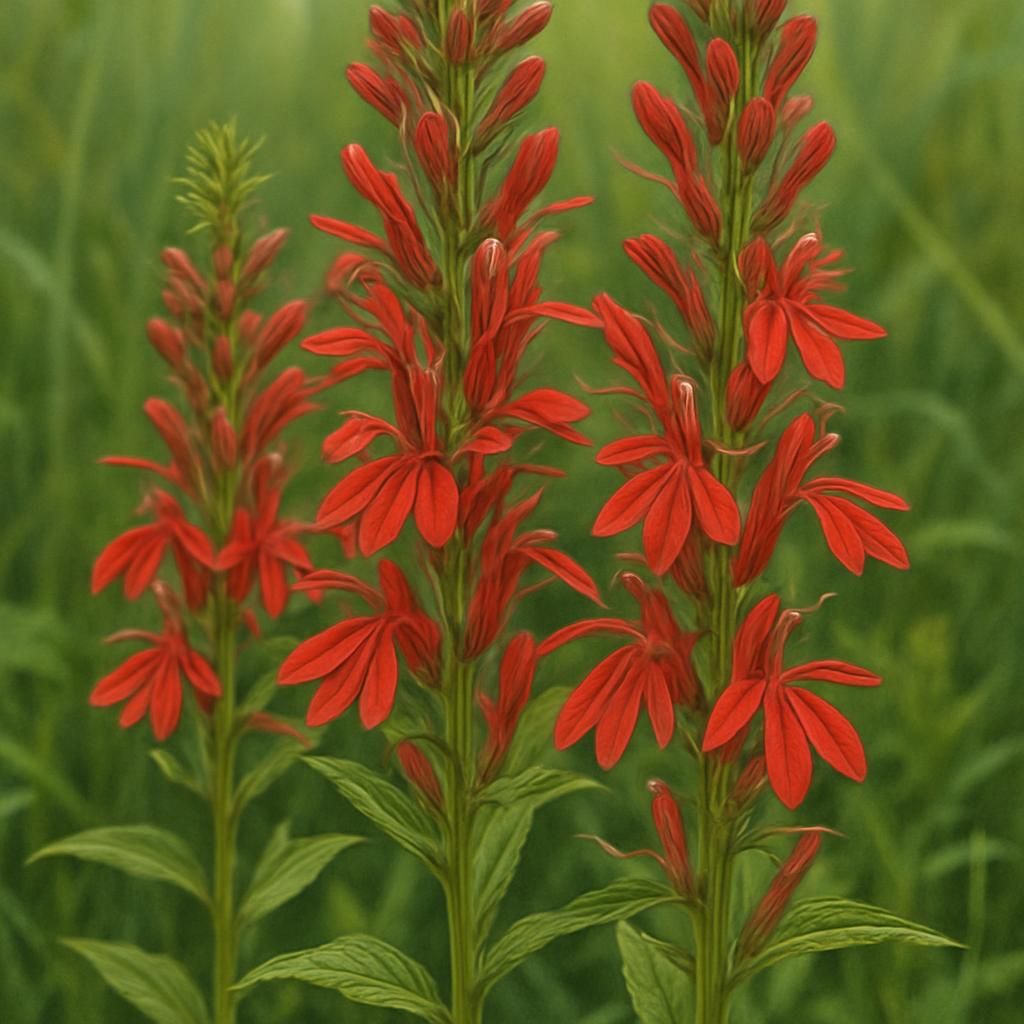
Introduction to Cardinal Flower
Cardinal Flower (Lobelia cardinalis) is a native North American perennial renowned for its vivid scarlet spikes that bloom from midsummer into early autumn. Gardeners and restoration ecologists value it for its ability to colonize moist sites while supporting specialized pollinators such as ruby-throated hummingbirds. Because it tolerates periodic flooding yet demands consistent moisture, it excels in rain gardens, bioswales, and the edges of ponds or streams.
Beyond aesthetics, Cardinal Flower plays an ecological role by stabilizing soil along waterways and providing late-season nectar when many other perennials have finished blooming. Its relatively short lifespan of three to five years is offset by prolific self-seeding and the ease of vegetative division, making it sustainable for both home landscapes and larger-scale habitat projects.
Botanical Profile of Cardinal Flower
Lobelia cardinalis belongs to the Campanulaceae family. Plants produce basal rosettes of lance-shaped, dark green leaves that reach 12–18 inches before sending up unbranched flowering stems 2–4 feet tall. Each stem bears a dense terminal raceme of brilliant red, two-lipped tubular flowers approximately 1–1.5 inches long. The corolla structure is specifically adapted for hummingbird pollination; the reproductive organs are positioned so that pollen is deposited on the bird’s head as it probes for nectar.
Cardinal Flower is hardy in USDA zones 3–9. In its native range it occurs from southeastern Canada through the eastern and central United States into northern Mexico, typically in wet meadows, swamps, and along stream banks. The species is short-lived but readily perpetuates itself through seed and basal offsets.
Soil, pH, and Climate Requirements for Cardinal Flower
Successful cultivation hinges on replicating the consistently moist, organically rich conditions found in its natural habitat.
| Parameter | Ideal Range | Notes |
|---|---|---|
| Soil Type | Loamy to clay loam with high organic matter | Avoid compacted or sandy soils that dry rapidly |
| Soil pH | 5.8–7.2 | Slightly acidic to neutral is optimal |
| Moisture | Consistently moist to wet | Tolerates seasonal flooding but not drought |
| Temperature Range | 60–85 °F daytime; hardy to –30 °F | Performs best with cool nights |
| Light | Full sun to partial shade | More shade increases stem length but reduces flower density |
| Spacing | 12–18 inches between plants | Allows air circulation while forming colonies |
Step-by-Step Planting & Propagation
Site selection is the first critical step. Choose a location that receives at least four hours of direct sun yet retains moisture; low spots or areas near downspouts are excellent. Amend the planting area with 2–3 inches of well-rotted compost or leaf mold to improve water-holding capacity and fertility.
Cardinal Flower can be established from seed, division, or nursery transplants. For seed propagation, sow fresh seed on the soil surface in late fall or early spring; do not cover because light is required for germination. Maintain soil temperature between 55–65 °F and keep the surface evenly moist. Germination typically occurs in 14–21 days. Seedlings should be thinned or transplanted once they develop two true leaves.
Vegetative division is faster and preserves cultivar characteristics. In early spring or immediately after flowering, lift established clumps and separate into sections each containing at least three shoots and a portion of the root system. Replant divisions at the same depth, spacing 12–18 inches apart, and water thoroughly.
Container-grown plants from reputable nurseries can be transplanted any time the ground is workable. Dig a hole twice the width of the root ball, set the plant so the crown sits at soil level, backfill, and mulch with 2 inches of shredded leaves or pine straw to conserve moisture.
Care & Maintenance regimes for Cardinal Flower
Consistent moisture and periodic renewal keep plants vigorous and floriferous.
| Task | Schedule | Details |
|---|---|---|
| Watering | Weekly deep soak during active growth; daily in extreme heat | Maintain 1 inch of water per week; use drip irrigation or soaker hoses |
| Fertilizer | Early spring and post-bloom | Apply balanced organic fertilizer (NPK 5-5-5) at 1 lb per 100 sq ft; avoid high-nitrogen formulas |
| Mulching | Spring and fall | 2–3 inches of organic mulch to suppress weeds and retain moisture |
| Pruning / Deadheading | Remove spent spikes after flowering | Cut stems to basal foliage to encourage rebloom and reduce self-seeding if desired |
| Division | Every 2–3 years in early spring | Rejuvenates clumps and prevents center die-out |
Pests, Diseases & Organic Management
Cardinal Flower is relatively pest-resistant, yet several issues can arise under stress. Slugs and snails may chew young foliage in cool, damp springs; handpick at dusk or apply iron-phosphate baits. Aphids occasionally cluster on tender shoot tips; a strong water spray or insecticidal soap provides control. Spider mites can appear during prolonged drought; increasing humidity and releasing predatory mites are effective organic remedies.
Fungal leaf spots caused by Alternaria or Septoria may develop in overcrowded plantings. Improve air circulation by proper spacing and remove infected leaves. Root and crown rots can occur in poorly drained sites; ensure soil remains moist but not waterlogged. Phytophthora species have been reported in overly saturated conditions—avoid over-irrigation and improve drainage where possible.
Harvesting, Curing & Optimal Storage
Although primarily grown as an ornamental, Cardinal Flower seed can be collected for propagation. Harvest mature capsules when they turn brown and begin to split, typically 4–6 weeks after flowering ceases. Place capsules in a paper bag and allow them to dry indoors at 60–70 °F for two weeks. Gently crush to release seed, then clean by screening or winnowing. Store cleaned seed in labeled paper envelopes inside an airtight container at 35–40 °F; viability remains high for up to three years.
Dried stems can be used in floral arrangements. Cut stems at peak color, strip lower leaves, and hang upside down in a warm, dark, well-ventilated space for 10–14 days. Once fully dry, store in acid-free boxes away from direct light to preserve color.
Companion Planting for Cardinal Flower
Pairing Cardinal Flower with other moisture-loving natives creates resilient, pollinator-rich plantings. Joe-Pye Weed provides height contrast and extends the bloom season, while Blue Flag Iris offers early-season interest and similar cultural requirements. Marsh Marigold blooms in spring before Cardinal Flower emerges, and ferns such as Ostrich Fern supply textural contrast in partial shade. Avoid aggressive spreaders like Common Reed that can outcompete slower-establishing perennials.
For vegetable-adjacent rain gardens, interplant with moisture-tolerant herbs such as Mint or Lemon Balm to attract beneficial insects while the Cardinal Flower draws hummingbirds that also help control small pests. Rotate locations every four years to minimize any buildup of soil-borne pathogens.