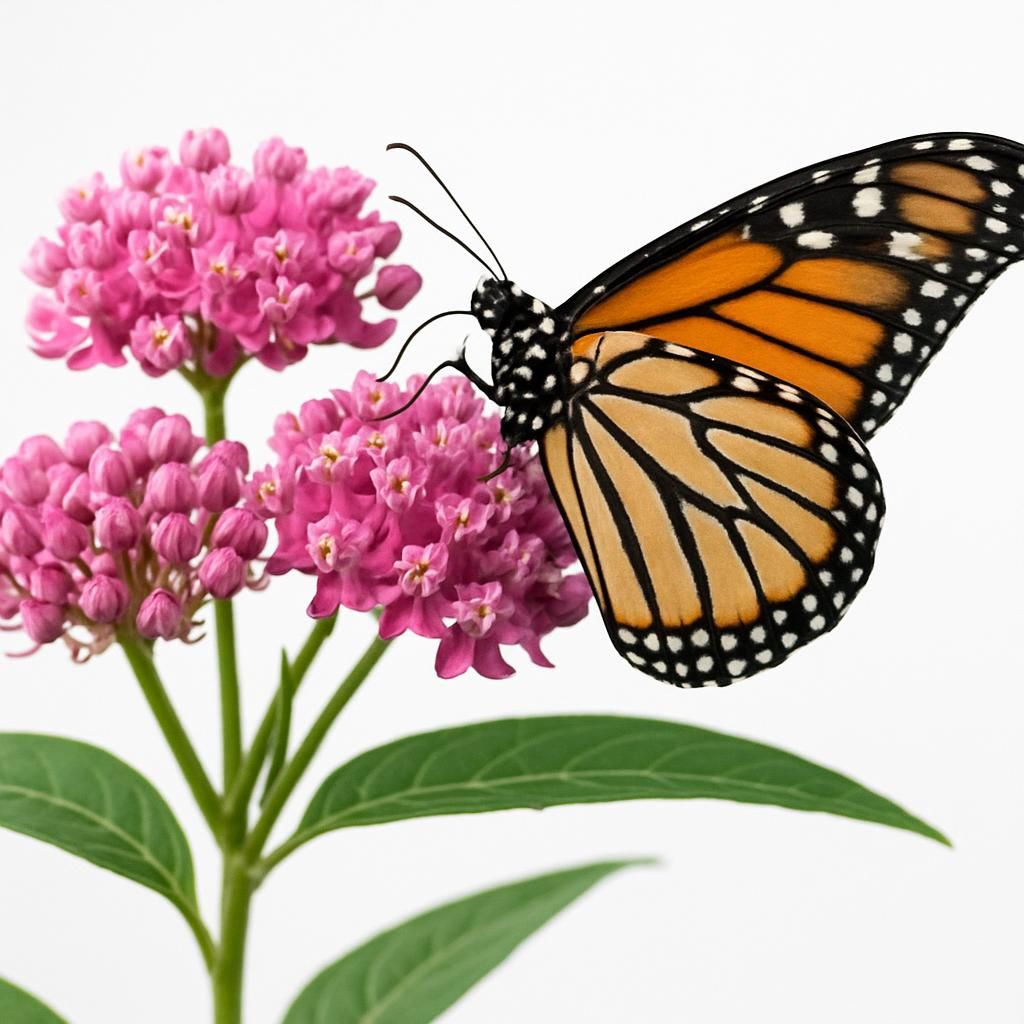
Introduction to Swamp Milkweed
Swamp Milkweed (Asclepias incarnata) is a clump-forming herbaceous perennial native to much of eastern and central North America. Unlike its upland relative common milkweed, it prefers saturated soils and is frequently found along stream banks, marshes, and wet meadows. Its clusters of fragrant, rose-pink flowers appear from mid-summer into early fall, providing abundant nectar for bees, butterflies, and beneficial wasps. Because it is the primary larval host for monarch butterflies (Danaus plexippus), Swamp Milkweed plays an essential ecological role in supporting declining pollinator populations. Commercial growers, native-plant nurseries, and restoration contractors increasingly cultivate this species both for seed sales and for live-plant plugs used in wetland mitigation projects.
Beyond its pollinator value, Swamp Milkweed offers practical agricultural applications. Its deep, fibrous root system stabilizes soil in riparian buffers and helps filter agricultural runoff. The plant tolerates periodic flooding yet survives short dry spells once established, making it suitable for climate-resilient landscaping on farms. Growers also appreciate its relatively low maintenance requirements once plants are sited correctly. This guide delivers professional-grade, field-tested recommendations for successful commercial and conservation-scale production.
Botanical Profile of Swamp Milkweed
Swamp Milkweed belongs to the Apocynaceae family. Mature plants reach 3–5 feet (0.9–1.5 m) in height with an upright, branching habit. Opposite, lance-shaped leaves are 3–6 inches long and emit a milky latex when damaged. Terminal umbels 2–4 inches across bear 20–50 individual flowers, each featuring the characteristic milkweed corona and reflexed petals. Seed pods (follicles) are slender, 3–4 inches long, and split open at maturity to release numerous seeds equipped with silky white coma hairs for wind dispersal. The species is hardy in USDA zones 3–9 and is fully deciduous in winter.
Soil, pH, and Climate Requirements for Swamp Milkweed
Successful cultivation begins with matching site conditions to the plant’s native wetland preferences. The following table summarizes ideal parameters for commercial production.
| Parameter | Ideal Range | Notes |
|---|---|---|
| Soil Texture | Loam to clay loam | High organic matter improves moisture retention |
| Soil pH | 6.0–7.5 | Slightly acidic to neutral; tolerates up to 8.0 |
| Moisture | Consistently moist to wet | 1–2 inches standing water tolerated short-term |
| Drainage | Poor to moderate | Avoid sites that dry out completely in summer |
| Temperature Range | 65–85 °F (18–29 °C) daytime | Frost hardy to –30 °F (–34 °C) once dormant |
| Light | Full sun to partial shade | Minimum 6 hours direct sun for optimal flowering |
| Spacing | 18–24 inches (45–60 cm) | 36-inch rows for mechanical cultivation |
Step-by-Step Planting & Propagation
Swamp Milkweed is most reliably propagated from seed or root divisions. Begin by cold-stratifying seeds for 30–60 days at 35–40 °F (2–4 °C) to break dormancy. Sow stratified seed ¼ inch deep in flats or plug trays filled with a peat-perlite mix in late winter. Maintain soil temperature at 70 °F (21 °C) and keep evenly moist; germination occurs in 10–20 days. Transplant seedlings outdoors after the last frost when they have at least four true leaves.
Root division is performed in early spring or fall. Dig mature clumps, separate healthy rhizomes with visible buds, and replant immediately at the same depth. Divisions establish faster than seedlings and flower in the first season. For large-scale production, purchase certified plugs from native-plant nurseries to ensure genetic diversity and disease-free stock.
Site preparation includes eliminating perennial weeds and incorporating 2–3 inches of well-rotted compost or aged manure. Raised beds or berms are unnecessary in naturally wet areas; however, in upland fields, create shallow swales or install drip irrigation to maintain consistent moisture.
Care & Maintenance regimes for Swamp Milkweed
Once established, Swamp Milkweed requires minimal intervention. The table below outlines seasonal water, fertilizer, and pruning schedules for commercial growers.
| Season | Watering | Fertilizer | Pruning / Maintenance |
|---|---|---|---|
| Spring | Maintain 1 inch/week; avoid drying | Apply ½ inch compost tea or 5-5-5 organic at 1 lb/100 ft² | Remove winter debris; divide overcrowded clumps |
| Summer | Irrigate during prolonged dry spells | Side-dress with aged manure mid-June if growth stalls | Deadhead spent blooms to encourage rebloom |
| Fall | Reduce watering as plants senesce | No additional fertilizer | Cut back to 6 inches after first hard frost |
| Winter | Natural precipitation sufficient | None | Mulch lightly with leaf litter in zone 3–4 |
Monitor soil moisture with tensiometers or by the “squeeze test.” Over-fertilization promotes lush foliage at the expense of flowers and increases aphid pressure. Always use low-phosphorus organic amendments to protect nearby waterways.
Pests, Diseases & Organic Management
Swamp Milkweed is generally pest-resistant thanks to cardiac glycosides in its tissues, but several insects and pathogens can affect production. Aphids (Aphis nerii) commonly colonize stems and leaves; blast with a strong water spray or apply insecticidal soap. Spider mites appear during hot, dry periods—maintain humidity and release predatory mites as needed. Occasional outbreaks of powdery mildew are managed by improving air circulation and applying potassium bicarbonate sprays.
Root and crown rots caused by Pythium or Phytophthora can occur in poorly drained containers or compacted field soils. Prevent these issues by using sterile media and avoiding overwatering seedlings. Deer and rabbits rarely browse milkweed; however, young transplants may need temporary fencing until established.
Harvesting, Curing & Optimal Storage
Harvest seed pods when they begin to split but before seeds disperse. Cut entire stems and place in paper bags to finish drying indoors at 60–70 °F (15–21 °C) with good airflow. Once pods fully open, separate seeds from coma using a gentle fan or screen. Store cleaned seed in labeled paper envelopes inside airtight containers at 35–40 °F (2–4 °C) with 5–8 % moisture content; viability remains above 80 % for three years.
For live-plant sales, dig dormant bareroot divisions in late fall or early spring. Trim foliage, wash soil from roots, and store in moist sphagnum at 35–40 °F. Ship within 7–10 days to maintain viability.
Companion Planting for Swamp Milkweed
Swamp Milkweed pairs well with other wetland species that share similar moisture and light requirements. Recommended companions include Joe-Pye Weed, Blue Flag Iris, Cardinal Flower, and Turtlehead. These combinations create diverse pollinator habitat while reducing monoculture disease pressure. Avoid planting near heavy feeders such as Corn that may compete for nutrients or shade the milkweed. In rain-garden designs, interplant with sedges and rushes to stabilize soil and enhance visual appeal throughout the season.