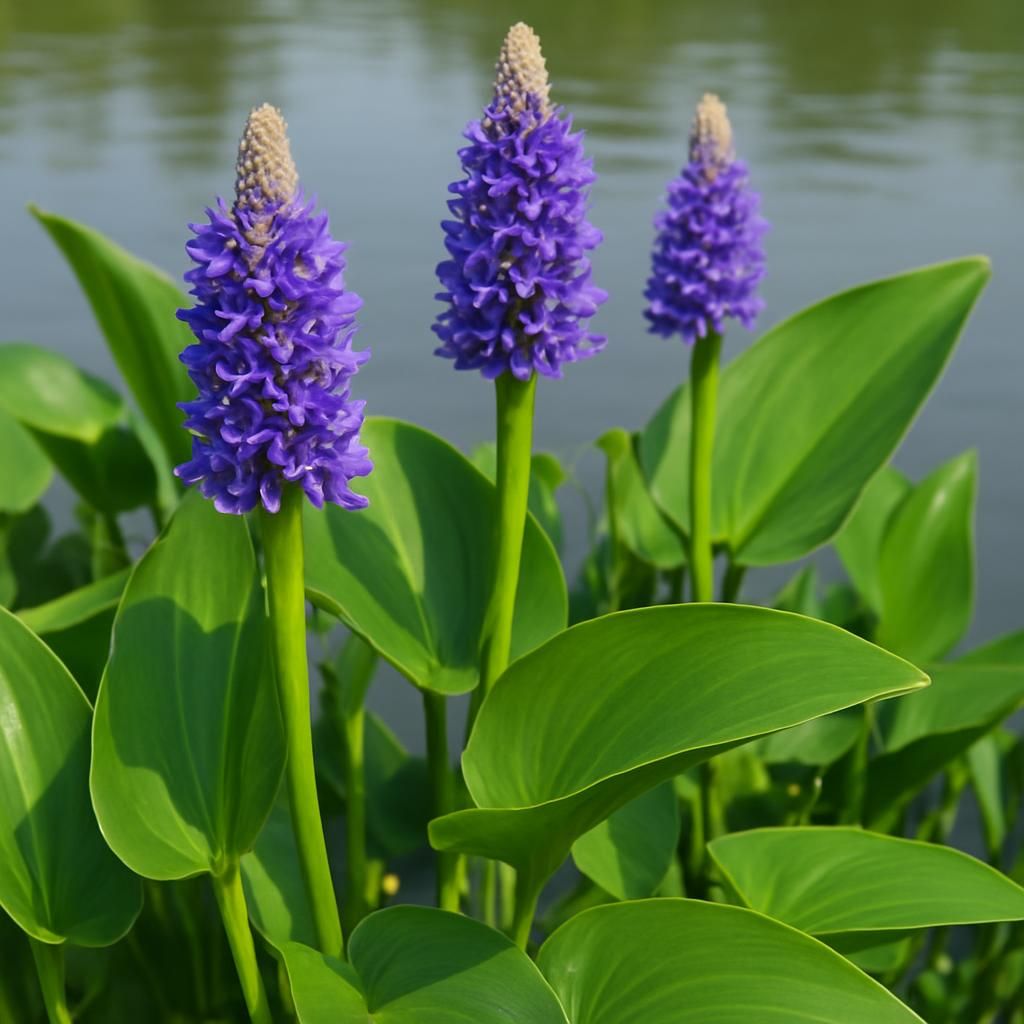
Introduction to Pickerelweed
Pickerelweed (Pontederia cordata) is a robust, clump-forming aquatic perennial native to wetlands, ponds, and slow-moving streams across eastern North America. It produces heart-shaped leaves and dense spikes of violet-blue flowers that bloom from late spring through early fall, attracting bees, butterflies, and other pollinators. In agricultural and restoration contexts, pickerelweed is valued for its capacity to filter nutrients, stabilize muddy banks, and create wildlife habitat while remaining productive in saturated soils where most terrestrial crops fail.
Because it tolerates periodic flooding and grows vigorously in shallow water, pickerelweed is increasingly cultivated for both ecological restoration projects and specialty wetland farms. The plant's rhizomes and young leaves are also used in traditional crafts and occasionally in forage systems. Its long bloom period and tolerance of poor drainage make it an ideal choice for constructed wetlands, bioswales, and pond edges.
This definitive growing guide provides professional-grade, field-tested information on soil, climate, planting, care, pest management, harvesting, and companion planting so growers can establish productive, resilient stands.
Botanical Profile of Pickerelweed
Pickerelweed belongs to the Pontederiaceae family. It is a herbaceous perennial that spreads via thick, fleshy rhizomes and forms dense colonies in 2–12 inches of standing water or consistently saturated soil. Mature plants reach 2–4 feet in height with glossy, arrow- to heart-shaped leaves up to 10 inches long. The inflorescence is a terminal spike of numerous small, tubular flowers ranging from deep violet to pale blue, each with a conspicuous yellow spot on the upper petal.
The species is highly variable; several cultivars exist with improved flower color, compact habit, or extended bloom. Pontederia cordata is fully hardy in USDA zones 3–10 and can withstand winter freezing when rhizomes remain below the frost line or are protected by water or mulch. The plant is primarily propagated vegetatively, though seed production is possible under favorable conditions.
Soil, pH, and Climate Requirements for Pickerelweed
Pickerelweed performs best in heavy, fertile soils that remain moist to saturated throughout the growing season. It tolerates a wide pH range but prefers slightly acidic to neutral conditions. The following table summarizes ideal environmental parameters:
| Parameter | Ideal Range | Notes |
|---|---|---|
| Soil Type | Loamy to clay, high in organic matter | Avoid pure sand unless amended heavily |
| Soil pH | 5.5–7.0 | Tolerates 5.0–7.5 with reduced vigor |
| Water Depth | 0–12 inches (0–30 cm) | Shallow water or saturated soil required |
| Temperature Range | 60–90 °F (15–32 °C) daytime | Frost hardy to −20 °F (−29 °C) |
| USDA Hardiness Zones | 3–10 | Rhizomes must remain submerged or mulched |
| Sun Exposure | Full sun to partial shade | Full sun maximizes flowering |
| Salinity Tolerance | Low | Sensitive to brackish or saline water |
Step-by-Step Planting & Propagation
Site Preparation: Choose a location with consistent moisture or shallow standing water. Remove competing vegetation and incorporate 2–4 inches of well-rotted compost or aged manure to increase organic matter.
Division Method (Recommended): In early spring or fall, lift established clumps and separate rhizomes with at least one growing point and several roots. Replant divisions 12–18 inches apart at the same depth they were growing.
Container or Pond Planting: Use fabric pots or aquatic baskets filled with heavy loam. Place containers so the soil surface sits 2–6 inches below the water line. This method prevents unwanted spread in managed landscapes.
Seed Propagation: Collect ripe seed in late summer. Sow fresh seed in flats kept constantly moist at 70 °F (21 °C). Germination occurs in 14–30 days. Seedlings are transplanted after the last frost when they have three true leaves.
Timing: Plant divisions or seedlings after soil temperatures reach 55 °F (13 °C) and danger of hard frost has passed. In mild climates, fall planting is also successful.
Care & Maintenance regimes for Pickerelweed
Once established, pickerelweed requires minimal intervention beyond water-level management and periodic division. The following table outlines seasonal water, fertilizer, and pruning schedules:
| Season | Water Management | Fertilizer Application | Pruning / Maintenance |
|---|---|---|---|
| Spring | Maintain 2–6 inches standing water | Apply slow-release aquatic fertilizer at half rate when new growth appears | Remove winter-damaged foliage; divide overcrowded clumps |
| Summer | Keep water level consistent; top up during drought | Light monthly feeding with fish emulsion or aquatic tabs if growth is pale | Deadhead spent flower spikes to encourage rebloom |
| Fall | Allow water to recede naturally | Cease fertilization 6 weeks before frost | Cut back foliage to 4–6 inches after first hard frost |
| Winter | Ensure rhizomes remain below ice line or heavily mulched | None | Minimal; protect young plantings with straw or evergreen boughs |
Monitor for nutrient deficiencies (especially nitrogen and iron) indicated by yellowing leaves. In constructed wetlands, periodic harvesting of biomass helps export excess nutrients and maintain plant vigor.
Pests, Diseases & Organic Management
Pickerelweed is generally resistant to serious pests, but several insects and pathogens can affect stressed stands. Common issues include Aphids, Spider mites, and occasional leaf spot caused by fungal pathogens.
Aphids cluster on new growth and can be controlled with strong water sprays or insecticidal soap. Spider mites appear during hot, dry periods; increasing humidity and releasing predatory mites provides effective biological control. Leaf spots are rarely severe; remove affected foliage and improve air circulation.
Root and crown rots may occur in stagnant, poorly oxygenated water. Maintain gentle water movement or periodic aeration. In high-density plantings, divide clumps every 3–4 years to reduce disease pressure.
Harvesting, Curing & Optimal Storage
Harvesting depends on intended use. For cut flowers, harvest spikes when 50–75 % of florets are open; stems last 5–7 days in fresh water. For rhizome division or propagation, lift plants in early spring or fall when dormant.
Rhizomes intended for replanting should be washed, divided into sections with visible buds, and stored in moist sphagnum moss at 35–40 °F (2–4 °C) for up to three months. For biomass harvest in constructed wetlands, cut foliage at peak growth and compost or use as mulch.
Dried seed heads can be collected in late summer for propagation or crafts. Store cleaned seed in paper envelopes at cool, dry room temperature for one season.
Companion Planting for Pickerelweed
Pickerelweed pairs well with other wetland species that share similar moisture and nutrient requirements. Recommended companions include Cattail for nutrient uptake, Arrowhead for vertical structure, and Water Iris for extended bloom color. These combinations create diverse habitat while reducing pest pressure through increased predator diversity.
Avoid planting with aggressive spreaders such as Purple Loosestrife that can outcompete pickerelweed. In pond systems, combine with submerged oxygenators such as Hornwort to maintain water quality. Strategic placement near the water's edge also provides cover for amphibians and beneficial insects that help control mosquito larvae.
For more information on wetland plant integration, see the Wiki entry on Rice and the blog post Summer Companion Planting: 10 Organic Pairings to Boost Small Farm Resilience.