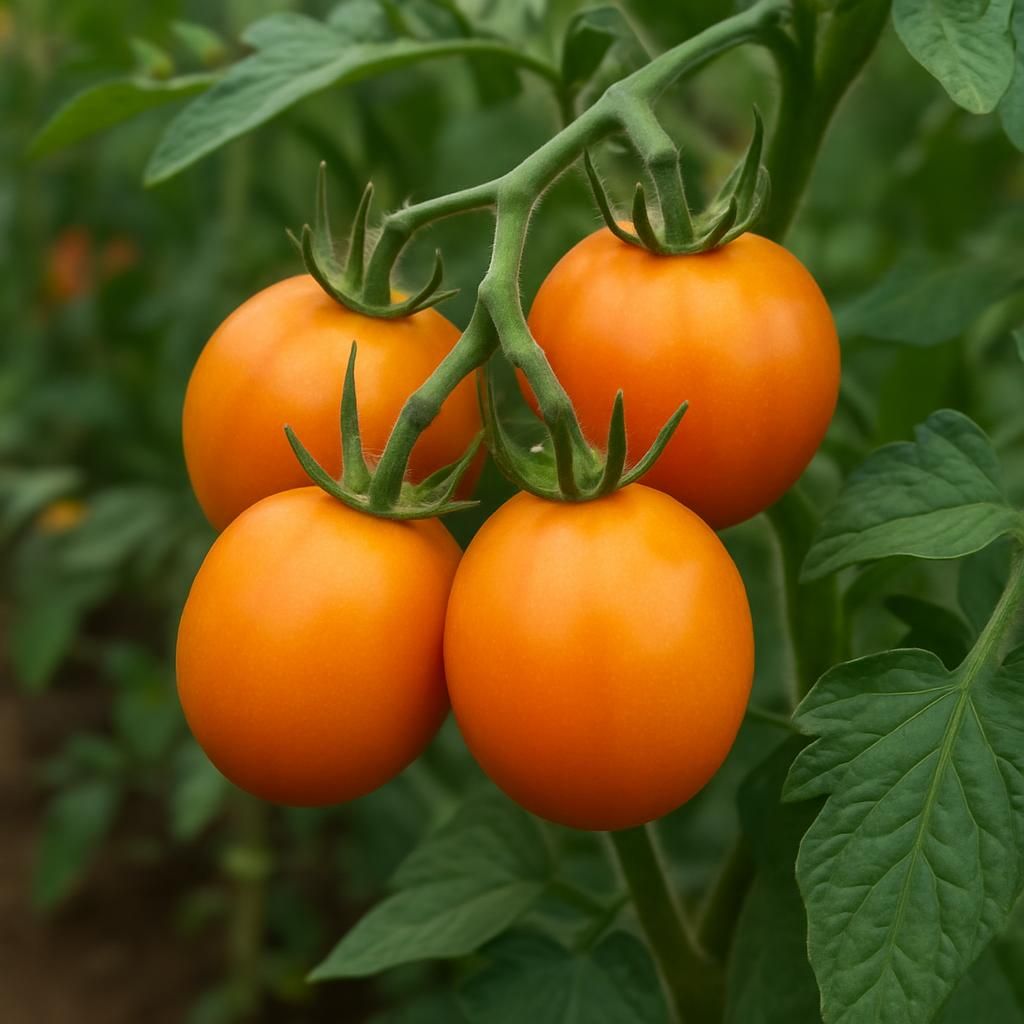
Introduction to Jaune Flamme Tomato
Jaune Flamme, translating to 'Yellow Flame,' is a celebrated French heirloom tomato variety known for its vibrant tangerine-orange fruits and exceptional sweet-tart flavor profile. Developed in the Normandy region of France, this cultivar has gained international recognition among home gardeners and market farmers for its early maturity, disease tolerance, and consistent productivity even in challenging growing conditions. The fruits typically weigh 2-4 ounces and feature a smooth, slightly flattened shape with minimal cracking.
Gardeners appreciate Jaune Flamme for its ability to set fruit reliably in cooler temperatures while maintaining excellent flavor intensity throughout the season. Its compact growth habit makes it suitable for both open-field production and protected cultivation in polytunnels or greenhouses. The variety's striking color and gourmet taste have made it a favorite at farmers' markets and in specialty produce programs.
Botanical Profile of Jaune Flamme Tomato
Jaune Flamme belongs to the Solanaceae family and exhibits characteristics intermediate between determinate and indeterminate growth patterns. Plants typically reach 4-5 feet in height with sturdy stems that benefit from light staking or caging. The foliage is medium-green with slightly serrated leaflets, and the plant produces clusters of 4-6 fruits that ripen from green to brilliant orange.
The variety demonstrates strong resistance to common tomato ailments including early blight and certain fungal pathogens. Fruit development occurs in approximately 70-75 days from transplant, with individual fruits featuring thin skins and dense, meaty flesh containing few seeds. The flavor profile balances high sugar content with bright acidity, making it excellent for fresh eating, roasting, and preserving.
Soil, pH, and Climate Requirements for Jaune Flamme Tomato
Successful cultivation of Jaune Flamme requires attention to soil structure, nutrient availability, and environmental conditions. This variety performs best in well-drained loamy soils enriched with organic matter. The following table outlines ideal growing parameters:
| Parameter | Ideal Range | Notes |
|---|---|---|
| Soil Type | Loamy, well-drained | Incorporate compost or aged manure |
| Soil pH | 6.2 - 6.8 | Test soil annually; adjust with lime/sulfur |
| Temperature (Day) | 70-85°F (21-29°C) | Optimal fruit set occurs in this range |
| Temperature (Night) | 55-65°F (13-18°C) | Avoid prolonged exposure below 50°F |
| Spacing | 24-36 inches between plants | Rows 4-5 feet apart for airflow |
| Sunlight | Full sun (6-8+ hours) | Morning sun helps reduce foliar diseases |
| Frost Tolerance | None | Protect or delay planting until after last frost |
Step-by-Step Planting & Propagation
Begin by starting seeds indoors 6-8 weeks before the expected last frost date in your region. Sow seeds ¼ inch deep in sterile seed-starting mix and maintain soil temperature at 75-80°F for optimal germination, which typically occurs within 7-10 days. Once seedlings develop their first true leaves, transplant into larger containers and provide 14-16 hours of supplemental light daily.
Harden off seedlings for 7-10 days before transplanting outdoors. Choose a planting site with full sun exposure and well-prepared soil amended with aged compost. Dig holes 24-36 inches apart, incorporating a handful of balanced organic fertilizer or bone meal at the base of each planting hole. Plant seedlings deep, burying the stem up to the first set of leaves to encourage robust root development.
Water thoroughly after planting and apply a 2-3 inch layer of organic mulch around each plant to conserve moisture and suppress weeds. Install support structures such as tomato cages or stakes at planting time to avoid disturbing roots later in the season.
Care & Maintenance regimes for Jaune Flamme Tomato
Consistent care throughout the growing season ensures maximum productivity and fruit quality. Focus on balanced watering, appropriate nutrition, and timely pruning to maintain plant health. The following table provides a comprehensive schedule:
| Growth Stage | Watering Schedule | Fertilizer Application | Pruning Actions |
|---|---|---|---|
| Transplant to 3 weeks | Deep watering 2-3 times weekly | Light application of balanced organic fertilizer at planting | Remove lower leaves touching soil |
| Vegetative (3-6 weeks) | Maintain even soil moisture (1-1.5 inches/week) | Side-dress with compost tea or fish emulsion every 3 weeks | Remove suckers below first flower cluster |
| Flowering & Fruit Set | Increase to 2 inches/week during heat | Apply phosphorus-rich fertilizer; avoid excess nitrogen | Continue selective sucker removal; maintain 2-3 main stems |
| Ripening (70+ days) | Reduce slightly to concentrate sugars | Minimal additional feeding; focus on potassium if needed | Remove yellowing foliage for airflow |
Monitor plants weekly for signs of nutrient deficiency or water stress. Consistent mulching helps regulate soil temperature and moisture levels while reducing disease pressure.
Pests, Diseases & Organic Management
Jaune Flamme demonstrates good resistance to several common tomato pathogens, yet remains susceptible to certain pests and environmental stresses. Primary insect concerns include Aphids, Hornworms, and Spider Mites (new entry). Implement integrated pest management strategies beginning with regular scouting and cultural controls.
Diseases such as Early Blight, Septoria Leaf Spot, and Verticillium Wilt may occur under humid conditions. Preventative measures include proper spacing for airflow, mulching to reduce soil splash, and removal of infected plant material. Organic options include neem oil applications, Bacillus thuringiensis for caterpillars, and copper-based fungicides when necessary.
Encourage beneficial insects such as ladybugs, lacewings, and parasitic wasps through habitat plantings and avoidance of broad-spectrum pesticides. Crop rotation with non-solanaceous plants every 3-4 years helps break disease cycles.
Harvesting, Curing & Optimal Storage
Harvest Jaune Flamme tomatoes when fruits reach full orange color with slight softening at the blossom end. For peak flavor, allow fruits to ripen fully on the vine. Use clean pruners to clip stems rather than pulling, which can damage plants.
For extended storage, harvest mature green fruits and ripen indoors at 65-70°F. Fully ripe tomatoes store best at room temperature away from direct sunlight for 3-5 days. For longer preservation, process into sauces, salsas, or freeze whole or halved fruits for winter use.
Companion Planting for Jaune Flamme Tomato
Strategic companion planting enhances Jaune Flamme productivity while providing natural pest deterrence. Excellent partners include Basil, Marigold, Nasturtium, and Garlic, which help repel aphids and other common pests. Borage attracts pollinators and beneficial insects while improving overall plant vigor.
Avoid planting near Fennel or Walnut trees, which can inhibit tomato growth through allelopathic effects. Cucumber and Pepper companions work well in rotation systems but require careful spacing to prevent shared disease transmission.
Integrate nitrogen-fixing cover crops such as Clover in off-seasons to build soil fertility for subsequent tomato plantings. Diverse plantings create resilient ecosystems that support healthy Jaune Flamme production throughout the season.