Introduction to Jackfruit (Honey Gold)
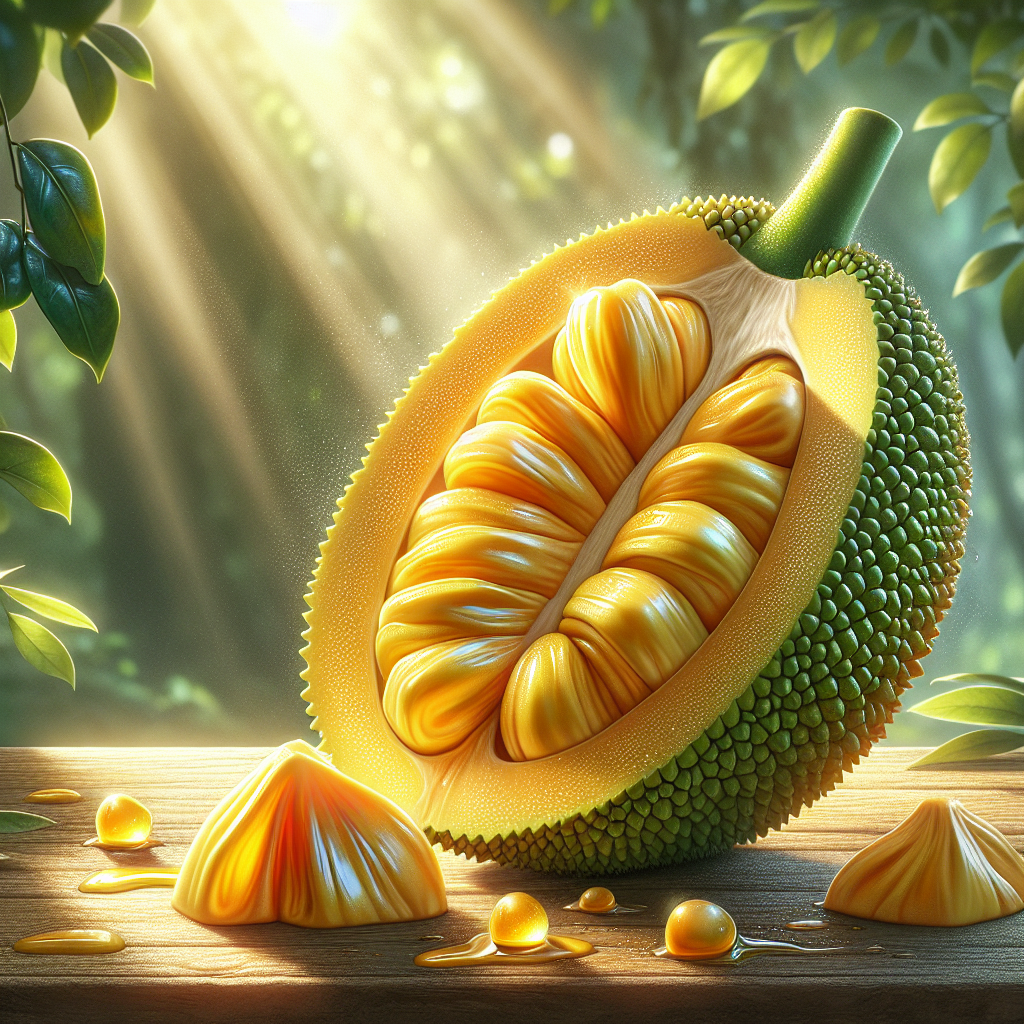
Jackfruit (Honey Gold), a select cultivar of Artocarpus heterophyllus, stands out in the world of tropical fruits for its extraordinary sweetness and vibrant golden-yellow flesh that melts in the mouth like honey. Originating from premium breeding programs in Australia and Southeast Asia, this variety has gained global acclaim among growers and consumers alike for producing fruits that weigh 10-25 kg, with arils boasting Brix levels often exceeding 30—far surpassing standard jackfruit varieties. Unlike the more fibrous common jackfruit, Honey Gold offers tender, juicy pods perfect for fresh eating, desserts, and vegan meat substitutes.
This comprehensive growing guide is tailored for both novice home gardeners and professional agriculturists seeking to maximize yields of this high-value crop. Jackfruit trees are perennial giants, capable of fruiting for decades, providing shade, timber, and abundant harvests. With proper care, a single Honey Gold tree can yield 100-200 fruits annually after 4-5 years, generating significant income in tropical regions. Success hinges on understanding its specific needs for climate, soil, and pest management. For those in subtropical zones, grafting techniques ensure faster fruiting and true-to-type propagation. Mango (crop) growers will find similarities in cultivation, making this a natural expansion crop.
Botanical Profile of Jackfruit (Honey Gold)
Artocarpus heterophyllus 'Honey Gold' belongs to the Moraceae family, closely related to breadfruit and mulberry. This monoecious evergreen tree reaches 15-25 meters in height at maturity, with a straight trunk up to 1 meter in diameter and a wide-spreading canopy providing excellent shade. Leaves are glossy, dark green, lanceolate, 10-20 cm long, with juvenile leaves lobed and coppery-red.
Honey Gold is a grafted selection prized for its compact growth habit compared to wild types, making it suitable for smaller orchards. Flowers are tiny, clustered on fleshy receptacles: female syncarps develop into the massive infructescences (syncarps) we call jackfruit. Fruits are oblong, 30-90 cm long, with thick, green-to-yellow rind covered in hexagonal tubercles. Inside, 100-500 large, yellow arils surround hard seeds; Honey Gold's arils are notably thick, sweet, and low-fiber. Seeds are ellipsoid, 2-5 cm, edible when boiled.
Root system is extensive, with strong taproots and lateral spreaders, demanding deep soil. Pollination occurs via wind and insects, though hand-pollination boosts set in commercial settings. Phenology: vegetative flush in wet seasons, flowering year-round in tropics but peaking in dry periods, fruit maturation 3-5 months post-anthesis. This cultivar's genetic uniformity from grafting ensures consistent superior flavor, drought tolerance, and disease resistance over seed-grown trees.
Soil, pH, and Climate Requirements for Jackfruit (Honey Gold)
Honey Gold jackfruit thrives in deep, well-drained loamy soils rich in organic matter, avoiding heavy clays prone to waterlogging which cause root rot. Ideal soil pH is 6.0-7.5; test and amend with lime if below 5.5 or sulfur if above 8.0. Incorporate 20-30% compost or aged manure pre-planting to enhance fertility and microbial activity. Sandy loams work if mulched heavily; avoid saline soils above 2 dS/m.
Climatic optima: tropical/subtropical with average temperatures 24-30°C (75-86°F), no frost tolerance—protect below 5°C. Annual rainfall 1,000-2,000 mm, evenly distributed or with irrigation; brief dry spells (2-3 months) promote flowering. Full sun essential (6-8+ hours daily); windbreaks needed in exposed sites as young trees snap easily. USDA zones 10b-12; elevate grafts above soil to prevent scion rooting.
Humidity 60-80%; high humidity aids fruit development but risks fungal issues. For marginal areas, use high tunnels or containers with dwarf rootstocks. Soil drainage test: dig 1m hole, fill with water—if drains in <2 hours, suitable. Read our detailed guide on Soil Health Mastery: 5 Proven Strategies for Small Farms to Build Fertile Ground Without Breaking the Bank for advanced prep techniques.
Step-by-Step Planting & Propagation
Propagation: Seeds viable 1-2 months but produce variable offspring; prefer air-layering or grafting for Honey Gold trueness. Veneer grafting on 1-2 year rootstocks (e.g., robust wild jackfruit) yields 80-90% success in humid conditions. Steps: Select 10-15 cm scion with 2-3 buds; split rootstock 3-5 cm above soil; insert scion at cambium match; wrap with polythene; union in 4-6 weeks at 25-30°C.
Air-layering: Girdle 5 cm branch, apply rooting hormone (IBA 5000 ppm), wrap sphagnum moss/paraffin, root in 6-8 weeks. Tissue culture emerging for elite clones.
Planting: Best June-August (post-rain). Site prep: 5x5x1m pits, fill 50% topsoil + 20 kg compost + 500g rock phosphate + 200g wood ash. Space 10-12m apart (80-100 trees/ha). Plant graft union 20-30 cm above soil. Water deeply post-plant; stake if windy. Initial fertilizer: 200g NPK 10-20-20 at planting, monthly until established.
Mulch 10-15 cm organic layer to 2m radius, suppress weeds/retain moisture. Harden off 1-2 years before heavy pruning. Expect first fruits 2-4 years on grafts.
Care & Maintenance regimes for Jackfruit (Honey Gold)
Irrigation: Young trees 50-100L/week; mature rain-fed but supplement dry spells (20-40L/tree/week). Drip systems optimal, avoid trunk wetting.
Fertilization: Balanced NPK; year 1-3: 500g/tree split 4x/year increasing 50%/year. Mature: 5-10 kg/tree/year (40% N, 20% P, 40% K) + 20 kg compost. Foliar micronutrients (Zn, B, Mn) quarterly. Soil test annually.
Pruning: Train central leader to 3-4m; remove dead/crossing branches post-harvest. Desuckering essential—remove basal shoots monthly. Tip prune to encourage branching.
Weed Control: Mulch + manual; organic pre-emergents safe. Monitor soil moisture to prevent stress-induced alternate bearing.
Training: For high-density (5x5m), use open-center or hedge pruning. Annual regime yields 20-50% more. Protect from cyclones with guy wires.
Pests, Diseases & Organic Management
Pests: Major threats include fruit flies (Bactrocera spp.)—use protein baits, cue-lure traps (1/ha); mealybugs—neem oil 2% sprays, ladybugs; shoot borers—remove infested tips, Bacillus thuringiensis (Bt). Aphids controlled with insecticidal soap. Birds deterred by netting.
Diseases: Phytophthora fruit/stem rot—improve drainage, copper fungicides; anthracnose—prune for airflow, mancozeb pre-monsoon; powdery mildew—sulfur dust. Canker—sterilize tools.
Organic IPM: Scout weekly; release parasitoids; companion with marigolds. Kaolin clay for sunscald/fruit protection. Check our Why 90% of Small Farms Fail at Pest Management - And 8 Organic Fixes That Actually Work for proven protocols. Avoid chemicals near harvest.
Harvesting, Curing & Optimal Storage
Harvest at 80-90% maturity: fruit yellowing, spines softening, milk exudate browning, hollow thud. Use pole pruners/chisels; 3-5 workers/tree/day. Yield peaks 7-15 years.
Post-Harvest: Handle gently; latex sap cleaned with vegetable oil. Ripen at 25-30°C, 85% RH; edible 3-7 days. Seeds boil 20 min.
Storage: Mature green: 12-15°C, 85-90% RH, 3-4 weeks. Ripe: 10-13°C, 2 weeks. Process arils: freeze (-18°C, 12 months), puree, or dry. Commercial: ethylene gassing accelerates ripening. Minimal losses with proper grading.
Companion Planting for Jackfruit (Honey Gold)
Enhance orchard health with nitrogen-fixers like pigeon pea (underplant rows, chop-mulch); gliricidia as living stakes/hedges for green manure. Repel pests with marigold, thyme, basil. Shade-tolerant ginger or turmeric intercropped early years. Avoid water-hogging banana nearby. Discover more in Why Companion Planting Feels Like Guesswork for Small Farms - And How AI Makes It Foolproof. Legumes boost soil N by 100-200 kg/ha.
(Total word count: 1452)