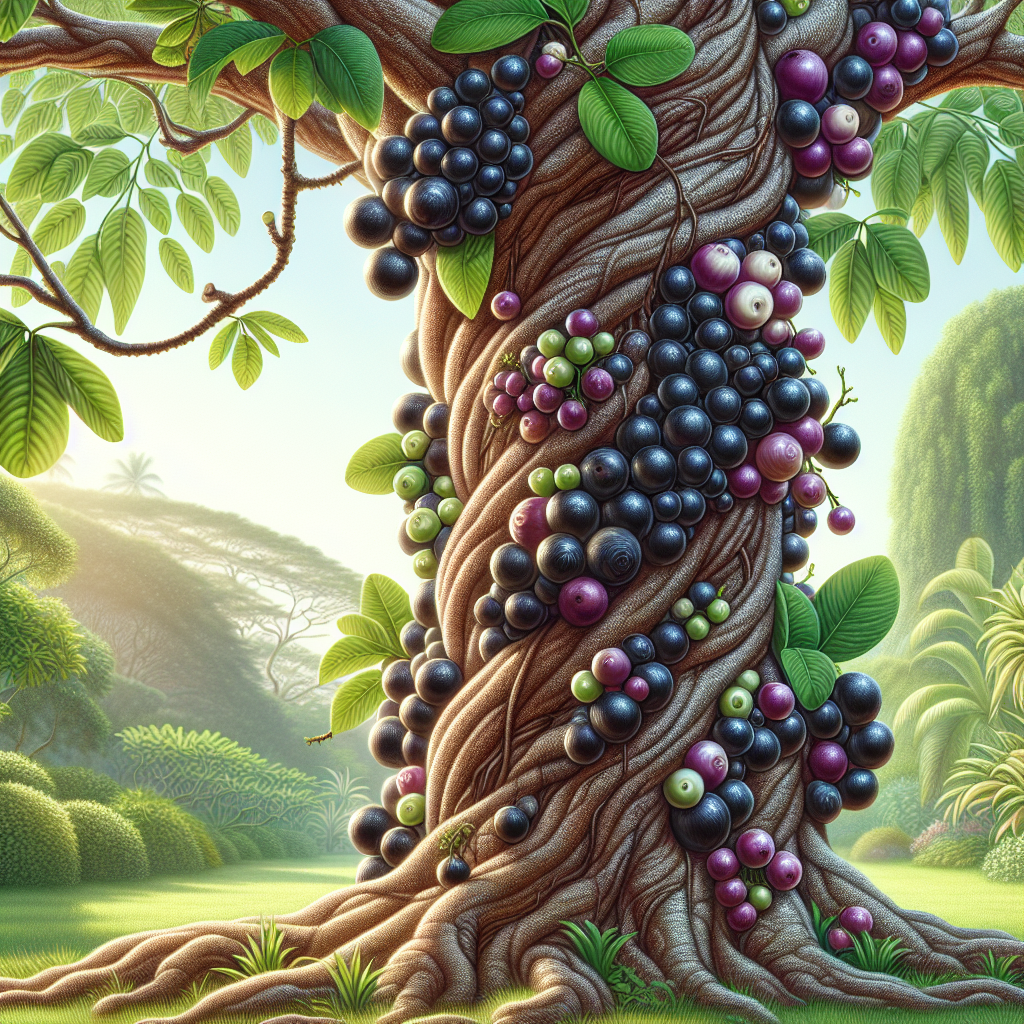
Introduction to Jaboticaba (Grimal)
Jaboticaba (Grimal), scientifically known as Myrciaria cauliflora 'Grimal', stands out as one of the most distinctive fruit trees in the world. Native to the Atlantic Forest regions of Brazil, this evergreen myrtaceous species is celebrated for its extraordinary fruiting habit called cauliflory, where glossy, purple-black grapes emerge directly from the stout trunk and larger branches rather than from twigs. The 'Grimal' cultivar is particularly prized for its exceptional cold hardiness, tolerating temperatures down to 18°F (-8°C), making it viable in USDA zones 9-11 and even protected microclimates in zone 8.
Unlike traditional fruit trees, Jaboticaba (Grimal) produces multiple crops annually, often flowering and fruiting several times per year under optimal conditions. Fruits are 1-1.5 inches in diameter, with a thick, slip-off skin enclosing juicy, white flesh surrounding 1-4 small seeds. The flavor profile blends sweet grape notes with subtle muscat undertones and a hint of currant tartness, boasting 14-18% sugars and high anthocyanin content for antioxidant benefits. This tree's compact growth—reaching 10-15 feet tall and wide—suits container culture, espalier training, or small-scale orchards. Guava (crop) growers often appreciate its similar subtropical adaptability but superior cold tolerance.
Commercially, Jaboticaba (Grimal) commands premium prices in niche markets, fresh fruits selling for $10-20 per pound. Its versatility shines in value-added products like jellies, wines, liqueurs, and even chocolate coatings. For small farms, it offers low-maintenance, high-yield potential with fruits maturing in 2-3 months from bloom. Check out this Fall Companion Planting Guide: Boost Yields and Soil Health for Small Farms and Gardens for synergistic pairings.
Botanical Profile of Jaboticaba (Grimal)
Jaboticaba (Grimal) belongs to the Myrtaceae family, closely related to guava and pitanga. The species Myrciaria cauliflora exhibits four main cultivars: Sabará (most common), Ponhema (largest fruit), Rajada (cracked skin), and Grimal (cold-hardy hybrid). 'Grimal' was selected in California for its vigor, productivity, and resilience to cooler climates, displaying smoother bark and denser branching than wild types.
Leaves are opposite, lanceolate, 2-4 inches long, leathery, and deep green with prominent veins. New growth emerges bronze-red, providing ornamental appeal. Flowers are tiny (1/4 inch), white, staminate, borne in dense clusters on old wood, exuding a mild fragrance. Pollination is primarily entomophilous, with bees and native pollinators crucial; self-fertile but yields improve with cross-pollination from other cultivars.
The tree's slow to moderate growth rate (1-2 feet/year) forms a rounded, multi-trunked canopy. Root system is shallow and fibrous, sensitive to compaction but efficient at nutrient uptake. Mature specimens develop picturesque, gnarled trunks covered in fruits, resembling a "tree of grapes." Lifespan exceeds 50 years, with peak production from years 5-20. Similar to Fig (crop), it prefers well-drained sites but adapts to heavier soils with amendments.
Soil, pH, and Climate Requirements for Jaboticaba (Grimal)
Jaboticaba (Grimal) excels in fertile, well-draining soils with pH 5.5-6.8. Loamy sand or sandy loam ideal; avoid heavy clays prone to waterlogging. Incorporate 30-50% organic matter like composted pine bark or coconut coir for aeration. Test soil annually; amend with dolomite lime if pH drops below 5.5, targeting micronutrient balance (Fe, Mn, Zn).
Climate-wise, optimum is subtropical (60-85°F average), but 'Grimal's hardiness allows 20°F brief freezes with mulching. Requires 40+ inches annual rainfall, evenly distributed; supplement with drip irrigation during dry spells (1-2 inches/week). Full sun (6-8 hours) essential for fruit set; partial shade reduces yields by 30-50%. Wind protection critical—plant near walls or hedges. Humidity above 50% prevents bud drop; coastal areas perfect.
Elevations up to 3,000 feet suit it, mimicking Brazilian habitats. Frost pockets deadly; use microclimates or overhead protection. Pair with Thai Basil (crop) for humidity-loving synergy. Mulch 4-6 inches deep with wood chips to retain moisture and suppress weeds.
Step-by-Step Planting & Propagation
Propagation: Seeds germinate in 20-30 days at 75-85°F, but seedlings take 8-10 years to fruit. Preferred: air-layering (80% success) or cuttings (girdle 4-inch branches, apply rooting hormone, mist 60-70% RH). Grimal roots readily in perlite:vermiculite (1:1).
Planting Steps: 1. Select 3-5 gallon liners, 18-24 inches tall. 2. Dig hole 2x width, same depth as container. 3. Backfill with 50/50 native soil/compost. 4. Plant at soil line; stake if windy. 5. Space 12-15 feet apart. 6. Water deeply post-planting; mulch immediately. Best time: early spring post-frost.
Container growing: 15-25 gallon pots with drainage holes. Use citrus mix; repot every 2-3 years. Fertilize monthly (8-3-9 slow-release). Overwinter indoors if below 25°F. Prune post-harvest to shape.
Care & Maintenance regimes for Jaboticaba (Grimal)
Water consistently to establish (first 2 years); mature trees drought-tolerant but fruit drop if stressed. Drip irrigate to 18-inch depth. Fertilize March/June/September: 6-6-6 + minors (1 lb/tree/year, increasing 0.5 lb/year to 10 lb max). Foliar spray micronutrients bi-monthly.
Prune lightly after harvest: remove dead/crossing branches, thin canopy for light penetration. Thin heavy fruit clusters to 4-6 inches apart for larger berries. Mulch annually; weed-free zone 3 feet radius. Monitor for nutrient deficiencies: yellow leaves = iron chelate.
Pollination boost: attract bees with nearby flowers. Protect young trees from sunburn with 30% shade cloth first summer. Like Mango (crop), it benefits from girdling trunks pre-bloom for synchronized sets.
Pests, Diseases & Organic Management
Common pests: Scale insects (pest), Mealybugs (pest), ants. Manage: neem oil (2% solution, weekly), horticultural oil dormant sprays, ladybugs. Fruit flies: kaolin clay barriers, spinosad baits.
Diseases: Root rot (disease) from overwatering (Phytophthora); ensure drainage, use biofungicides (Trichoderma). Anthracnose: copper sprays pre-monsoon, prune airflow. Powdery mildew (disease): potassium bicarbonate, sulfur. Birds/squirrels ravage fruits—netting essential.
Organic IPM: scout weekly, beneficials (predatory mites, parasitic wasps), reflective mulches. Resistant 'Grimal' minimizes issues. See Why 90% of Small Farms Fail at Pest Management - And 8 Organic Fixes That Actually Work for protocols.
Harvesting, Curing & Optimal Storage
Harvest when fruits blacken, 60-90 days post-bloom; twist or clip clusters. Yields: 20-50 lbs/tree at maturity, multiple flushes. Fresh: refrigerate 2-3 weeks at 45°F. Process immediately—skins toughen.
Curing: wash, destem; for eating, slip skins. Jams: equal sugar/fruit, pectin, boil 15 min. Wine: ferment pulp (12-14% ABV). Freeze whole (-0°F, 6 months). Dry slices for snacks. Market fresh in ventilated crates; process rejects into vinegar.
Companion Planting for Jaboticaba (Grimal)
Enhance growth with nitrogen-fixers like Clover (crop) understory, repels nematodes. Marigold (crop) deters soil pests. Herbs: Thyme (crop), Yarrow (crop) attract pollinators. Avoid grasses (compete water). Nasturtium (crop) traps aphids. Guild with Pineapple (crop) for groundcover, suppressing weeds while sharing humidity needs. Rotate with legumes every 5 years.