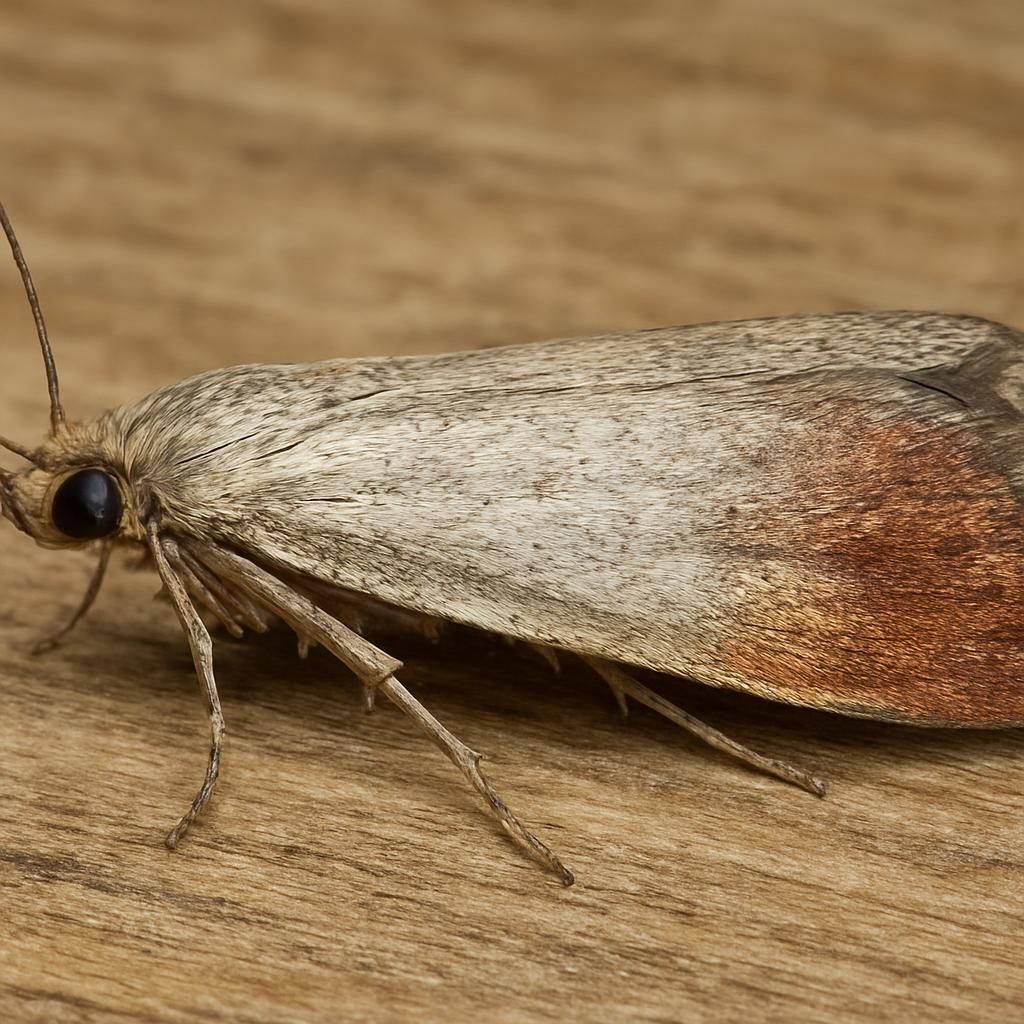
Introduction to Indian meal moth
The Indian meal moth (Plodia interpunctella) is one of the most common and economically important stored-product pests worldwide. Adults are small, 5–10 mm long, with distinctive coppery-bronze wing tips and pale gray bases. Larvae are creamy white to pinkish with brown heads and reach 12–15 mm at maturity. This cosmopolitan species thrives in pantries, warehouses, and food-processing facilities where it infests cereals, flour, nuts, dried fruits, pet food, and birdseed.
Damage occurs primarily during the larval stage when caterpillars feed on and contaminate stored commodities. Economic losses stem from direct consumption, product rejection due to webbing and frass, and costs associated with control measures. The moth’s ability to develop resistance to certain insecticides and its rapid reproductive cycle make it a persistent challenge for both commercial and home storage.
Identifying Symptoms & Damage
Visible signs of Indian meal moth infestation include small moths flying near storage areas, especially at dusk, and the presence of silken webbing on the surface of food products. Larvae often leave behind frass pellets and empty pupal cases. Infested items may appear clumped together due to silk threads.
Damage manifests as holes in packaging, discolored or powdery material, and an unpleasant odor from larval secretions. Heavily infested lots can contain live or dead larvae, pupae, and adult moths. Early detection through regular inspection of stored goods is critical to prevent widespread contamination.
Lifecycle and Progression of Indian meal moth (MUST INCLUDE A MARKDOWN TABLE OF LIFECYCLE STAGES)
The Indian meal moth undergoes complete metamorphosis with four distinct stages. Development time varies with temperature but typically ranges from 30–60 days under optimal conditions.
| Stage | Duration | Key Characteristics | Temperature Range (°C) |
|---|---|---|---|
| Egg | 2–14 days | Tiny white eggs laid in clusters on food surfaces | 20–35 |
| Larva | 2–6 weeks | Creamy-white to pink caterpillars; active feeders | 18–32 |
| Pupa | 6–20 days | Formed inside silken cocoons; immobile | 15–30 |
| Adult | 1–2 weeks | Non-feeding moths; focus on reproduction and dispersal | 15–32 |
Environmental Triggers & Risk Factors
Warm temperatures (25–30 °C) and moderate humidity accelerate development and increase population growth. Poor sanitation, cracked storage containers, and long-term storage of susceptible commodities create ideal conditions for outbreaks. Introduction of infested goods is the primary route of entry into clean facilities.
Organic Control & Treatment Plans (MUST INCLUDE A MARKDOWN TABLE OF TREATMENT OPTIONS AND FREQUENCIES)
Integrated management begins with thorough sanitation to remove food residues. Physical and biological controls are preferred in organic systems.
| Treatment Option | Method | Frequency / Application Rate | Notes |
|---|---|---|---|
| Freezing | Place infested items at –18 °C for 4 days | As needed when infestation detected | Kills all life stages |
| Heat treatment | 60 °C for 30 minutes | Single treatment per batch | Effective for bulk commodities |
| Pheromone traps | Place 1–2 traps per 100 m² | Monitor weekly; replace lures every 6–8 weeks | Detects adult males; guides timing |
| Diatomaceous earth | Dust 1–2 cm layer on shelves and floors | Reapply after cleaning or every 3 months | Abrades cuticle; low toxicity |
| Bacillus thuringiensis (Bt) | Spray 0.5–1 g/L on surfaces or food | Apply at first sign of larvae; repeat in 7–10 days | Targets young larvae |
| Sanitation | Vacuum and wipe all surfaces | Weekly during high-risk periods | Removes eggs, larvae, and food sources |
Preventing Indian meal moth in the Future
Store susceptible commodities in airtight glass, metal, or heavy-duty plastic containers. Implement a first-in, first-out rotation system and inspect incoming goods. Maintain storage areas at temperatures below 15 °C when possible and keep humidity under 50 %. Regular cleaning and monitoring with pheromone traps provide early warning of new introductions.
Crops Most Affected by Indian meal moth
While the Indian meal moth primarily targets stored products rather than growing crops, it readily infests harvested Rice, Wheat, Corn, Barley, Oats, Sorghum, and Millet. Processed products derived from these grains, as well as dried fruits and nuts from Almond, Walnut, and Pistachio trees, are also highly susceptible once in storage.