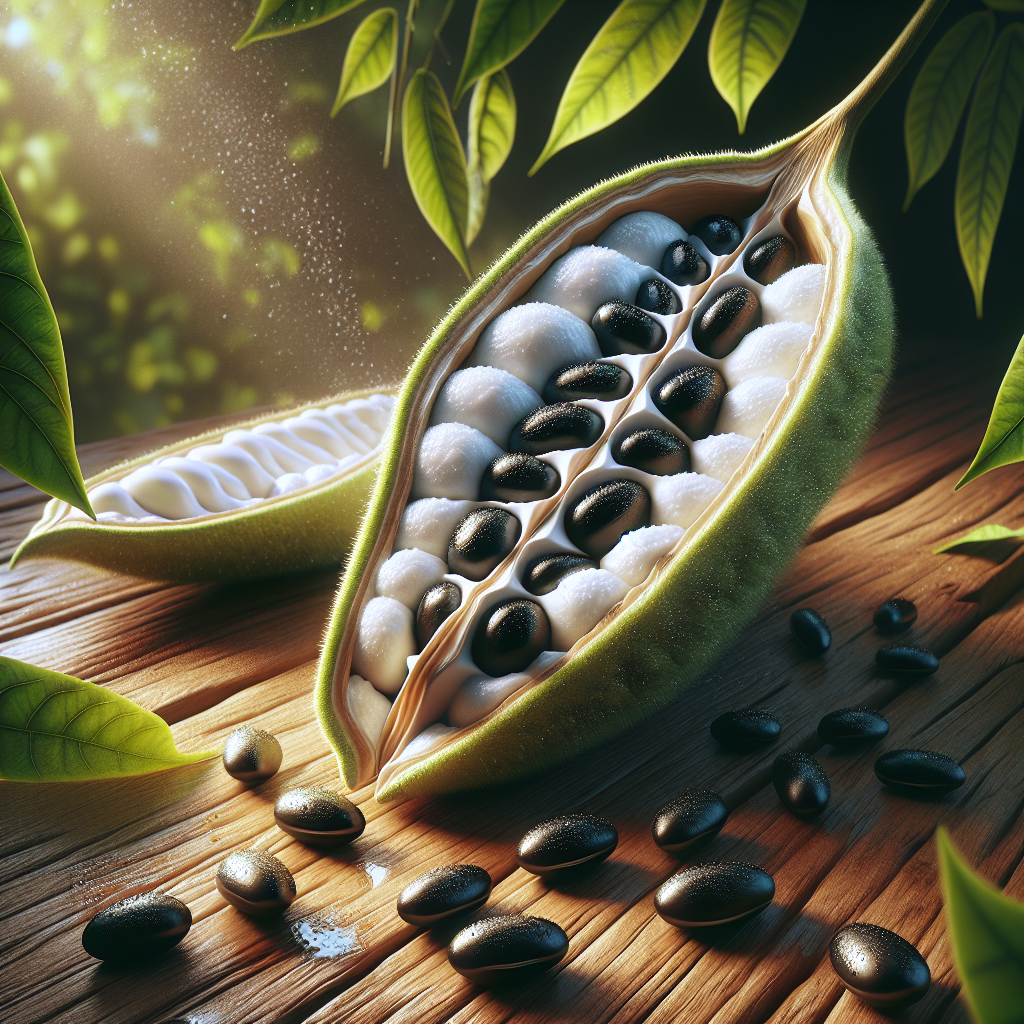
Introduction to Ice Cream Bean (Inga edulis)
Ice Cream Bean, scientifically known as Inga edulis, is a remarkable tropical legume tree that has captivated growers worldwide with its unique, dessert-like fruit. Native to the Amazon basin and other regions of South America, this tree produces long, curved pods filled with sweet, fluffy white pulp surrounding large seeds. The pulp's creamy texture and vanilla-like flavor have earned it the moniker "ice cream bean," making it a favorite for fresh eating, desserts, and even beverages in tropical agriculture.
Beyond its culinary appeal, Inga edulis is a powerhouse in agroforestry systems. As a nitrogen-fixing species in the Fabaceae family, it enriches soil fertility, provides dappled shade for understory crops, and serves as living fence posts or windbreaks. Mature trees can reach 15-20 meters (50-65 feet) tall, but with proper pruning, they adapt well to smaller farms and home gardens. Yields begin in 2-3 years from seed, with pods reaching 1 meter (3 feet) long containing up to 20 seeds each. Each tree can produce 50-100 kg (110-220 lbs) of pods annually once established, offering both food security and economic potential through local markets or value-added products like pulp extracts.
This comprehensive guide draws on decades of botanical and agricultural research to provide professional-grade advice for cultivating Inga edulis. Whether you're integrating it into permaculture designs, coffee shade systems, or standalone orchards, mastering its growth unlocks sustainable yields in humid tropics. For more on tropical fruit trees, see our detailed Guava (crop) wiki page.
Botanical Profile of Ice Cream Bean (Inga edulis)
Inga edulis belongs to the genus Inga, which comprises over 300 species of neotropical trees, all characterized by their pinnate leaves, showy flowers, and legume pods. This species is evergreen to semi-deciduous, with a straight trunk and low-branching habit ideal for agroforestry. Leaves are alternate, bipinnate with 4-6 pairs of leaflets, each 5-10 cm (2-4 inches) long, glossy green above and slightly pubescent below. New growth flushes pinkish-red, providing ornamental value.
Flowers emerge in dense, cylindrical spikes up to 10 cm (4 inches) long, creamy-white to pale yellow, heavily scented to attract bats and insects for pollination. Blooming occurs year-round in equatorial regions but peaks in dry seasons. Pods mature 10-12 weeks post-pollination, turning green to brown, filled with sweet aril (pulp) that constitutes 40-50% of pod weight. Seeds are lens-shaped, 2-3 cm (0.8-1.2 inches) wide, viable for 1-2 months if kept moist.
The tree's root system features extensive lateral roots and nitrogen-fixing nodules via Rhizobium symbiosis, enabling soil improvement rates of 100-200 kg N/ha/year. Wood is lightweight, used for crafts, while leaves and pods serve as high-protein fodder (20-25% crude protein). Genetic diversity is high; select cultivars like 'Gigante' yield larger pods. For insights into legume companions, check Why Companion Planting Feels Like Guesswork for Small Farms - And How AI Makes It Foolproof.
Soil, pH, and Climate Requirements for Ice Cream Bean (Inga edulis)
Inga edulis excels in fertile, well-drained loamy soils but tolerates a wide range, from sandy loams to clay loams, with optimal texture being 20-30% clay for moisture retention. Avoid heavy clays prone to waterlogging, as roots are susceptible to root rot. Soil depth should exceed 1 meter (3 feet) for anchorage. Incorporate organic matter like compost or aged manure at 5-10 kg per planting hole to boost microbial activity and nutrient cycling.
pH tolerance spans 4.5-7.5, thriving at slightly acidic to neutral (5.5-6.5), mimicking Amazonian oxisols. Test soil and amend with lime if below 4.5 or sulfur if above 7.5. Key nutrients include phosphorus for root establishment (apply 50-100 g superphosphate per hole) and potassium for pod fill. Micronutrients like zinc and boron prevent deficiencies visible as chlorosis or dieback.
Climatically, it demands tropical to subtropical conditions: USDA zones 10-12, with average temperatures 22-30°C (72-86°F). Minimum survivable low is 5°C (41°F) for short periods; frost kills young trees. Rainfall needs 1200-2500 mm (47-98 inches) annually, evenly distributed, but it endures dry seasons up to 6 months with deep watering. Humidity above 60% supports growth; full sun (6-8 hours) for fruiting, partial shade for seedlings. Wind protection is essential, as pods snap in gales. Elevations up to 1500 m (5000 ft) suit highland variants.
Step-by-Step Planting & Propagation
Propagation primarily uses fresh seeds, which germinate in 7-14 days at 80-90% rates. Harvest ripe pods, extract seeds, and sow immediately in 50% sand-50% compost mix. Scarify by nicking seed coat or soaking in hot water (80°C/176°F for 2 hours) to hasten germination. Sow 2 cm (0.8 inches) deep, 10 cm apart in shaded trays at 25-30°C (77-86°F). Transplant seedlings at 20-30 cm (8-12 inches) tall to 20 L pots after 2-3 months.
Air-layering (marcotting) yields faster fruiting trees: select 2-3 cm diameter branches, girdle 5 cm wide, apply rooting hormone, wrap in moist sphagnum moss and plastic. Roots form in 6-8 weeks. Cuttings root poorly without mist systems. Grafting onto rootstocks improves vigor.
Plant out at 1-1.5 m (3-5 ft) tall during rainy season, spacing 5-8 m (16-26 ft) for orchards or 3-4 m for hedges. Dig 50x50x50 cm holes, fill with topsoil + 10 kg compost + 100 g rock phosphate + 50 g wood ash. Plant at same depth as nursery, water deeply, mulch 10 cm thick with leaves or grass clippings. Stake if windy. Initial survival exceeds 95% with consistent moisture.
Care & Maintenance regimes for Ice Cream Bean (Inga edulis)
Water young trees weekly (20-40 L per tree) until established (6-12 months), then rely on rainfall, supplementing during dry spells. Mulch annually to conserve moisture and suppress weeds. Fertilize at planting with NPK 10-20-20 (200 g/tree), then yearly with manure (5 kg/tree) or urea (100 g) post-pruning. Avoid excess nitrogen to prevent vegetative overgrowth.
Prune at 1-2 years to single trunk, removing basal suckers and crossing branches. Annual light pruning post-harvest shapes canopy for light penetration and pod access. In agroforestry, coppice every 3-5 years for fodder while maintaining fruiters. Irrigate via drip for efficiency in drier areas, targeting 800-1000 mm equivalent.
Weed control is critical first 2 years; use cover crops like cowpeas or mulch. Monitor for nutrient deficiencies: yellow leaves indicate iron/manganese shortage in high pH. Thin pods if overloaded for larger fruit. Trees live 30-50 years, peaking at 10-15.
Pests, Diseases & Organic Management
Common pests include aphids, mealybugs, and pod borers. Scout weekly; blast aphids with water or neem oil (2 ml/L weekly). Introduce ladybugs or parasitic wasps. For borers, remove infested pods and use Bacillus thuringiensis (Bt) sprays. Leaf-cutting ants defoliate seedlings—bait with boric acid + sugar.
Diseases feature anthracnose (dark pod lesions) and powdery mildew in humid conditions. Ensure airflow via pruning; apply copper fungicide or potassium bicarbonate (5 g/L). Root rot from Phytophthora hits waterlogged soils—improve drainage, use biofungicides like Trichoderma. Wilt from nematodes managed by marigold interplanting and solarization.
Integrated pest management emphasizes sanitation, resistant spacing, and beneficials. For deeper organic strategies, explore Why 90% of Small Farms Fail at Pest Management - And 8 Organic Fixes That Actually Work. Losses rarely exceed 10% with vigilance.
Harvesting, Curing & Optimal Storage
Harvest when pods turn brown and rattle (10-12 weeks post-bloom), twisting off or clipping with secateurs to avoid trunk wounds. Yield peaks May-July in most tropics. Fresh pods store 1-2 weeks at 10-15°C (50-59°F), 85% humidity. For pulp, split pods, scoop aril, rinse seeds; pulp freezes 6-12 months or dries into powder.
Seeds for propagation store moist in peat at 4°C (39°F) for 2 months. Dry pods for seed last 1 month. Process promptly to avoid fermentation. Market as fresh, juiced, or fermented into chicha. Post-harvest losses minimized by rapid cooling.
Companion Planting for Ice Cream Bean (Inga edulis)
Inga edulis' nitrogen-fixing prowess pairs perfectly with crops like coffee, cacao, and banana, providing shade and fertility without competition due to shallow surface roots. Underplant with cassava, maize, or vegetables in first 2 years. Avoid deep-rooted competitors like large timber.
Legumes like pigeon pea enhance N-fixation; herbs such as thyme or marigold deter nematodes. In alley cropping, plant rows 10 m apart with 4 m alleys for soybeans or sweet potato. Benefits include 20-30% yield boosts in associates, soil organic matter increase of 1-2%, and biodiversity. Read Fall Companion Planting Guide: Boost Yields and Soil Health for Small Farms and Gardens for seasonal tips.