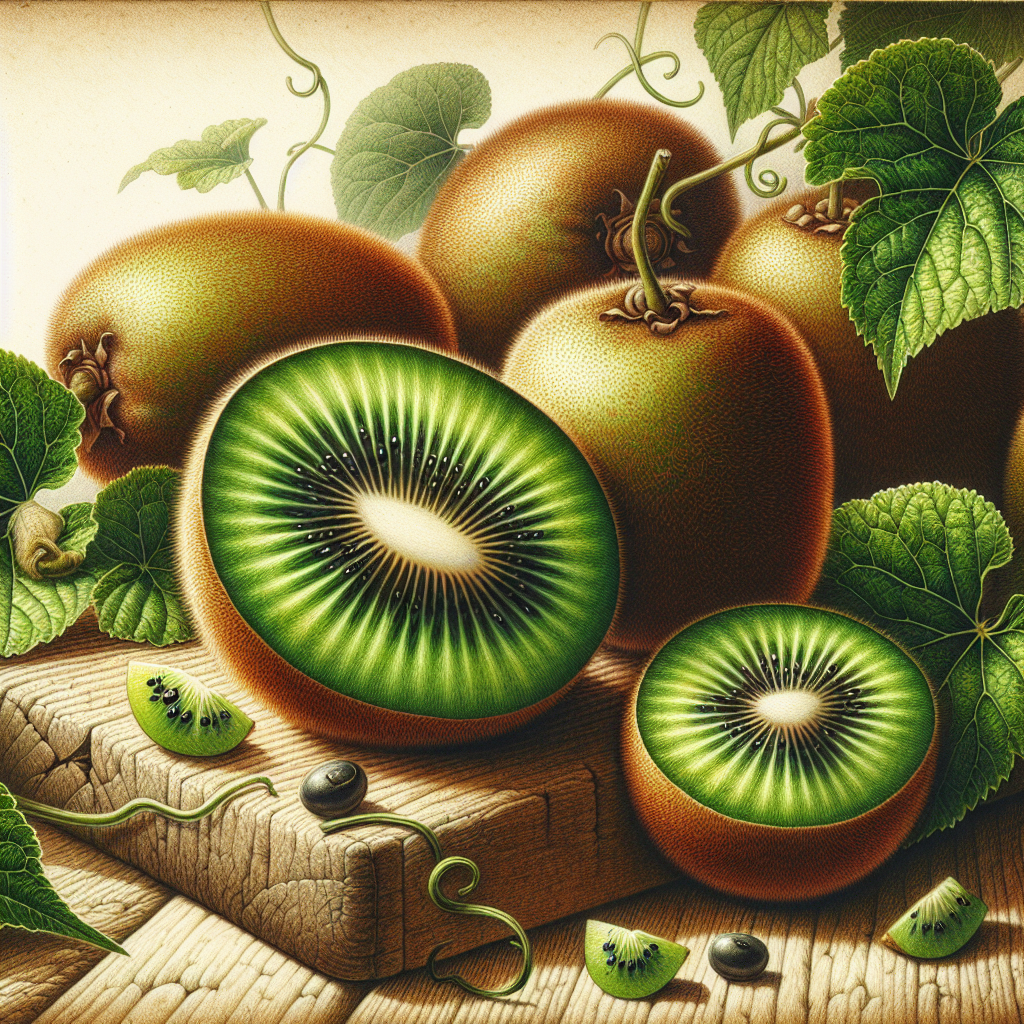
Introduction to Hayward Kiwi
The Hayward Kiwi (Actinidia deliciosa 'Hayward') stands as the gold standard among green kiwi varieties, dominating global markets with its superior size, flavor profile, and storability. Originating from New Zealand in the early 20th century, this cultivar was selected by Hayward Wright for its oversized fruits—often weighing 100-150 grams each—and firm texture that resists bruising during transport. Commercial growers favor it for yields up to 20-30 kg per mature vine, while home gardeners appreciate its ornamental fuzzy vines and edible flowers.
Kiwi fruits from Hayward vines deliver a nutritional powerhouse: over 90% water, rich in vitamin C (more than oranges), vitamin E, potassium, and fiber, with antioxidants like lutein supporting eye health. Unlike Golden Kiwi, Hayward offers a classic tart-sweet balance in brilliant emerald flesh surrounding a tiny black seed core. Vines reach 10 meters in length, requiring robust pergolas or T-bar trellises. Expect first fruits in 3-4 years from grafted plants, with peak productivity by year 7. For small farms, integrating Hayward into polycultures boosts profitability through direct sales or value-added products like jams and smoothies. Read our in-depth Why Companion Planting Feels Like Guesswork for Small Farms - And How AI Makes It Foolproof for synergistic pairings.
Botanical Profile of Hayward Kiwi
Hayward Kiwi belongs to the Actinidiaceae family, a genus of about 70 woody vine species native to East Asia's temperate forests. Actinidia deliciosa, the species behind Hayward, is a dioecious perennial (separate male and female plants), with vigorous growth forming thick, twining stems covered in reddish-brown, fuzzy bark. Leaves are large (10-20 cm), cordate, dark green with silvery undersides, turning vibrant yellow in autumn.
Flowers emerge in late spring: 5-6 cm wide, white with subtle fragrance, attracting bees for pollination. Female flowers develop into oval fruits with thin, brown, hairy skin protecting juicy, green flesh. Botanically, kiwis are berries with over 1,000 tiny black seeds embedded in a central core—each viable and capable of producing rootstock vines. Chromosomal complexity (hexaploid, 2n=174) contributes to vigor but complicates breeding.
Root systems are extensive, fibrous, and shallow (top 60 cm), spreading 4-5 meters laterally, demanding mulch to retain moisture. Male vines produce no fruit but pollen for 40-60 nearby females. Hardy to USDA zones 8-10, withstanding -10°C briefly. Compared to Kiwi (Hardy), Hayward prefers milder winters but rewards with larger fruits.
Soil, pH, and Climate Requirements for Hayward Kiwi
Hayward Kiwi demands well-drained, fertile loam soils rich in organic matter—aim for sandy loam or silt loam with 3-5% organic content. Heavy clays lead to root rot, while pure sands dry too quickly; amend with 10-15 cm compost pre-planting. Soil pH should be mildly acidic (5.5-6.5); test and adjust with sulfur if above 7.0, as alkaline conditions lock up iron, causing chlorosis.
Optimal climate mirrors New Zealand's: 15-25°C daytime averages, mild winters (rarely below -8°C), and 1,200-1,800 mm annual rainfall evenly distributed. Frost pockets doom buds; select slopes for air drainage. Full sun (6-8 hours) essential, though afternoon shade mitigates heat stress above 30°C. Coastal areas excel due to humidity moderating extremes—avoid hot, arid interiors without irrigation.
Chill hours (400-600 below 7°C) trigger dormancy break. High winds shred leaves; windbreaks of Thyme or hedges advised. Mulch 10 cm deep with wood chips or straw conserves moisture, suppresses weeds, and feeds mycorrhizae. For marginal zones, microclimates via walls or greenhouses extend viability.
Step-by-Step Planting & Propagation
Propagation: Commercial Hayward is grafted onto seedling rootstocks (e.g., Actinidia deliciosa or A. arguta) for vigor and disease resistance—avoid seed-grown females due to variability. Root cuttings (10-15 cm, winter) root 70% in perlite under mist; hardwood cuttings strike in summer with IBA hormone.
Site Prep: Select T-bar trellises (2 m cross-arms, 4-5 m posts, 4.5-6 m spacing). Dig 60x60x60 cm holes, fill with 40% compost, 20% perlite, superphosphate (100 g), and dolomite lime if needed. Plant in early spring post-frost.
Planting: One male per 6-8 females, 40-50 m apart. Set grafts 5 cm below soil line; spread roots outward. Water deeply (50 L/plant), mulch immediately. Train leaders vertically first year.
Year 1 Care: Pinch tips at 1.5 m; prune laterals to 3 buds. Fertilize monthly (N-P-K 10-10-10 at 50 g). Irrigate to 25 mm/week.
Care & Maintenance regimes for Hayward Kiwi
Pruning: Winter dormant season critical—spur prune females to 6-8 buds on laterals, removing 80% growth. Males get cane pruning for pollen vigor. Summer tip-prune to promote fruiting buds. Thin clusters to 2-3 fruits for size.
Fertilization: Spring: high-nitrogen (200 g N/vine). Summer: potassium boost (300 g K2O) for fruit swell. Foliar calcium prevents disorders. Soil test annually; micronutrients via chelates.
Irrigation: Drip systems deliver 30-50 L/vine weekly, increasing to 100 L during fruiting. Deficit irrigation late season enhances sugars.
Training: Year 1-2: single trunk to 1.8 m, then two cords along wires. Year 3+: cane-replace system yields 50-100 kg/vine.
Pollination: Supplement bees; hand-pollinate in greenhouses.
Pests, Diseases & Organic Management
Pests: Scale insects suck sap—neem oil or insecticidal soap weekly. Mealybugs cluster on stems; alcohol dips or ladybugs. Leafrollers bind leaves—Bt kurstaki sprays. Mites cause bronzing; predatory mites or sulfur.
Diseases: Botrytis rots flowers—good airflow, potassium bicarb. Phytophthora root rot—raised beds, phosphite drenches. Powdery mildew—sulfur dust. Pseudomonas canker: copper sprays.
Organic IPM: Monitor weekly; release lacewings, encourage birds. Neem/hort oil rotations; sanitation removes mummies.
Harvesting, Curing & Optimal Storage
Harvest late fall when fruit sugars hit 6.5° Brix (taste test or refractometer), skin gives slightly to thumb pressure—typically 30-35 weeks post-bloom. Clip with 2 cm stem to avoid sap bleed. Yields: 20-50 kg/vine.
Cure at 20°C, 85% humidity 3-5 days for ripening enzymes. Store at 0°C, 90-95% RH up to 6 months—ventilate to prevent ethylene buildup. Ripen at room temp with apples.
Companion Planting for Hayward Kiwi
Pair Hayward with Nasturtium as groundcover repelling aphids, Yarrow attracting pollinators, and Clover fixing nitrogen. Avoid Potato (nematode vectors) and walnuts (allelopathy). Legumes like peas enrich soil; herbs deter pests. Understory Thyme suppresses weeds. See our Fall Companion Planting Guide: Boost Yields and Soil Health for Small Farms and Gardens.