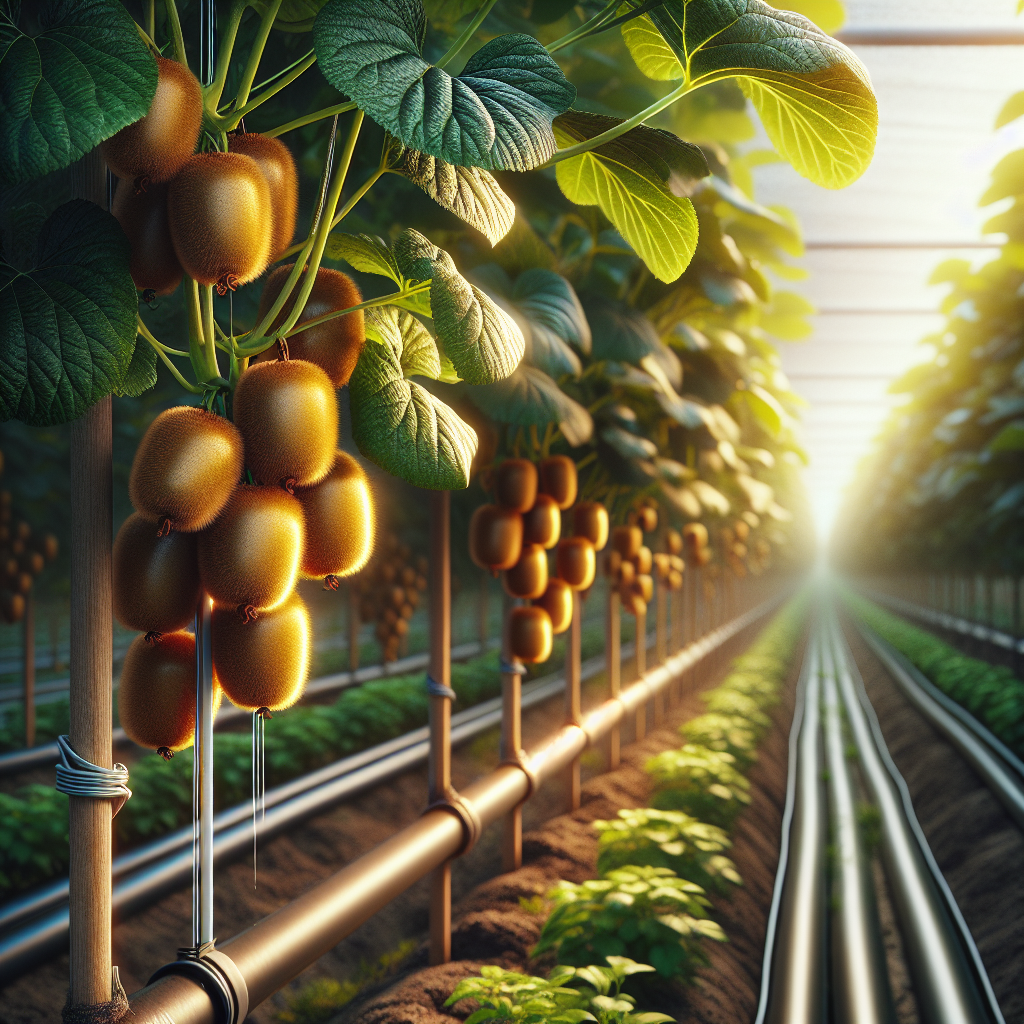
Introduction to Golden Kiwi
Golden kiwi refers primarily to yellow-fleshed selections of Actinidia chinensis, a species distinct from the classic fuzzy green kiwifruit that is more commonly associated with Actinidia deliciosa. Commercially, golden-fleshed kiwifruit rose to global prominence through New Zealand breeding and selection programs, especially as growers sought sweeter fruit with smoother skin, lower acidity, and a more tropical flavor profile than standard green types. The fruit is often marketed as a premium dessert crop because ripe fruit can show notes of mango, melon, citrus, and honey.
For growers, this is not a casual backyard vine unless the site is very well chosen. It is a vigorous, deciduous, woody climber that needs a permanent support system, careful pruning, reliable summer irrigation, and pollination planning. Golden kiwi also rewards patience: vines usually spend their first years building framework before settling into consistent cropping. Those who understand its biology and manage it like a high-value fruit vine rather than a random trellis plant are the ones who obtain heavy yields of uniform, high-brix fruit.
If you want a useful baseline comparison with the broader crop category, see our Kiwi guide. For broader orchard soil-building ideas, the principles in this soil health article can be adapted well to trellised fruit systems.
Botanical Profile of Golden Kiwi
This crop belongs to the family Actinidiaceae. Golden kiwi vines are functionally dioecious in most commercial systems, meaning male and female flowers are borne on separate plants. That has major management implications: fruiting blocks must include compatible male pollinizers with overlapping bloom. Self-fertile exceptions exist in kiwifruit breeding, but professional growers still usually rely on deliberate pollination design.
The vine is twining and highly vigorous, with long annual canes emerging from permanent cordons. Leaves are broad, nearly circular to heart-shaped, and relatively thin, which partly explains the plant’s sensitivity to hot dry wind and leaf scorch. Dormant wood carries buds that break in spring; flowering is typically on current-season shoots arising from one-year-old canes. Fruit shape varies by cultivar, but golden types often produce more elongated, beakless fruit than traditional green fuzzy kiwis, with bronze skin and bright yellow flesh surrounding a pale central core.
Golden kiwi generally differs from green kiwifruit in several important ways:
- It tends to have smoother or less hairy skin.
- Flesh is yellow to deep gold rather than emerald green.
- Soluble solids can rise quickly near maturity, giving a sweeter taste at a similar firmness.
- Vines are commonly more vulnerable to frost, sunburn, and bacterial canker stress than older green cultivars.
- Fruit often commands a higher market price but may require gentler handling.
Commercial golden cultivars have included selections such as Hort16A and newer replacements developed for improved disease tolerance and fruit quality. Cultivar choice matters enormously because susceptibility to Pseudomonas syringae pv. actinidiae (PSA), chilling requirement, bloom window, and storage performance can vary.
Soil, pH, and Climate Requirements for Golden Kiwi
This crop thrives in deep, fertile, well-drained soils with high organic matter and consistent moisture. The ideal soil profile is at least 1-1.5 meters deep, friable, and free from hardpan because the root system is shallow-spreading but still benefits from deep aeration and drainage. Golden kiwi does poorly in compacted subsoil, seasonal waterlogging, or heavy clay that remains saturated after rain.
Target soil pH is generally 5.5 to 6.5, with 6.0 to 6.3 being an excellent practical range for nutrient availability. Above about pH 7.0, iron, manganese, and zinc deficiencies become more common, often appearing as interveinal chlorosis on younger leaves. Below pH 5.0, aluminum toxicity risk rises and root performance can drop. Before planting, conduct a full soil test including pH, cation exchange capacity, calcium, magnesium, potassium, phosphorus, boron, zinc, and organic matter.
Drainage is non-negotiable. Kiwi roots are highly sensitive to oxygen deprivation. If water stands for more than 24 hours in the root zone after heavy rain, root stress and disease pressure increase sharply. In marginal soils, planting on raised berms 30-45 cm high and 1-1.5 m wide is often the difference between vine vigor and chronic decline.
Climate requirements are best described as warm-temperate to mild subtropical with winter chill, but not severe winter cold. Golden kiwi needs enough winter dormancy to reset bud development, yet many cultivars are less tolerant of extreme cold than green kiwifruit. Typical mature dormant vines may survive light to moderate freezes, but swollen buds and emerging shoots can be damaged around -1 to -2°C, and open flowers may be injured at temperatures just below freezing. Spring frost is therefore one of the biggest site-selection risks.
Ideal growing conditions include:
- Frost-free or low-frost spring sites
- Warm summers without prolonged extreme heat above 35°C
- Relative humidity moderate enough to prevent severe leaf desiccation
- Shelter from drying winds
- Reliable irrigation through the growing season
In hot regions, afternoon shade is usually not necessary if soil moisture is steady, but protection from reflected heat and hot wind is helpful. In cool maritime regions, choose the warmest, sunniest block available with good air drainage. North- or east-facing gentle slopes in the Northern Hemisphere often reduce frost settling while avoiding the harshest late-afternoon heat.
Step-by-Step Planting & Propagation
Start with named, disease-free nursery plants rather than seedlings. Seed propagation is unsuitable for true-to-type production because offspring vary genetically and sex is unpredictable. Commercial and serious home growers use grafted or rooted clonal plants so fruiting traits and pollination compatibility are known.
- Choose the site first, not the plant first. Pick land with excellent drainage, wind protection, irrigation access, and minimal spring frost risk.
- Prepare the soil 2-6 months ahead. Correct pH, rip compacted layers if needed, add well-finished compost, and form berms where drainage is questionable.
- Install the trellis before planting. Golden kiwi is far too vigorous for improvised support. Use a strong T-bar or pergola system with end assemblies anchored for heavy crop loads. Wires must support both vine weight and mature fruit.
- Plan male-to-female ratios. A common orchard ratio is 1 male for every 6-8 female vines, though this varies with trellis style, pollen viability, and whether supplemental pollen application is used.
- Plant during dormancy or early spring. In mild climates, late winter planting works well. In colder districts, plant after severe freeze risk passes but before active growth becomes strong.
- Set the crown correctly. Plant at the same depth as in the nursery pot or slightly above surrounding grade on heavy soils. Do not bury the trunk.
- Water in thoroughly. Apply enough water to settle soil around roots, then maintain even moisture without saturation.
- Train a single leader. Select the strongest upright shoot and tie it gently to a bamboo cane or training stake until it reaches the fruiting wire.
- Remove competing shoots. During establishment, direct energy into trunk and framework formation, not early cropping.
Typical spacing depends on system and vigor, but 3-5 m between vines and 4-6 m between rows is common. In smaller plantings, allow more space than you think you need; crowding quickly turns pruning and harvest into a management problem.
Propagation is usually by cuttings, grafting, or budding onto compatible rootstock or clonal material. Hardwood cuttings can root, but success varies with cultivar and propagation environment. Bench grafting and nursery finishing are standard for consistent commercial stock.
Care & Maintenance regimes for Golden Kiwi
Golden kiwi requires disciplined annual management. The crop combines the pruning intensity of grapes with the irrigation sensitivity of a shallow-rooted fruit vine.
Irrigation: The root zone should remain evenly moist but never waterlogged. As a practical field target, keep soil in the top 20-40 cm consistently damp and biologically active, not alternately dusty and flooded. During active summer growth, many sites perform best when soil moisture is maintained near 70-85% of field capacity. If tensiometers are used, sandy loams may warrant irrigation around 15-25 centibars, while loams may be kept around 20-35 centibars, adjusting for local conditions.
Signs of underwatering include dull leaves, midday wilting that does not recover quickly in evening, marginal leaf scorch, small fruit size, and excessive fruit drop after heat events. Signs of overwatering include persistent limpness despite wet soil, yellowing leaves, reduced shoot extension, sour-smelling soil, algal growth near emitters, and increased incidence of root disease. Golden kiwi roots need oxygen; if the soil feels sticky, cold, and airless several centimeters down, irrigation intervals are too short or drainage is inadequate.
Drip irrigation is preferred. Use multiple emitters per vine rather than a single point source so the feeder root zone spreads broadly. Increase irrigation frequency during fruit enlargement, hot spells, and dry wind conditions. Reduce late-season excess watering slightly as harvest approaches to avoid bland flavor and overly soft fruit, but never induce severe drought stress.
Nutrition: Golden kiwi is a moderately heavy feeder, especially for nitrogen and potassium, but overapplication creates soft growth, poor fruit quality, and greater disease susceptibility. Base the program on leaf analysis and soil testing. In establishment years, modest split nitrogen applications encourage framework development. Once bearing, nitrogen should be timed mainly from budbreak through early summer. Excess nitrogen after midsummer can delay hardening and increase winter damage risk.
Potassium is essential for fruit sizing, sugar movement, and vine balance. Calcium supports firmness and cell wall integrity, especially in rapidly growing tissues. Boron is critical around flowering and fruit set, but the margin between deficiency and excess is narrow. Zinc and iron deficiencies are more likely on alkaline soils.
Mulching: Apply 5-10 cm of coarse organic mulch, keeping it 10-15 cm away from the trunk. Mulch moderates soil temperature, reduces evaporation, and supports soil biology. Avoid piling mulch against the crown, which encourages rot.
Training and pruning: Year 1 focuses on establishing the trunk and permanent cordons. In years 2-3, build structure while limiting crop. Mature vines need winter pruning and summer pruning. Winter pruning removes exhausted fruiting canes and selects replacement one-year wood at regular intervals along the cordon. Fruit is usually produced on shoots from last year’s canes, so pruning must renew wood continuously. Summer pruning improves light penetration, pollinator access, spray coverage, and fruit color. Remove tangled vegetative growth, watersprouts, and excessively shading laterals.
A useful rule is that productive canes should be well exposed, pencil-thick to slightly thicker, and evenly spaced rather than clustered. Old, weak, shaded wood becomes unproductive and should be replaced.
Pollination: Pollination is often a yield-limiting factor. Bees are important, but kiwi flowers are less attractive than many competing blooms because nectar rewards can be modest. Place pollinizers evenly and, where needed, supplement with cut flowering males, pollen blowers, or hand application. Poor pollination results in misshapen fruit, low seed count, and smaller final size.
Pests, Diseases & Organic Management
Golden kiwi can be vulnerable to several serious issues, especially where humidity is high or canopy density is excessive.
PSA bacterial canker is among the most important diseases in many production regions. Symptoms include cankers on canes and leaders, reddish or rust-colored exudate, leaf spotting, flower necrosis, shoot dieback, and collapse in severe cases. Disease pressure increases with wounds, cool wet conditions, and susceptible cultivars. Organic-style management relies on strict sanitation, pruning only in dry weather, disinfecting tools between cuts, improving airflow, avoiding excessive nitrogen, and removing infected wood well below visible symptoms. Copper-based products may be used within label limits in dormant or low-risk tissue stages, but overuse can damage plants and soil biology.
Phytophthora root and crown rot appears where drainage is poor. Vines become weak, chlorotic, and stunted, sometimes with sudden collapse in warm wet conditions. Prevention is far better than cure: raised beds, careful irrigation, and clean planting stock are essential.
Botrytis and fruit rots can develop in dense canopies or after wet harvest periods. Open pruning and careful harvest handling reduce losses.
Armored scale, leafrollers, mites, and thrips may attack foliage and fruit. Monitoring matters more than blanket spraying. Use dormant oil where appropriate, conserve predators, avoid dust, and prune for airflow. Sticky traps and regular scouting of leaf undersides, flower clusters, and fruit shoulders help catch problems early.
Root-knot nematodes may stress young vines in warm soils. Pre-plant soil assessment, organic matter improvement, and rotation or fallow with biofumigant or suppressive cover crops can help.
Birds can damage ripening fruit, and deer may browse tender shoots. Netting and fencing are often necessary in exposed sites.
Organic management works best as an integrated system:
- start with disease-free planting material
- maintain balanced nutrition rather than lush growth
- keep rows mulched but not waterlogged
- prune to an open, light-filled canopy
- monitor weekly during active growth
- remove mummified fruit and infected prunings
- protect beneficial insects and pollinators
Harvesting, Curing & Optimal Storage
Golden kiwi is typically harvested mature but not fully soft. Unlike many tree fruits, it continues to ripen well after picking if harvested at the correct physiological stage. Harvest timing should be based on dry matter, soluble solids, seed color, and firmness rather than skin color alone.
A practical maturity sequence is as follows: seeds darken, fruit size stabilizes, dry matter rises, and soluble solids begin increasing. Many commercial growers target cultivar-specific dry matter thresholds because this predicts eating quality better than a simple calendar date. Refractometer readings are useful, but exact standards vary by market and cultivar.
Pick carefully by hand, lifting and twisting gently to avoid tearing the stem end or bruising the shoulder. Fruit should be placed into padded containers, never dropped. Golden-fleshed cultivars can mark easily, and even slight compression may show later in storage as soft patches.
Do not leave harvested fruit in sun. Field heat should be removed promptly. Pre-cool as soon as possible to around 0-1°C with high relative humidity, typically 90-95%, if long storage is intended. Under excellent conditions, properly harvested fruit can store for weeks to months depending on cultivar, atmosphere control, and disease pressure. Ethylene management is crucial because kiwifruit is highly responsive to it. Keep stored fruit away from ethylene-producing commodities such as ripe apples, bananas, and tomatoes unless intentional ripening is desired.
For ripening before sale or home use, move fruit to room temperature. Exposure to a small ethylene source can accelerate softening, but monitor closely. Eating-ripe fruit should yield slightly under gentle thumb pressure and have a fragrant, sweet aroma. Overripe fruit becomes translucent, leaking, and fermentation-prone.
The term “curing” is less commonly used for kiwi than for onions or sweet potatoes, but a short conditioning period after harvest may help stabilize fruit temperature and handling flow before cold storage. The key postharvest goals are rapid cooling, bruise avoidance, sanitation, and ethylene separation.
Companion Planting for Golden Kiwi
Companion planting around a trellised kiwi system should focus on pollinator support, beneficial insect habitat, and soil protection rather than crowding the vine root zone with thirsty competitors. The best companions are low-growing or edge-planted species that do not climb the trellis, shade the trunk, or create humid, disease-prone jungle conditions.
Thyme works well as a low-growing aromatic groundcover near but not against the vine base. It helps suppress weeds, attracts beneficial insects when in bloom, and does not compete aggressively when managed.
Clover is one of the most useful alley or under-row support species in larger plantings. It protects soil, improves infiltration, moderates dust, and contributes biologically fixed nitrogen if mowed and managed correctly. Keep it short near young vines so it does not compete excessively for water.
Yarrow is valuable on row edges because its flowers attract hoverflies, parasitic wasps, and other beneficial insects. It is especially useful in diversified orchards where natural enemy habitat improves pest balance over time.
Nasturtium can be used in small plantings as a trap and pollinator-support plant, though it should be placed where it does not smother irrigation emitters or hold excess moisture near the trunk.
Avoid planting vigorous climbers, tall annuals that shade cordons, or heavy feeders directly under the canopy. The ideal kiwi companion system is tidy, low, insect-friendly, and easy to mow or manage. In commercial blocks, many growers get the best results from a clean strip at the vine row combined with flowering insectary plants on margins and controlled cover crops in the alleyways.