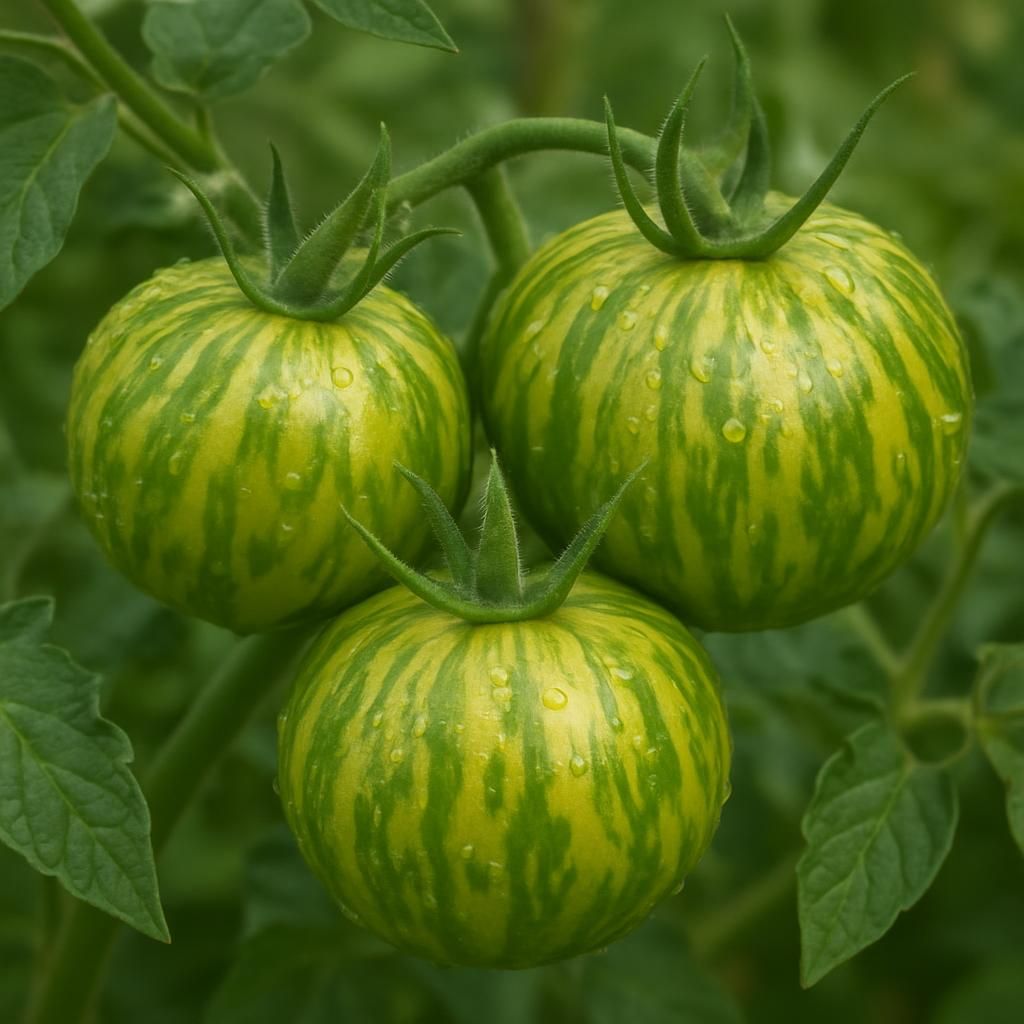
Introduction to Green Tiger Tomato
Green Tiger Tomato is an indeterminate heirloom variety distinguished by its bold green-and-yellow tiger stripes and complex sweet-tart flavor profile. The fruits typically weigh 2–4 ounces and reach full ripeness while retaining their characteristic green hue, making them a favorite for fresh eating, salads, and gourmet presentations. This variety combines the visual appeal of specialty tomatoes with reliable productivity when grown under proper conditions.
Botanical Profile of Green Tiger Tomato
Green Tiger Tomato belongs to the nightshade family, Tomato. It exhibits classic indeterminate growth, producing long vines that can reach 6–8 feet when supported. The plants develop compound leaves with serrated margins and clusters of small yellow flowers that give way to oval fruits marked with distinct longitudinal stripes. The flesh is juicy with a balanced acidity and notable sweetness.
Soil, pH, and Climate Requirements for Green Tiger Tomato (MUST INCLUDE A MARKDOWN TABLE OF IDEAL CONDITIONS)
Successful cultivation begins with well-drained, fertile soil rich in organic matter. Green Tiger Tomato thrives in warm temperatures and requires consistent moisture without waterlogging.
| Parameter | Ideal Range | Notes |
|---|---|---|
| Soil Type | Loamy, well-drained | Amend with compost for structure |
| Soil pH | 6.2–6.8 | Test annually; adjust with lime or sulfur |
| Temperature (Day) | 70–85°F (21–29°C) | Optimal fruit set occurs in this range |
| Temperature (Night) | 60–70°F (15–21°C) | Avoid below 55°F to prevent blossom drop |
| Sunlight | Full sun (6–8+ hours) | South-facing exposure recommended |
| Spacing | 24–36 inches between plants | Rows 48–60 inches apart |
| Frost Tolerance | None | Transplant after last frost |
Step-by-Step Planting & Propagation
Start seeds indoors 6–8 weeks before the last expected frost. Sow ¼ inch deep in sterile seed-starting mix and maintain 75–80°F soil temperature. Transplant seedlings outdoors when soil reaches 60°F and all danger of frost has passed. Harden off plants for 7–10 days prior to planting. Provide sturdy cages or trellises at transplant time to support vigorous vines.
Care & Maintenance regimes for Green Tiger Tomato (MUST INCLUDE A MARKDOWN TABLE OF WATER, FERTILIZER, AND PRUNING SCHEDULES)
Consistent care ensures high yields and disease resistance. Mulch heavily to retain moisture and suppress weeds.
| Growth Stage | Watering Schedule | Fertilizer Schedule | Pruning Schedule |
|---|---|---|---|
| Seedling/Transplant | Keep evenly moist; 1 inch/week | Apply balanced 10-10-10 at transplant | Remove lower leaves touching soil |
| Vegetative | 1–1.5 inches/week; deep watering | Side-dress with compost tea every 3 weeks | Prune suckers below first flower cluster |
| Flowering/Fruiting | Maintain consistent moisture | Switch to high-potassium fertilizer (5-10-10) | Continue removing suckers weekly |
| Late Season | Reduce slightly to concentrate flavor | Stop nitrogen applications 4 weeks before frost | Remove diseased foliage immediately |
Pests, Diseases & Organic Management
Common threats include Aphids, Spider Mites, Hornworms, and fungal issues such as Early Blight and Powdery Mildew. Implement integrated pest management: introduce beneficial insects, apply neem oil or insecticidal soap at first signs of infestation, and practice crop rotation. Remove and destroy infected plant material promptly.
Harvesting, Curing & Optimal Storage
Harvest Green Tiger Tomatoes when stripes are fully developed and fruits yield slightly to gentle pressure. Pick at peak ripeness for best flavor. Store unwashed fruits at room temperature away from direct sunlight; they will keep 5–7 days. For longer storage, process into sauces or freeze. See guidance on The Overlooked Art of Seasonal Harvest Timing for Small Farm Profit.
Companion Planting for Green Tiger Tomato
Pair Green Tiger Tomato with Basil, Marigold, Nasturtium, and Garlic to deter pests and improve flavor. Avoid planting near Fennel or Walnut trees, which can inhibit growth. Cucumber and Pepper also make compatible neighbors when spaced properly.