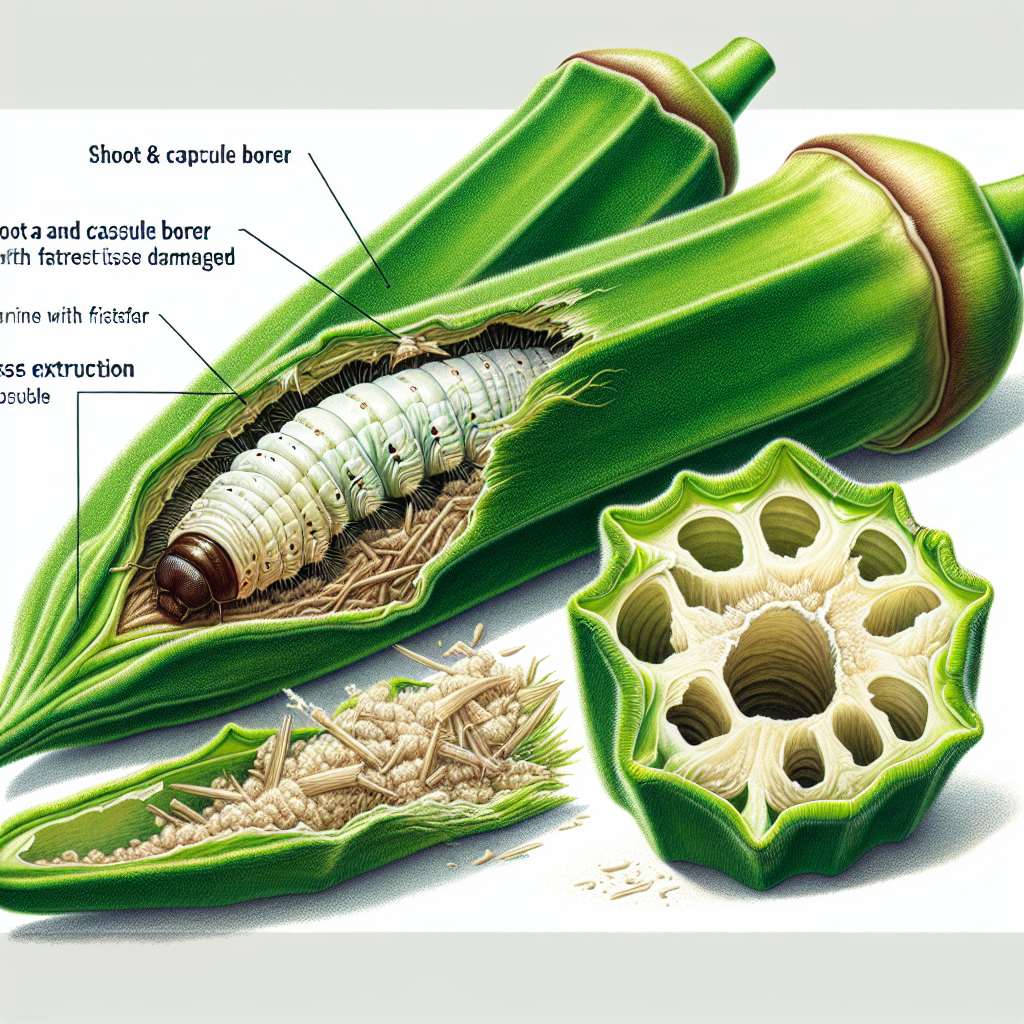
Introduction to Shoot and capsule borers
Shoot and capsule borers, scientifically known as Conogethes punctiferalis (Guenée) and related species in the family Crambidae (Lepidoptera), represent one of the most devastating pests in tropical and subtropical agriculture. These moths lay eggs on tender plant tissues, and their larvae bore into shoots, flower buds, and developing capsules or fruits, leading to catastrophic damage. Native to Asia and widespread across India, Southeast Asia, and parts of Africa, they thrive in warm, humid conditions, attacking a range of high-value crops. Farmers often first notice the pest through sudden shoot wilting, frass (insect waste) accumulation, and deformed fruits, which can result in 30-70% yield reductions if unchecked. Understanding their biology is crucial for implementing integrated pest management (IPM) strategies that minimize chemical use while protecting harvests. This guide provides comprehensive diagnostics, lifecycle insights, and organic solutions tailored for small-scale and commercial growers.
Identifying Symptoms & Damage
Early detection is key to managing shoot and capsule borers. Look for these hallmark signs:
- Shoot Wilting and Dieback: Young shoots turn brown, droop, and dry up from the tip downward. A small entry hole at the base, often plugged with silk and frass, is diagnostic.
- Capsule and Bud Damage: Flower buds and young capsules show boring holes with sawdust-like frass. Affected capsules may drop prematurely or develop malformed seeds.
- Frass and Silk Webs: Greenish-black pellets and silken tunnels on stems and fruits indicate active larval feeding.
- Plant Stress Indicators: Stunted growth, reduced branching, and fewer flowers due to repeated attacks on apical meristems.
Damage severity peaks during flowering and fruit set, with larvae consuming internal tissues, leading to secondary infections from fungal blights or bacteria. Differentiate from similar pests like fruit and shoot borers by the characteristic frass and preference for capsules over mature fruits. Use a knife to slice open suspect shoots—healthy tissue contrasts with the clean, tunnel-like galleries bored by larvae.
In severe infestations, entire branches collapse, mimicking drought stress. Regular scouting, especially at dusk when moths are active, prevents escalation. For visual aids, check resources on Spring Pest Patrol: Organic AI Strategies to Shield Your Crops from Common Invaders.
Lifecycle and Progression of Shoot and capsule borers
The lifecycle of shoot and capsule borers spans 25-40 days, depending on temperature (optimal at 25-30°C), with 4-6 generations per year in tropical climates.
- Egg Stage (2-4 days): Tiny, flat, yellowish eggs laid singly or in clusters on tender leaves, shoots, or buds.
- Larval Stage (10-20 days): Cream-colored caterpillars with brown heads emerge, boring into shoots or capsules. They feed voraciously, molting 4-5 times, producing frass.
- Pupal Stage (3-7 days): Larvae pupate in silken cocoons within tunnels or on leaves.
- Adult Moth (5-10 days): Small, yellowish-brown moths (20-25mm wingspan) with black spots emerge at night, mating and laying 100-200 eggs.
Overwintering occurs as diapausing larvae in crop debris. Progression accelerates in monsoon seasons, with peak activity during new flush growth. Monitoring with pheromone traps captures adults for timing interventions.
Environmental Triggers & Risk Factors
Shoot and capsule borers flourish under specific conditions:
- Warm, Humid Climates: Temperatures above 25°C and humidity >70% trigger rapid development.
- Crop Susceptibility: Overly lush, nitrogen-rich growth from excessive fertilization attracts egg-laying.
- Monsoon Timing: Heavy rains coincide with larval emergence, aiding dispersal.
- Poor Sanitation: Leftover plant debris harbors pupae, perpetuating infestations.
Risk amplifies in monocultures or near wild hosts like okra or castor. Companion planting with repellents like marigold reduces incidence. Climate change extends active seasons, making vigilance essential. Avoid overhead irrigation to lower humidity.
Organic Control & Treatment Plans
Organic management emphasizes IPM for sustainable control:
Cultural Controls:
- Prune and destroy infested shoots promptly.
- Rotate crops; avoid solanaceous sequences.
- Use reflective mulches to deter moths.
Biological Controls:
- Introduce Trichogramma wasps (egg parasitoids) at 20,000/ha weekly.
- Apply Bacillus thuringiensis (Bt) var. kurstaki (2-3g/L) on young larvae evenings.
- Encourage predators like birds and spiders.
Botanical & Organic Sprays:
- Neem oil (5ml/L) + soap weekly disrupts larval feeding.
- Garlic-chili extract repels adults.
Trapping:
- Pheromone traps (4-6/ha) for monitoring and mass trapping.
Treatment Timeline:
- Scout weekly; act at 5% shoot infestation.
- Bt/neem at egg hatch; repeat 7-10 days.
- Post-harvest: Deep plow to expose pupae.
For small farms, this approach yields 80-90% control without residues. Combine with natural enemies for long-term suppression.
Preventing Shoot and capsule borers in the Future
Prevention hinges on proactive strategies:
- Resistant Varieties: Plant okra hybrids like Arka Anamika or tomato varieties with tough stems.
- Sanitation: Remove volunteers and weeds; burn debris.
- Timing: Delay planting to miss peak moth flights.
- Barriers: Fine mesh nets over seedlings.
- Soil Health: Balanced nutrition reduces susceptibility; incorporate Soil Health Mastery: 5 Proven Strategies for Small Farms to Build Fertile Ground Without Breaking the Bank.
Monitor with sticky traps; threshold: 1 moth/trap/night. Intercrop with thai-basil for repulsion. Long-term, build predator habitats and use cover crops to disrupt lifecycles.
Crops Most Affected by Shoot and capsule borers
These borers target over 30 hosts, prioritizing:
- Okra (okra): Capsules heavily bored, up to 50% loss.
- Tomato (tomato): Shoots and fruits attacked.
- Brinjal/Eggplant (eggplant): Flower buds destroyed.
- Capsicum/Bell Pepper (bell-pepper): Young pods ruined.
- Castor, Cowpea: Secondary hosts.
Also impacts cardamom, sesame, and cotton. In India, okra sees annual losses >20%. Protect high-value crops like chili-pepper with vigilant IPM.