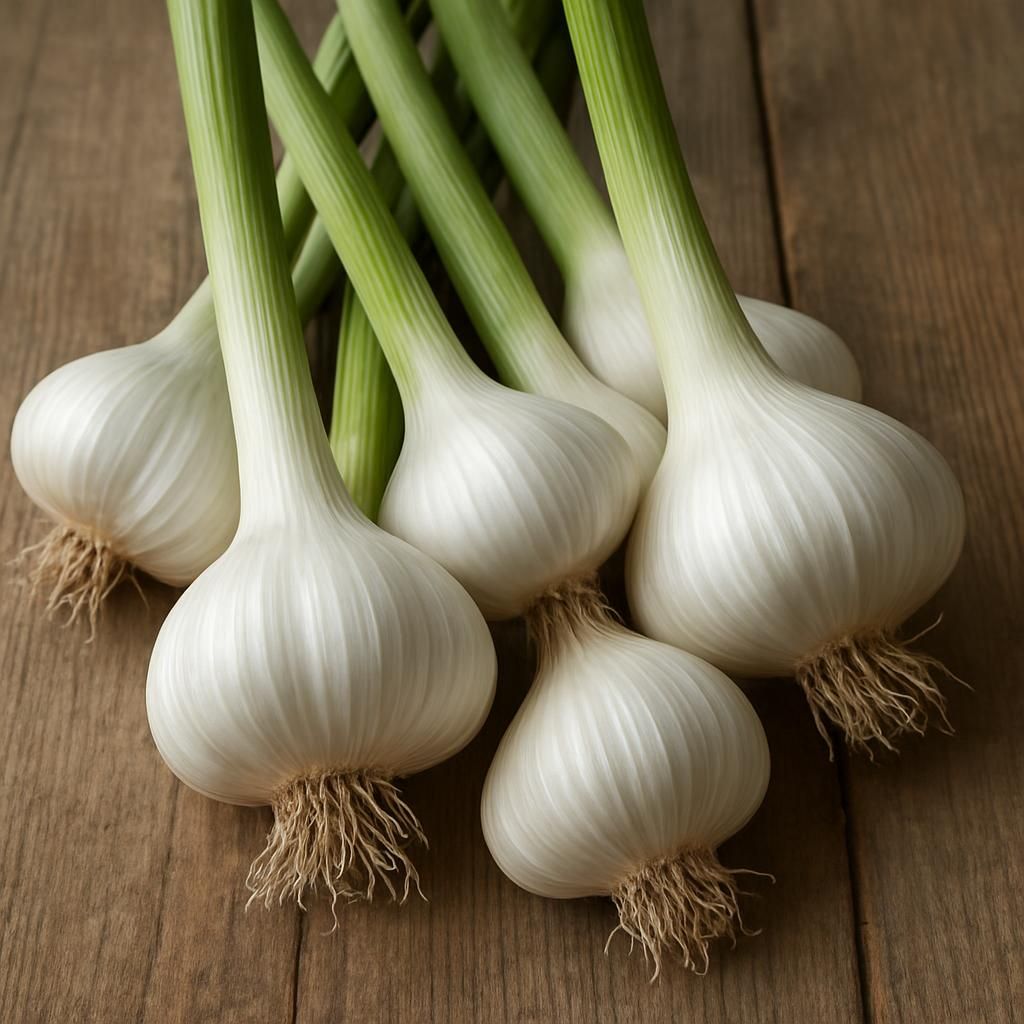
Introduction to Garlic (Silverwhite)
Garlic (Silverwhite) is a softneck variety (Allium sativum) favored by commercial growers and home gardeners alike for its vigorous growth, mild yet aromatic flavor, and exceptional storage qualities. Unlike hardneck types, Silverwhite produces no scapes and forms multiple layers of cloves around a central stalk, making it ideal for braiding. Its silvery-white papery skin and uniform bulb size contribute to high market value and consistent yields across diverse growing regions.
This definitive growing guide delivers professional-grade, research-backed advice on every aspect of Silverwhite garlic production. Whether you manage a small diversified farm or a backyard plot, the strategies below will help you maximize bulb size, flavor intensity, and shelf life while minimizing pest and disease pressure.
Botanical Profile of Garlic (Silverwhite)
Silverwhite belongs to the Amaryllidaceae family and is propagated vegetatively through individual cloves rather than true seeds. Each bulb typically contains 10–20 cloves arranged in concentric rings. The plant produces flat, bluish-green leaves that emerge in early spring and reach 30–60 cm in height. Because it is a softneck cultivar, it rarely bolts and instead channels energy into larger, multi-cloved bulbs.
The variety is photoperiod-sensitive and performs best when planted in autumn so that vernalization triggers clove division. Silverwhite exhibits moderate cold hardiness and can overwinter successfully in USDA zones 5–9 when properly mulched. Its mild flavor profile makes it popular for fresh market sales and value-added products such as roasted garlic and garlic powder.
Soil, pH, and Climate Requirements for Garlic (Silverwhite)
Garlic demands fertile, well-drained soils with high organic matter. Heavy clay soils should be amended with compost or aged manure to improve structure and drainage. Avoid planting in low-lying areas prone to waterlogging, as excess moisture promotes bulb rot.
| Parameter | Ideal Range | Notes |
|---|---|---|
| Soil Type | Loamy to sandy loam | High organic matter; avoid compacted clays |
| Soil pH | 6.0–7.0 | Slightly acidic to neutral; lime if below 5.8 |
| Soil Temperature | 10–15 °C at planting | Ensures rapid root establishment |
| Air Temperature | 0–24 °C growing range | Requires 6–8 weeks below 10 °C for vernalization |
| Annual Rainfall | 500–750 mm | Supplement with irrigation during dry spells |
| Sunlight | Full sun (≥6 hours) | Maximizes photosynthesis and bulb sizing |
Step-by-Step Planting & Propagation
- Source certified disease-free seed garlic from reputable suppliers. Select the largest, healthiest cloves from previous harvests for replanting.
- Prepare beds 4–6 weeks before planting by incorporating 5–7 cm of well-rotted compost and a balanced organic fertilizer (N-P-K 5-5-5 or similar).
- Separate bulbs into individual cloves 24 hours before planting; keep the papery skin intact.
- Plant cloves 5–7 cm deep with the pointed end up, spaced 10–15 cm apart in rows 30–45 cm apart.
- Water thoroughly after planting to settle soil around cloves.
- Apply a 5–10 cm layer of straw or leaf mulch to moderate soil temperature and suppress weeds.
For northern climates, plant 4–6 weeks before the ground freezes. In milder regions, plant from October through December. Avoid planting grocery-store garlic, which may carry viruses or be treated with growth inhibitors.
Care & Maintenance regimes for Garlic (Silverwhite)
Consistent moisture and fertility are critical during the rapid leaf-growth phase in spring. Reduce irrigation as bulbs mature to prevent rot and improve storage quality.
| Growth Stage | Watering Schedule | Fertilizer Application | Pruning/Maintenance |
|---|---|---|---|
| Fall Establishment | 25 mm/week until freeze | 1–2 cm compost tea or fish emulsion | Remove weeds; maintain 5–10 cm mulch |
| Early Spring | 25–40 mm/week | Side-dress with 2–3 kg N/ha at 15 cm growth | Monitor for Aphids; cultivate lightly |
| Bulb Swelling (May–June) | 15–25 mm/week; taper off | Optional potassium-rich foliar spray | Cease nitrogen; remove any flower stalks |
| Pre-Harvest (2–3 weeks) | Withhold water | None | Allow foliage to yellow naturally |
Pests, Diseases & Organic Management
Silverwhite garlic is generally resilient but can be affected by several common issues. Onion thrips and Spider Mites may cause stippling on leaves during hot, dry periods. Practice strict crop rotation—never plant garlic or Onion in the same bed more than once every four years.
Fungal diseases such as white rot (Sclerotium cepivorum) and basal rot (Fusarium oxysporum) are soil-borne and difficult to eradicate. Use disease-free seed, solarize soil when possible, and maintain optimal drainage. For organic control of foliar pests, apply insecticidal soap or neem oil at the first sign of infestation. Encourage beneficial insects by planting flowering companions such as Thai Basil.
Harvesting, Curing & Optimal Storage
Harvest when 50–60 % of the leaves have turned yellow or brown, typically 90–120 days after spring growth resumes. Gently lift bulbs with a garden fork to avoid bruising. Shake off excess soil but do not wash.
Cure bulbs in a well-ventilated, shaded area at 20–25 °C with 60–70 % humidity for 2–3 weeks. Once necks are dry and papery, trim roots and tops to 2–3 cm. Store cured bulbs in mesh bags or braid softneck varieties at 0–4 °C and 60–70 % relative humidity. Properly cured Silverwhite garlic can maintain quality for 8–12 months.
Companion Planting for Garlic (Silverwhite)
Garlic repels many insect pests and improves the health of neighboring crops. Plant Silverwhite near Tomato, Carrot, Beet, and Lettuce to reduce aphid and carrot-fly pressure. Avoid planting near legumes, as alliums can inhibit nitrogen fixation.
Incorporate aromatic companions such as Rosemary or Thyme to further deter pests. For detailed organic pairing strategies, see Summer Companion Planting: 10 Organic Pairings to Boost Small Farm Resilience.