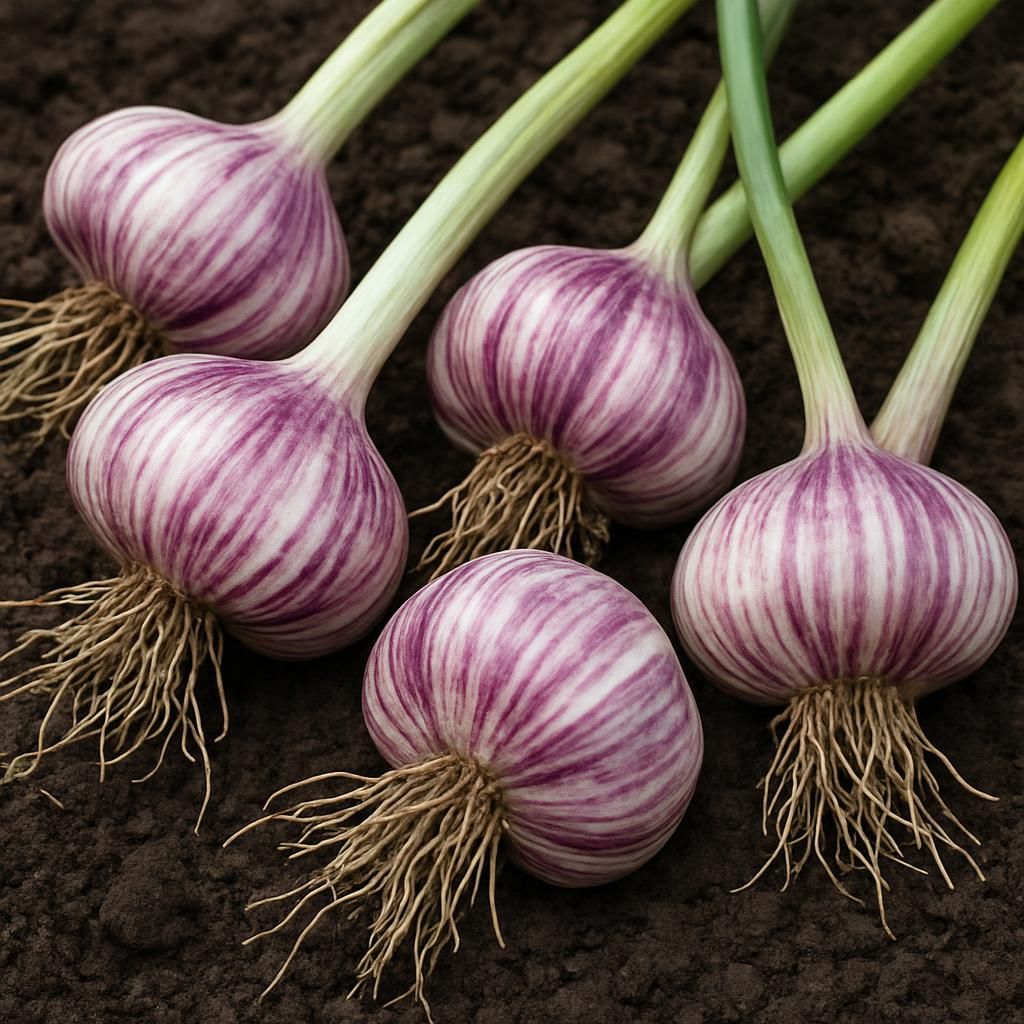
Introduction to Garlic (Chesnok Red)
Chesnok Red is a hardneck variety originating from the Republic of Georgia, known for its bold yet balanced flavor profile with lingering sweetness. Growers value this cultivar for its large, easy-to-peel cloves and striking purple-striped wrappers that make it a favorite at farmers' markets. As a hardneck type, it produces a scape in late spring that must be removed to direct energy into bulb development. With proper site selection and timing, home gardeners and small-scale farmers can achieve reliable harvests of this gourmet garlic.
Botanical Profile of Garlic (Chesnok Red)
Chesnok Red belongs to the Allium genus and is classified as a hardneck garlic due to its stiff central stalk. The plant produces broad, flat leaves that emerge from a single bulb composed of 8–12 large cloves arranged in a single layer. Each clove is covered by a thin, white skin marked with vivid purple stripes. In early summer the plant sends up a flowering stalk (scape) that forms a cluster of bulbils rather than true flowers. The bulbs themselves are medium to large, averaging 2–3 inches in diameter, with a robust yet refined flavor that intensifies when roasted.
Soil, pH, and Climate Requirements for Garlic (Chesnok Red)
Garlic performs best in loose, well-drained soils rich in organic matter. Heavy clay soils should be amended with compost or aged manure to improve structure and drainage. The ideal pH range is slightly acidic to neutral. Temperature and moisture management are critical during the winter dormancy period and spring growth phase.
| Parameter | Ideal Range | Notes |
|---|---|---|
| Soil Type | Loamy, well-drained | Avoid compacted or waterlogged soils |
| Soil pH | 6.0–7.0 | Test and amend with lime if below 6.0 |
| Organic Matter | 3–5% | Incorporate 2–3 inches of compost |
| Planting Temperature | 40–55 °F (4–13 °C) soil temperature | Plant 4–6 weeks before first hard frost |
| Growing Season Temp | 50–75 °F (10–24 °C) daytime | Mulch heavily in zones below USDA 5 |
| Annual Rainfall | 20–30 inches (500–750 mm) | Supplement during dry spring periods |
Step-by-Step Planting & Propagation
- Site Selection: Choose a location with full sun (minimum 6–8 hours) and good air circulation.
- Soil Preparation: Till or fork the bed to 10–12 inches, removing rocks and weeds. Mix in 2–3 inches of well-rotted compost and a balanced organic fertilizer (5-5-5 or similar).
- Clove Selection: Use only large, healthy, disease-free cloves from certified stock. Break bulbs apart 24 hours before planting to allow the basal plate to callus slightly.
- Planting Depth & Spacing: Plant cloves 2–3 inches deep with the pointed end up, spaced 4–6 inches apart in rows 12–18 inches apart.
- Mulching: Apply 3–4 inches of straw or shredded leaves immediately after planting to moderate soil temperature and suppress weeds.
- Timing: In northern climates plant in October; in milder regions plant November–December.
Care & Maintenance regimes for Garlic (Chesnok Red)
Consistent moisture and nutrient management are essential during the active growth period from March through May. Remove scapes when they form a full curl to redirect energy into bulb sizing. Monitor soil moisture weekly and adjust irrigation based on rainfall.
| Growth Stage | Watering Schedule | Fertilizer Application | Pruning/Scape Removal |
|---|---|---|---|
| Fall Establishment | Light irrigation if dry (½ inch/week) | None required | None |
| Early Spring | 1 inch per week | Side-dress with compost tea or fish emulsion (N-rich) | None |
| Scape Emergence | Maintain even moisture | Second light feeding if leaves pale | Cut scapes at 1st curl |
| Bulb Swelling | Reduce to ½ inch/week 3 weeks before harvest | Stop all nitrogen applications | None |
Pests, Diseases & Organic Management
Garlic is generally resistant to many insects but can suffer from Onion thrips, Aphids, and Spider Mites during hot, dry spells. Fungal issues such as White Rot and Botrytis neck rot are the primary disease concerns. Practice strict crop rotation (minimum 3–4 years) and plant only certified disease-free stock. Apply neem oil or insecticidal soap at the first sign of sucking insects. Improve airflow by proper spacing and avoid overhead watering to reduce fungal pressure. Remove and destroy infected plants immediately.
Harvesting, Curing & Optimal Storage
Harvest when lower leaves begin to yellow and dry, typically mid-June to mid-July depending on climate. Carefully lift bulbs with a garden fork to avoid bruising. Tie plants in small bundles and hang in a shaded, well-ventilated area with temperatures of 60–70 °F (15–21 °C) and 60–70% humidity for 2–3 weeks. Once necks are dry and papery, trim roots and tops to 1 inch and store in mesh bags or open crates at 32–40 °F (0–4 °C) with moderate humidity. Properly cured Chesnok Red stores 6–9 months.
Companion Planting for Garlic (Chesnok Red)
Garlic repels aphids, Japanese beetles, and carrot flies, making it an excellent neighbor for Carrot, Beet, Lettuce, and Tomato. Avoid planting near Peas or Beans as alliums can inhibit their growth. Interplant with Nasturtium and Marigold for additional pest deterrence. For more ideas on strategic pairings see Summer Companion Planting: 10 Organic Pairings to Boost Small Farm Resilience.