Introduction to Galbanum Resin
Galbanum resin, derived from the species Ferula gummosa, is prized in perfumery, traditional medicine, and niche agricultural markets for its intense green, balsamic aroma and therapeutic properties. The resin forms naturally as a defensive exudate when the plant’s tissues are wounded, and commercial cultivation focuses on optimizing this response while maintaining plant health. Although the crop is less common than staples such as Garlic or Turmeric, demand from essential-oil distillers and natural-product manufacturers continues to rise.
Successful production requires replicating the plant’s native high-altitude, continental climate and well-drained soils. Growers who master these parameters can achieve resin yields of 150–250 g per mature plant after three to four seasons. This guide synthesizes field research, extension service data, and long-term grower experience to provide a complete, actionable roadmap.
Botanical Profile of Galbanum Resin
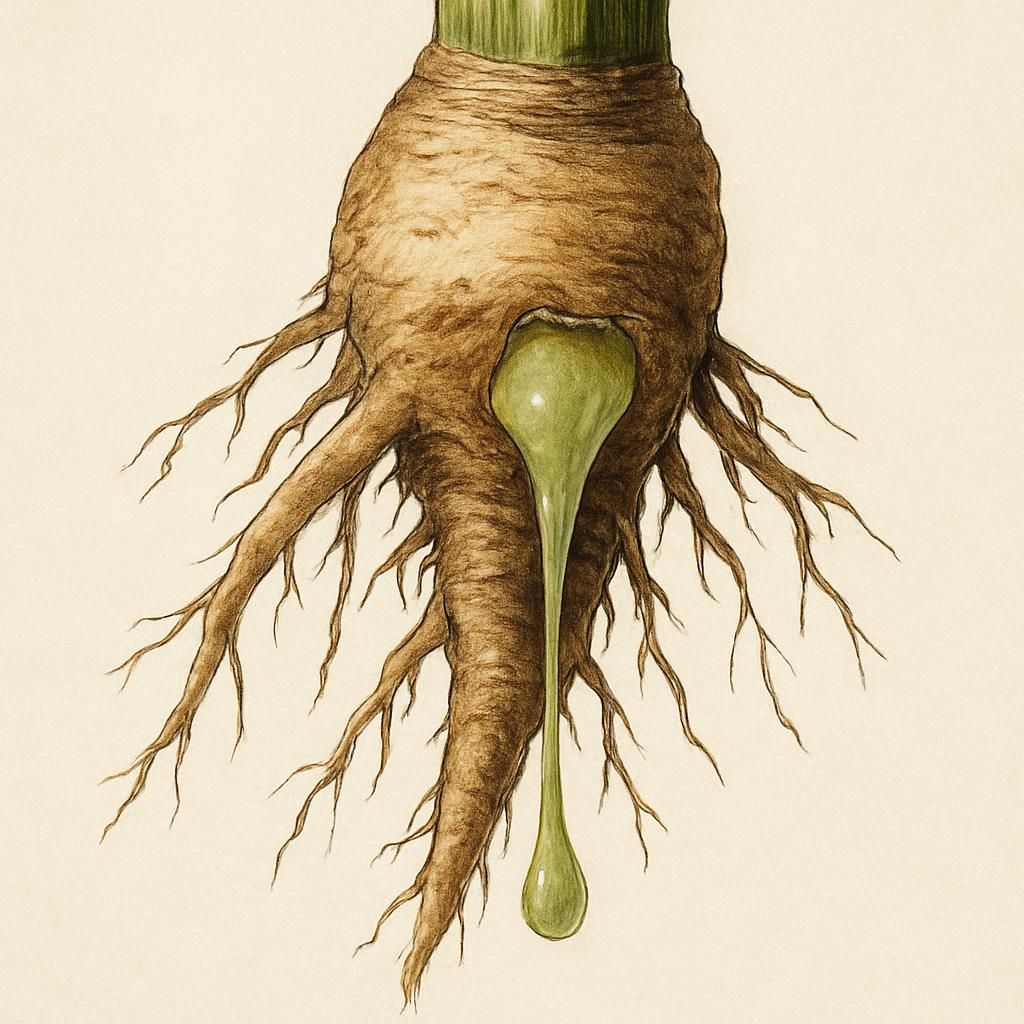
Ferula gummosa is a monocarpic perennial in the Apiaceae family. Plants form a basal rosette of finely divided, glaucous leaves during the first two to three years before sending up a stout, hollow flowering stalk that can reach 1.5–2 m. The taproot, which stores the majority of resin canals, thickens to 8–15 cm in diameter by the third season. Flowers are small, yellow, and borne in compound umbels; seed set occurs in late summer of the final year, after which the plant senesces.
The resin itself is a complex mixture of monoterpenes, sesquiterpenes, and polysaccharides. Highest concentrations occur in the cortical tissues of the upper taproot and lower stem. Genetic variation among wild populations influences both resin quantity and chemical profile; clonal selection from high-yielding mother plants is therefore recommended for commercial plantings.
Soil, pH, and Climate Requirements for Galbanum Resin (MUST INCLUDE A MARKDOWN TABLE OF IDEAL CONDITIONS)
Galbanum resin thrives on deep, coarse-textured soils that remain dry in winter yet retain enough moisture during the active growing period. The plant is extremely sensitive to waterlogging; even brief saturation can trigger root rot and collapse. Elevation between 1,200 and 2,200 m is optimal, providing cool nights and intense solar radiation.
| Parameter | Ideal Range | Notes |
|---|---|---|
| Soil Type | Sandy loam to gravelly loam | >60 % sand fraction, free-draining |
| Soil pH | 7.0–8.2 | Slightly alkaline conditions preferred |
| Organic Matter | 1.5–3.0 % | Low fertility reduces excessive vegetative growth |
| Temperature (Growing) | 18–28 °C daytime | Cool nights (8–12 °C) enhance resin quality |
| Temperature (Dormant) | −15 to −5 °C | Requires winter chill for vernalization |
| Annual Rainfall | 250–450 mm | Supplemental irrigation in dry springs |
| Elevation | 1,200–2,200 m | Higher altitudes increase resin terpenes |
| Frost-Free Period | 120–150 days | Critical for seed maturation |
Step-by-Step Planting & Propagation
Propagation is exclusively from seed because vegetative cuttings root poorly. Fresh seed collected in the same season exhibits 65–80 % germination when stratified at 4 °C for 45–60 days. Sow in early spring into 128-cell trays filled with a sterile, low-nutrient medium (pH 7.5). Maintain 15–18 °C soil temperature and light misting; seedlings emerge in 14–21 days.
Transplant at the two-true-leaf stage into 10 cm pots, then move to the field when plants have 6–8 leaves and soil temperature exceeds 12 °C. Field spacing is 40 cm within rows and 80 cm between rows (≈31,000 plants/ha). Pre-plant incorporation of 2–3 t/ha well-rotted compost and 40 kg/ha potassium sulfate prepares the bed without stimulating lush foliage.
Direct seeding is possible in mild climates: sow 3–4 seeds per station at 1 cm depth and thin to one plant. Protect young seedlings from cutworms with collars during the first 30 days.
Care & Maintenance regimes for Galbanum Resin (MUST INCLUDE A MARKDOWN TABLE OF WATER, FERTILIZER, AND PRUNING SCHEDULES)
After establishment, Galbanum resin demands minimal intervention. Over-fertilization, especially nitrogen, produces soft growth and diluted resin. Irrigation should mimic natural spring flush followed by summer drought. The following schedule supports commercial resin production while preserving plant vigor.
| Growth Stage | Watering Frequency | Fertilizer (NPK) | Pruning / Other Actions |
|---|---|---|---|
| Establishment (Year 1) | 15–20 mm every 10 days | 5-10-10 at 150 kg/ha at transplant | Remove flower stalks if they appear early |
| Vegetative (Year 2) | 20 mm every 14–18 days | 4-8-12 at 120 kg/ha in early spring | None; allow rosette expansion |
| Pre-Flowering (Year 3) | Withhold water 3 weeks prior | None; side-dress 30 kg/ha K only | None |
| Post-Harvest | Resume light irrigation if drought | Compost tea (1:10) at 5 L/plant | Cut senesced stalks at soil level |
Mulch with 5 cm of coarse gravel or crushed stone to suppress weeds and moderate soil temperature. Hand-weeding or shallow cultivation is preferred over herbicides, which can volatilize resin compounds.
Pests, Diseases & Organic Management
The most common threats are soil-borne fungi and occasional leaf-chewing insects. Pythium and Phytophthora cause damping-off in seedlings and crown rot in mature plants when drainage is inadequate. Preventive measures include raised beds, solarization of nursery media, and drenches of Bacillus subtilis at 10^9 CFU/mL.
Aphids and Spider Mites occasionally colonize leaf undersides during hot, dry spells. Releases of lady beetles and predatory mites, combined with weekly applications of 0.5 % neem oil, provide effective control without residue concerns. Root-knot nematodes can reduce resin yield; marigold borders and 3-year rotations with Cereal Rye suppress populations.
Harvesting, Curing & Optimal Storage
Resin is collected in the third or fourth year when the taproot diameter exceeds 10 cm. Two methods are used: (1) controlled wounding—shallow longitudinal cuts on the upper root and lower stem—induces fresh exudate that is scraped weekly for 4–6 weeks; (2) destructive harvest—entire root is excavated, sliced, and allowed to bleed resin onto collection sheets. The former method permits multi-year production; the latter yields a single large harvest.
Fresh resin is pale yellow-green and sticky. Spread in thin layers on food-grade trays in a shaded, well-ventilated area at 25–30 °C for 7–10 days until moisture falls below 8 %. Store in airtight, light-proof containers at 10–15 °C. Properly cured resin retains aromatic intensity for 24–36 months.
Companion Planting for Galbanum Resin
Galbanum resin benefits from associations that improve drainage, deter nematodes, and attract beneficial insects. Interplanting with Thyme or Rosemary provides aromatic masking and reduces aphid pressure. Deep-rooted Cereal Rye or Clover cover crops in the off-season build soil structure and suppress weeds. Avoid planting near Onion or Garlic families, which compete for potassium and may taint resin flavor.
Strategic pairing with Nasturtium creates a living mulch that shades soil and hosts predatory insects. Rotate blocks with Wheat or Barley to break disease cycles and restore soil biology before replanting.