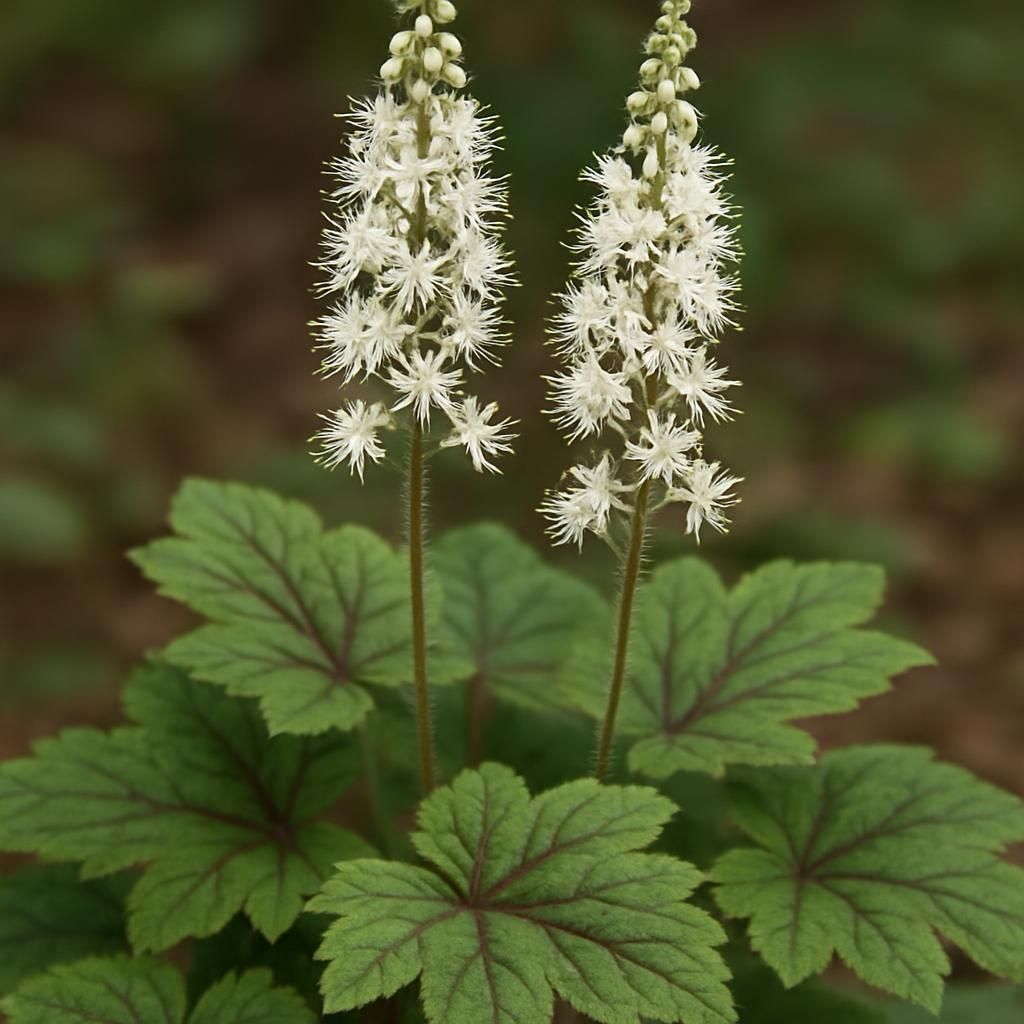
Introduction to foamflower (Tiarella cordifolia)
Foamflower (Tiarella cordifolia) is a herbaceous perennial native to the eastern woodlands of North America. It produces delicate, star-shaped white flowers on upright stems in spring that resemble foam, hence the common name. The deeply lobed, heart-shaped leaves often display burgundy veining or purple winter color, making it a four-season asset in shaded landscapes. Gardeners value it as a slow-spreading groundcover that suppresses weeds while supporting pollinators. Its adaptability to moist, organic-rich soils and tolerance of deep shade make it ideal for naturalistic plantings, rain gardens, and understory restoration projects.
Botanical Profile of foamflower (Tiarella cordifolia)
Tiarella cordifolia belongs to the Saxifragaceae family. Plants form basal rosettes of evergreen or semi-evergreen foliage 4–8 inches tall. Each leaf is palmately lobed with three to five primary lobes and serrated margins. In April–May, wiry 6–12 inch scapes emerge bearing racemes of tiny five-petaled white flowers with prominent stamens. The species spreads via slender above-ground stolons that root at nodes, eventually forming colonies 12–24 inches wide. Related species such as Tiarella trifoliata and Tiarella wherryi offer similar cultural requirements but differ in leaf division and flower color intensity.
Soil, pH, and Climate Requirements for foamflower (Tiarella cordifolia) (MUST INCLUDE A MARKDOWN TABLE OF IDEAL CONDITIONS)
Foamflower thrives in consistently moist, well-drained soils rich in organic matter. It performs best in partial to full shade but tolerates morning sun if soil moisture is maintained. The plant is hardy in USDA zones 3–8 and prefers cool, temperate climates with moderate humidity. Avoid heavy clay or drought-prone sandy soils without amendment.
| Parameter | Ideal Range | Notes |
|---|---|---|
| Soil Type | Loamy, high in humus | Incorporate leaf mold or compost |
| Soil pH | 5.5–6.8 | Slightly acidic to neutral |
| Soil Moisture | Evenly moist, never waterlogged | Mulch helps retain consistent moisture |
| Temperature Range | 50–75 °F (10–24 °C) growing season | Protect from extreme heat and drying winds |
| USDA Hardiness Zones | 3–8 | Mulch in zone 3 for winter protection |
| Light Requirements | Partial shade to full shade | Tolerates dappled morning sun |
| Drainage | Good drainage essential | Raised beds or slopes recommended |
Step-by-Step Planting & Propagation
- Site Selection: Choose a sheltered woodland edge or north-facing slope with dappled shade. Remove competing weeds and incorporate 2–3 inches of well-rotted leaf compost.
- Soil Preparation: Test pH and amend to 5.5–6.8. Loosen soil to 8–10 inches depth and ensure drainage by adding pine bark fines if needed.
- Division Propagation: In early spring or fall, lift established clumps and separate rooted stolons with at least two leaves. Replant divisions 8–12 inches apart at the same depth.
- Seed Propagation: Collect ripe capsules in late summer. Sow fresh seed in flats with moist seed-starting mix; stratify at 40 °F for 60 days before moving to 60–65 °F for germination.
- Container Planting: Use a 50/50 mix of high-quality potting soil and composted pine bark. Position containers in shade and water to keep media evenly moist.
- Timing: Plant bare-root or container-grown plants in spring after last frost or in early fall six weeks before ground freeze.
Care & Maintenance regimes for foamflower (Tiarella cordifolia) (MUST INCLUDE A MARKDOWN TABLE OF WATER, FERTILIZER, AND PRUNING SCHEDULES)
Foamflower requires minimal intervention once established. Focus on consistent moisture and annual organic top-dressing. Remove spent flower stalks after bloom to redirect energy into foliage and stolon production. Divide congested clumps every 3–4 years to maintain vigor.
| Season | Watering Schedule | Fertilizer Application | Pruning & Cleanup |
|---|---|---|---|
| Spring | 1 inch per week; increase during dry spells | Top-dress with ½ inch compost or aged manure | Remove faded flower stems; divide if needed |
| Summer | Maintain even moisture; mulch 2 inches | Optional light fish emulsion (1:10) monthly if growth is pale | Deadhead any secondary blooms; control weeds |
| Fall | Reduce to ½ inch per week as temperatures drop | Apply 1 inch leaf mold or shredded bark | Cut back damaged foliage; clean debris |
| Winter | Minimal supplemental water in mild zones | None required | Leave evergreen foliage for winter interest |
Pests, Diseases & Organic Management
Foamflower is relatively pest-resistant but can suffer from slugs and snails in overly wet conditions. Occasional outbreaks of aphids or spider mites may occur during hot, dry periods; blast foliage with water or apply insecticidal soap. Fungal issues such as powdery mildew or leaf spot diseases are rare when air circulation is adequate and foliage remains dry. Practice good sanitation by removing fallen leaves and avoid overhead irrigation. Encourage beneficial insects by planting nearby nectar sources.
Harvesting, Curing & Optimal Storage
Foamflower is primarily grown as an ornamental rather than a food crop. If collecting seed, harvest mature capsules when they turn tan and begin to split. Dry seed heads indoors for 7–10 days, then store in paper envelopes at 40 °F with low humidity for up to two years. Divisions can be lifted and stored in moist sphagnum moss at 35–40 °F for short-term holding before replanting. Foliage cuttings root readily in water or moist medium for propagation stock.
Companion Planting for foamflower (Tiarella cordifolia)
Pair foamflower with other shade-tolerant woodland species to create resilient understory communities. Recommended companions include fern species, wild ginger, trillium, and hepatica. For added spring color, interplant with Virginia bluebells or crested iris. The dense mat-forming habit of foamflower complements taller shade perennials such as Solomon’s seal and hosta while suppressing weeds. Avoid aggressive spreaders like English ivy that may outcompete slower-establishing Tiarella colonies.