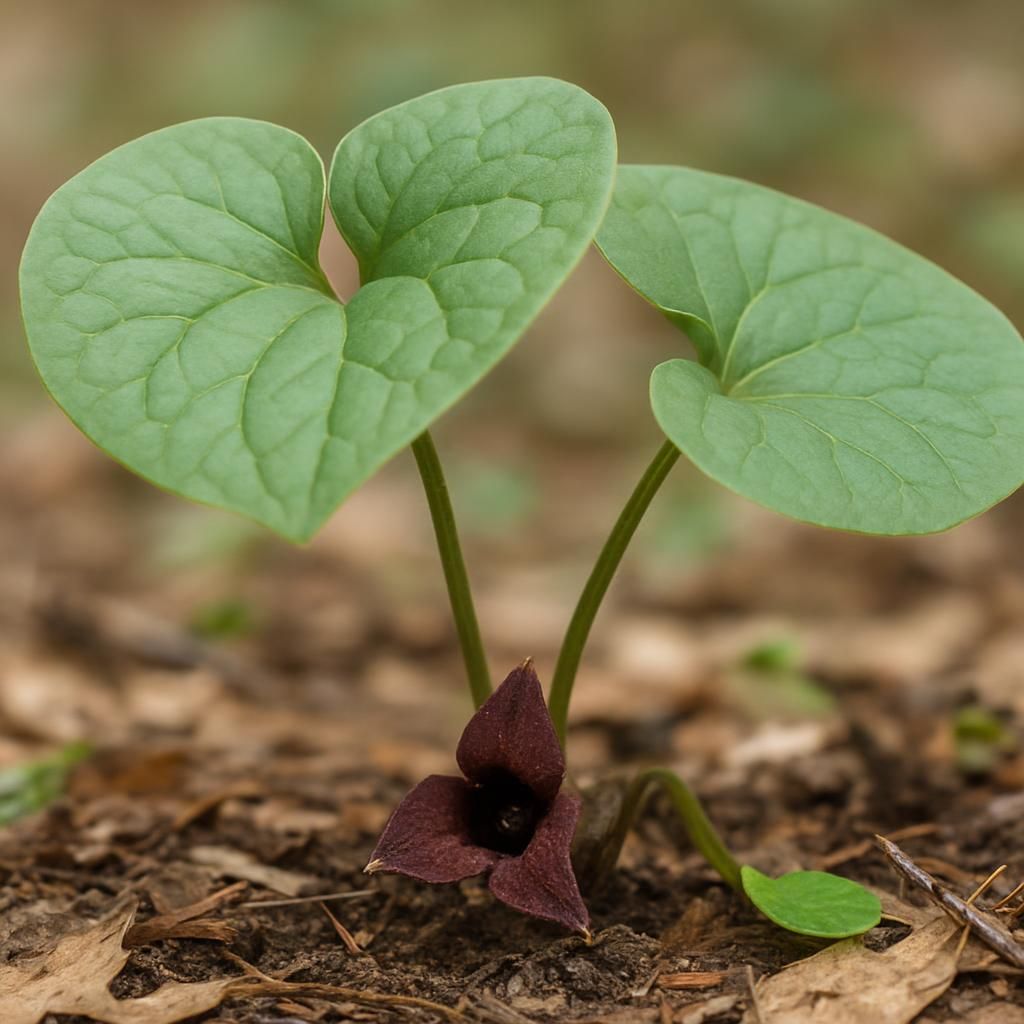
Introduction to wild ginger
Wild ginger (Asarum canadense) is a native North American woodland perennial prized for its heart-shaped leaves and aromatic rhizomes. Unlike culinary ginger, this species belongs to the Aristolochiaceae family and thrives in shaded, moist forest floors. Professional growers value it both as an ornamental groundcover and for its medicinal and culinary uses in wildcrafting traditions.
Botanical Profile of wild ginger
Wild ginger spreads via creeping rhizomes that produce fibrous roots and new shoots each spring. The plant produces distinctive maroon, jug-shaped flowers at ground level in early spring, followed by broad, kidney-shaped leaves that form dense mats. Rhizomes contain essential oils including asarone, giving them a spicy, ginger-like aroma. Mature plants reach 6–12 inches in height with a spread of 12–24 inches under optimal conditions.
Soil, pH, and Climate Requirements for wild ginger
Wild ginger demands consistently moist, well-drained, humus-rich soil that mimics native woodland conditions. The plant performs best in USDA zones 3–8 with cool, shaded microclimates.
| Parameter | Ideal Range | Notes |
|---|---|---|
| Soil Type | Loamy, high organic matter | Incorporate leaf mold or aged compost |
| Soil pH | 5.5 – 6.8 | Slightly acidic to neutral |
| Temperature Range | 55–75°F (13–24°C) | Protect from extreme heat and frost |
| Light Requirements | Partial to full shade | Avoid direct afternoon sun |
| Spacing | 12–18 inches | Allows rhizome expansion |
| Humidity | 60–80% | Mulch helps maintain consistent moisture |
Step-by-Step Planting & Propagation
- Site Selection: Choose a shaded woodland edge or north-facing bed with consistent moisture.
- Soil Amendment: Mix 3–4 inches of leaf mold or well-rotted compost into the top 8 inches of soil.
- Rhizome Division: In early spring or fall, divide healthy rhizomes into 3–4 inch sections, each with at least one bud.
- Planting Depth: Place rhizomes horizontally 1–2 inches deep and water thoroughly after planting.
- Mulching: Apply 2–3 inches of shredded bark or leaf litter to suppress weeds and retain moisture.
Care & Maintenance regimes for wild ginger
Consistent moisture and organic fertility support vigorous growth without chemical inputs.
| Task | Schedule | Details |
|---|---|---|
| Watering | Weekly during active growth | Maintain even soil moisture; avoid waterlogging |
| Fertilizer | Early spring & mid-summer | Apply 1 inch compost tea or fish emulsion |
| Pruning | Late fall or early spring | Remove spent foliage to reduce disease risk |
Pests, Diseases & Organic Management
Wild ginger is generally pest-resistant but can suffer from slugs and snails and occasional fungal issues in overly wet conditions. Hand-pick slugs at night or use iron-phosphate baits. Improve airflow and avoid overhead watering to prevent leaf spot diseases. Divide crowded clumps every 3–4 years to reduce disease pressure.
Harvesting, Curing & Optimal Storage
Harvest rhizomes in fall after foliage yellows. Gently lift plants, wash soil from roots, and cut healthy sections for replanting. Dry remaining rhizomes in a shaded, well-ventilated area for 7–10 days until brittle. Store in airtight glass jars in a cool, dark location for up to 12 months. For fresh use, keep unwashed rhizomes in damp sand in the refrigerator for 3–4 weeks.
Companion Planting for wild ginger
Wild ginger pairs well with other shade-loving natives. Recommended companions include thyme, yarrow, and nasturtium for pest deterrence and soil health. Avoid planting near aggressive spreaders that may outcompete the slow-growing rhizomes. For additional organic strategies, see Summer Companion Planting: 10 Organic Pairings to Boost Small Farm Resilience.