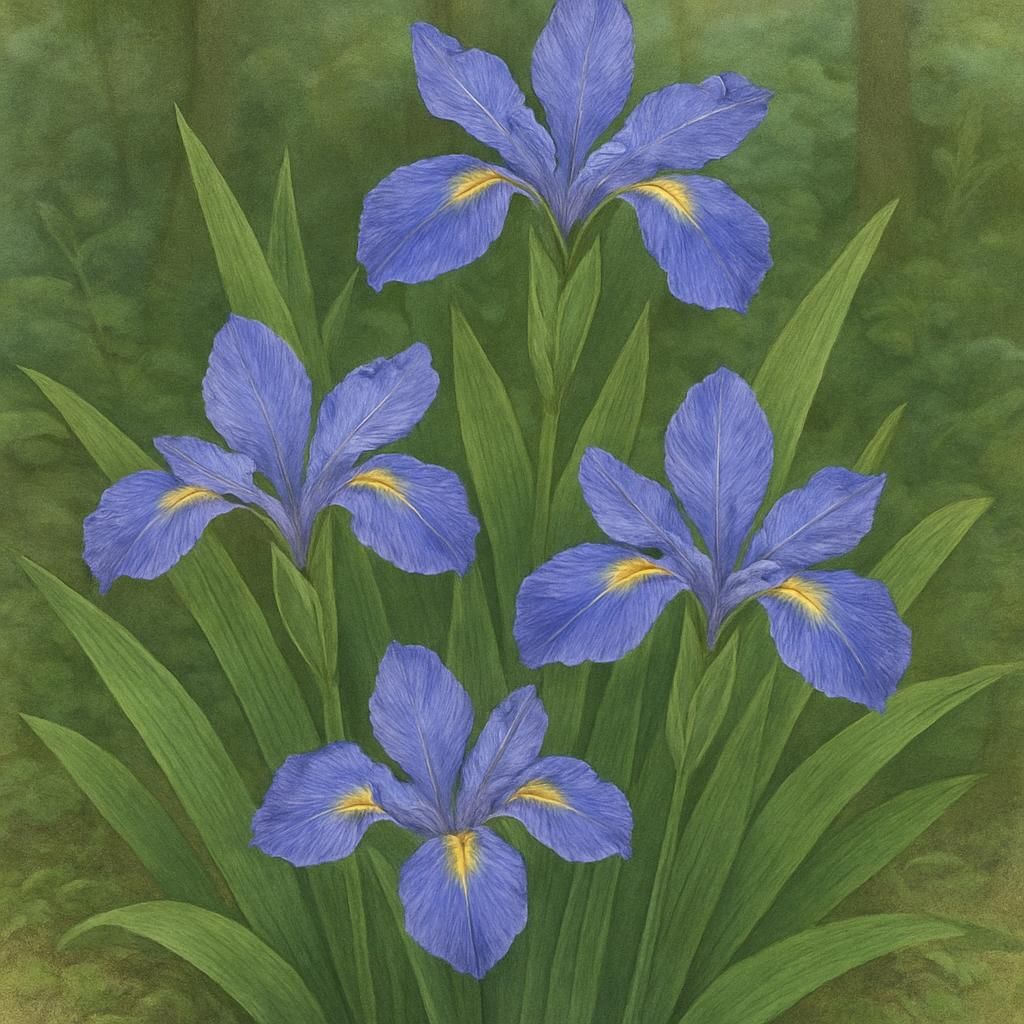
Introduction to crested iris
Crested iris (Iris cristata) is a low-growing, rhizomatous perennial native to the eastern United States. Gardeners value it for its delicate lavender-blue flowers marked by a distinctive yellow or white crest on the falls, blooming in mid-to-late spring before many other woodland perennials. Its arching, sword-like foliage remains attractive through summer, providing texture and erosion control on slopes or under deciduous trees. Because it spreads slowly by rhizomes, crested iris forms dense colonies that suppress weeds and enhance biodiversity when planted in drifts.
Botanical Profile of crested iris
Iris cristata belongs to the Iridaceae family and is characterized by short, fleshy rhizomes that sit at or just below the soil surface. Each fan of leaves reaches 4–8 inches tall, while flower stalks rise 3–6 inches and produce one to three blooms per stem. The falls feature a prominent raised crest that guides pollinators to the nectar. After flowering, seed capsules form and split open in late summer, though most propagation occurs vegetatively. The species is hardy in USDA zones 3–8 and enters dormancy in winter, with new growth emerging as soil temperatures rise above 50 °F (10 °C).
Soil, pH, and Climate Requirements for crested iris (MUST INCLUDE A MARKDOWN TABLE OF IDEAL CONDITIONS)
Crested iris performs best in moist yet well-drained, humus-rich soils typical of deciduous woodlands. Avoid heavy clay or sites that remain waterlogged; raised beds or amended slopes improve drainage. The plant tolerates partial to full shade but flowers more profusely with morning sun filtered by overhead canopy. Winter hardiness is excellent, yet late-spring frosts rarely damage buds once growth has hardened.
| Parameter | Ideal Range | Notes |
|---|---|---|
| Soil Type | Loamy, rich in organic matter | Incorporate leaf mold or aged compost |
| Soil pH | 5.5–6.5 | Slightly acidic conditions preferred |
| Drainage | Excellent | Raised beds or slope planting recommended |
| Temperature Range | 15–75 °F (-9–24 °C) | Hardy to zone 3; protect from extreme heat |
| Light | Partial shade to dappled sun | Avoid deep shade for best flowering |
| Spacing | 8–12 inches (20–30 cm) | Allows rhizome expansion and air flow |
| USDA Hardiness Zones | 3–8 | Mulch in northern winters for insulation |
Step-by-Step Planting & Propagation
- Choose a site with filtered light and prepare soil by removing weeds and incorporating 2–3 inches of leaf mold or well-rotted compost.
- Plant rhizomes in early fall or early spring at the same depth they were previously grown, spacing 8–12 inches apart.
- Water thoroughly after planting and apply a 1-inch layer of shredded bark mulch to retain moisture and moderate soil temperature.
- For propagation, divide established clumps every 3–4 years immediately after flowering; each division should contain at least one fan and a healthy rhizome section.
- Replant divisions promptly and keep evenly moist until new roots establish.
Care & Maintenance regimes for crested iris (MUST INCLUDE A MARKDOWN TABLE OF WATER, FERTILIZER, AND PRUNING SCHEDULES)
Crested iris requires minimal intervention once established. Focus on maintaining consistent moisture during the first growing season and replenishing organic mulch annually. Fertilization is light; overfeeding promotes foliage at the expense of blooms. Remove spent flower stalks promptly to redirect energy into rhizome growth. Divide congested clumps in late summer to maintain vigor and prevent center die-out.
| Season | Watering Schedule | Fertilizer Application | Pruning/Maintenance Tasks |
|---|---|---|---|
| Early Spring | Keep soil evenly moist; 1 inch/week | Apply balanced organic fertilizer (5-5-5) at half rate after new growth appears | Remove winter-damaged foliage; refresh mulch |
| Late Spring | Reduce to 0.5 inch/week after bloom | None; avoid high-nitrogen feeds | Deadhead spent blooms; divide if overcrowded |
| Summer | Water only during prolonged drought | None | Cut back yellowing leaves to 2 inches |
| Fall | Maintain moisture until dormancy | Top-dress with ½ inch compost | Remove all remaining foliage at ground level |
| Winter | None needed under mulch | None | Monitor for rodent damage under snow cover |
Pests, Diseases & Organic Management
Crested iris is relatively pest-resistant but can suffer from slugs and snails that chew notches in emerging leaves. Hand-pick at dusk or apply iron-phosphate baits. Aphids occasionally cluster on flower buds; a strong water spray or insecticidal soap provides control. Fungal issues such as Botrytis may appear in overly wet conditions—improve air circulation and avoid overhead watering. Rhizome rot caused by Pythium or Phytophthora occurs in poorly drained soils; lift and discard affected sections, then replant in amended beds. Regular division every three years prevents overcrowding that invites disease.
Harvesting, Curing & Optimal Storage
Crested iris is grown primarily as an ornamental rather than a cut flower or culinary crop. If seed collection is desired, allow capsules to dry on the plant until they split, then collect seeds and store in paper envelopes at 40 °F (4 °C) for spring sowing. Rhizomes intended for division or relocation should be lifted after foliage yellows, gently cleaned of soil, and stored in slightly moist sphagnum moss inside perforated plastic bags at 35–40 °F (2–4 °C) for no longer than four weeks. Label each bag with cultivar name and planting date to maintain genetic diversity in future plantings.
Companion Planting for crested iris
Pair crested iris with other shade-loving woodland species to create layered, resilient plantings. Hostas provide bold foliage contrast while occupying the same moisture and pH niche. Ferns such as Dryopteris add delicate texture and thrive under identical light conditions. Early spring bulbs like snowdrops emerge alongside crested iris, extending the bloom sequence. Low-growing wild ginger serves as a living mulch that retains soil moisture and suppresses weeds. Avoid aggressive spreaders such as English ivy that may outcompete the slower-growing iris rhizomes.