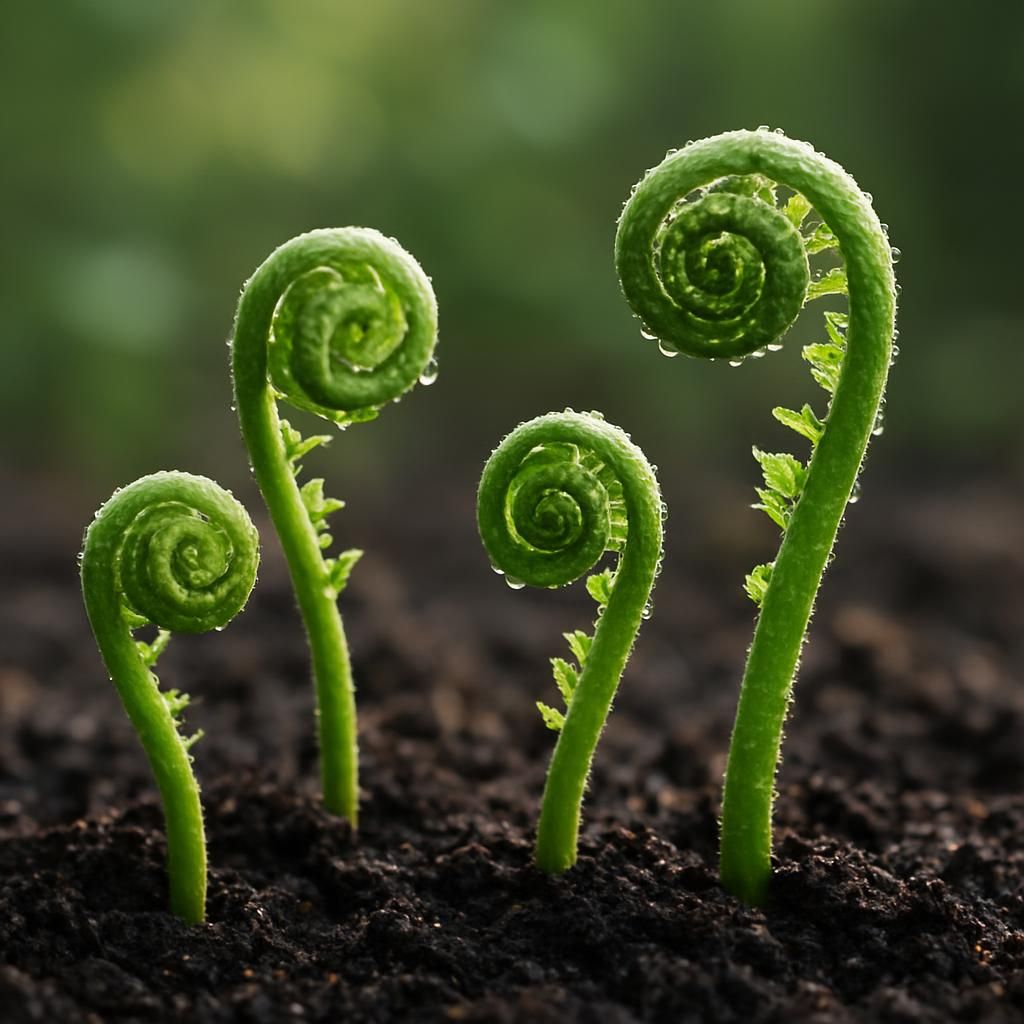
Introduction to fern
Ferns represent one of the oldest plant lineages still cultivated today, valued both for their tender edible fronds and their role in ecological landscaping. While many species exist, the most common edible fern is the bracken fern (Pteridium aquilinum) along with the ostrich fern (Matteuccia struthiopteris) and various tropical species used in Asian cuisines. These plants thrive in shaded, humid environments and are harvested primarily for their young, coiled crosiers before they unfurl.
Commercial fern production focuses on consistent moisture, soil acidity, and controlled light levels. Because ferns reproduce via spores rather than seeds, propagation techniques differ significantly from typical vegetable crops. Ferns also improve microclimates by increasing humidity and providing ground cover that reduces erosion on sloped land.
In agricultural systems, ferns are increasingly interplanted with shade-tolerant crops such as Thai Basil or Ginger to create layered canopies. Their deep rhizomes help stabilize soil and can suppress certain weeds when managed properly.
Botanical Profile of fern
Ferns belong to the division Polypodiophyta and lack flowers or seeds, reproducing instead through microscopic spores. The visible plant consists of fronds (leaves) arising from underground rhizomes. Edible species produce tightly coiled crosiers that are harvested at 15–25 cm in length.
The rhizome system is perennial, allowing established stands to persist for decades with proper management. Fronds emerge in spring or after monsoon rains and expand rapidly under warm, moist conditions. Most commercial edible ferns reach harvestable size within 4–8 weeks of emergence.
Fern anatomy includes a vascular system without true wood, making them sensitive to physical damage and drought. Their spore-bearing structures (sori) appear on the underside of mature fronds and are not harvested for food.
Soil, pH, and Climate Requirements for fern
Ferns demand consistently moist, well-drained, acidic soils rich in organic matter. They perform poorly in compacted or alkaline conditions. Below is a table of ideal growing parameters:
| Parameter | Ideal Range | Notes |
|---|---|---|
| Soil pH | 4.5 – 6.0 | Strongly acidic; lime only if below 4.0 |
| Temperature | 15–24 °C daytime | Avoid prolonged exposure above 30 °C |
| Annual Rainfall | 1200–2000 mm | Supplemental irrigation required in dry periods |
| Light | 30–60 % shade | Dappled light or north-facing slopes |
| Soil Texture | Loamy to sandy loam | High organic content; avoid heavy clay |
| Elevation | 0–1500 m | Higher elevations in tropics improve quality |
Consistent soil moisture is critical; allow the top 2–3 cm to dry slightly between waterings to prevent root rot while maintaining humidity around the crown.
Step-by-Step Planting & Propagation
Site Preparation: Clear competing vegetation and incorporate 5–8 cm of well-rotted leaf mold or compost into the top 20 cm of soil. Create raised beds 20–30 cm high on poorly drained sites.
Spore Collection & Sowing: Collect mature fronds with ripe sori in late summer. Place fronds in paper bags to release spores. Sow spores on sterilized peat-perlite mix in covered trays under 70 % shade. Maintain 18–22 °C and high humidity; germination occurs in 4–8 weeks.
Rhizome Division: For faster establishment, divide healthy rhizomes in early spring. Each division should contain at least one growing tip and several roots. Plant divisions 10–15 cm deep and 30 cm apart.
Transplanting: Harden off spore-grown plants for 2 weeks before transplanting. Space plants 40–60 cm apart in rows 60–90 cm wide. Water thoroughly after planting.
Mulching: Apply 5–8 cm of organic mulch (shredded leaves, pine needles) immediately after planting to conserve moisture and suppress weeds.
Care & Maintenance regimes for fern
Ferns require minimal intervention once established, but regular monitoring ensures high-quality fronds. The following table outlines seasonal schedules:
| Season | Watering Schedule | Fertilizer Application | Pruning / Harvesting |
|---|---|---|---|
| Spring | Keep soil evenly moist; 2–3× weekly | Apply fish emulsion (5-1-1) at 50 % strength once | Remove winter-damaged fronds; begin selective crosier harvest |
| Summer | Daily light watering in heat; mist foliage | Side-dress with aged compost or 4-2-3 organic blend monthly | Harvest crosiers every 3–5 days; remove any flowering weeds |
| Autumn | Reduce frequency as growth slows | Light compost tea application only | Cease harvest 4 weeks before first frost; cut back dead fronds |
| Winter | Minimal; protect from drying winds | None unless soil test indicates deficiency | Mulch crowns heavily in cold climates |
Monitor for nutrient deficiencies, especially nitrogen and magnesium, which manifest as yellowing fronds. Avoid high-nitrogen fertilizers late in the season to prevent soft growth susceptible to frost.
Pests, Diseases & Organic Management
Ferns are relatively pest-resistant but can suffer from slugs, snails, and fungal issues in overly wet conditions. Common problems include Slugs and snails, Spider mites, and various leaf spot fungi.
Organic Controls:
- Hand-pick slugs at night or use beer traps and copper barriers.
- Introduce predatory mites or release lacewing larvae for spider mite outbreaks.
- Improve air circulation and avoid overhead watering to reduce fungal pressure.
- Apply neem oil or horticultural soap at first sign of infestation.
- Remove and destroy heavily infected fronds to limit spore spread.
Regular scouting and maintaining plant spacing help prevent most issues before they become economically damaging.
Harvesting, Curing & Optimal Storage
Harvest young crosiers when they reach 15–20 cm and before fronds begin to unfurl. Cut at the base with a sharp knife, taking no more than one-third of the plant’s fronds at a time to maintain vigor.
Immediately after harvest, plunge crosiers into ice water for 5 minutes to remove bitterness and improve texture. For fresh market, pack in perforated bags and store at 0–2 °C with 95 % humidity for up to 7 days.
For longer storage, blanch crosiers for 2 minutes, cool rapidly, and freeze. Dried fern powder can be produced by dehydrating at 40 °C until brittle, then grinding; store in airtight containers away from light.
Companion Planting for fern
Ferns pair well with shade-loving species that share similar moisture and pH preferences. Recommended companions include Ginger, Turmeric, and Thai Basil planted at the edges of fern beds to create beneficial microclimates.
Avoid planting near heavy feeders such as Corn or brassicas that may compete for nutrients or alter soil pH. Ferns also benefit from understory planting beneath fruit trees, where fallen leaves provide natural mulch and the canopy supplies necessary shade.
Strategic companion planting improves biodiversity, reduces pest pressure, and can extend the productive season of fern stands by moderating temperature swings.